The Center for Sanitary and Epidemiological Surveillance of the Sughd Province urged residents to observe sanitary and hygienic norms ahead of the holiday of Eid al-Adha.
The Center reminded that slaughtering livestock in the yards of apartment buildings, by the roads, and in other unauthorized places without permission is prohibited.
Before slaughter, animals must undergo a mandatory veterinary examination.
Experts emphasize that consuming meat from a sick animal can be hazardous to health.
During the festive days, especially in hot conditions, the risk of intestinal infections and food poisoning increases.
Residents are advised to purchase products only at official outlets under sanitary control.
Particular danger may come from ready-made salads, meat, and dairy products prepared at home and sold in unauthorized places.
Experts also recommend consuming meat only after complete thermal processing, avoiding raw milk, and maintaining hand hygiene after contact with animals.
Every year on Eid al-Fitr and Eid al-Adha, residents of the capital and other cities are urged to slaughter livestock only in designated areas.
It is noteworthy that this year Tajik citizens, according to preliminary data, will celebrate Eid al-Adha on May 27.
As previously reported by “Asia-Plus,” the chairman of the Council of Ulema of the Islamic Center of Tajikistan, Saidmukarram Abdulqodirzoda, the date is not yet final.
Eid al-Adha is celebrated on the 10th day of the month of Dhu al-Hijjah according to the lunar calendar. Early in the morning, a festive prayer is held in all congregational mosques. Religious leaders in their sermons call on people to peace and unity, respect for elders, and support for those in need.
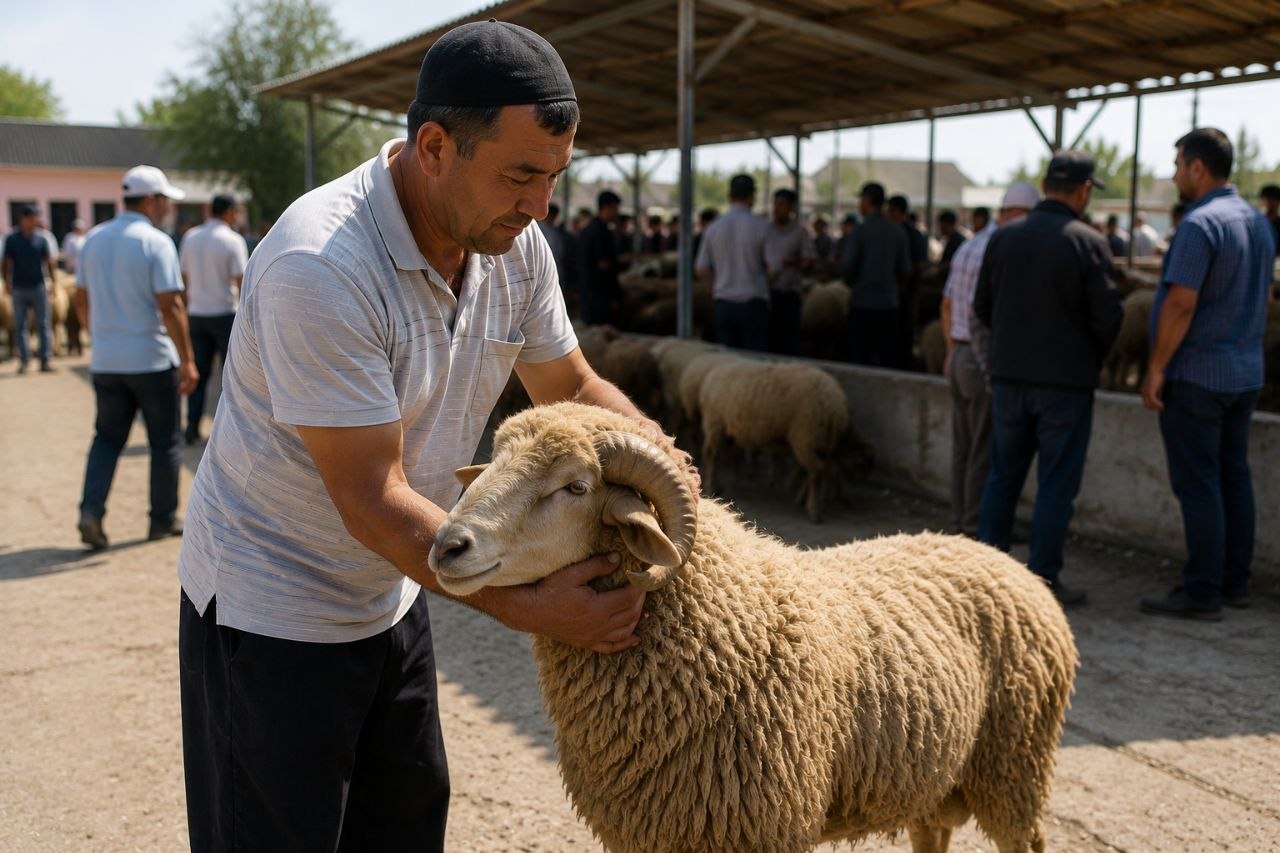
Wealthy and well-off people, according to Sharia norms, perform the sacrifice of livestock (sheep, cows, or camels). The meat of the sacrificial animal is divided into three parts: one part for the family, the second for relatives, and the third is necessarily given to the needy and orphans.
After the prayer, citizens visit cemeteries, recite prayers, and the Surah “Al-Fatiha” for the repose of their deceased ancestors.
One of the most important aspects of this holiday is helping the poor. Kind-hearted people during these days assist needy families not only with the meat of the sacrificial animal but also with clothing, food, or cash, so that everyone can feel the joy of the holiday.
In Tajikistan, this day is an official holiday.