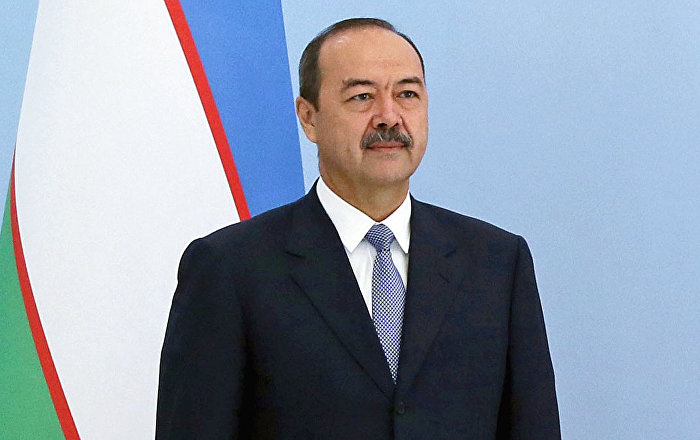
Uzbek Prime Minister Abdulla Aripov heading a dignified delegation arrived in Dushanbe today morning to discuss economic cooperation and border delineation issues with high-ranking Tajik state officials.
The Uzbek delegation members include representatives of foreign ministry, border service and economic bloc ministries.
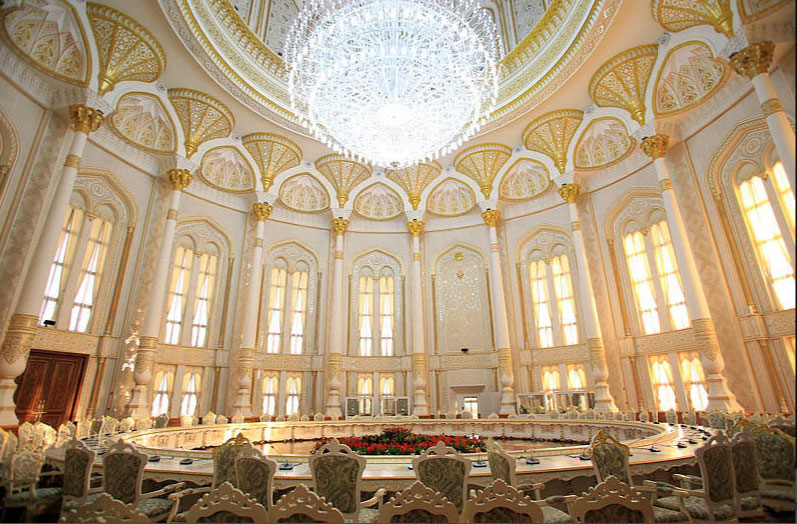
Co-chaired by Tajik Prime Minister Qohir Rasoulzoda and his Uzbek counterpart Abdulla Aripov, the meetings to discuss trade and economic cooperation and hasten negotiations to resolve border delineation disputes are being held at Kokhi Navrouz State Complex in Dushanbe behind closed doors, a source in the Tajik government told Asia-Plus in an interview.
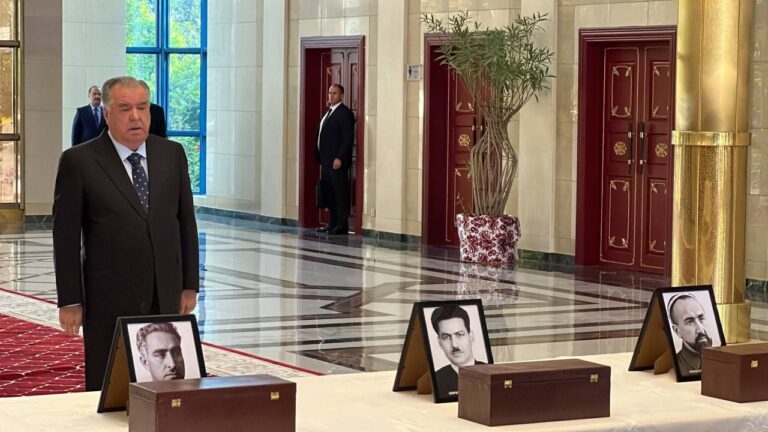
Uzbek prime minister will be received by President Emomali Rahmon today.
While in Dushanbe, the Uzbek premier is also expected to meet high-ranking Tajik state officials to lay groundwork for an official visit of Uzbek President Shavkat Mirziyoyev to Tajikistan.
The Uzbek delegation will leave Dushanbe for Tashkent today evening, the source added.
Recall, the Tajik-Uzbek border delimitation talks have been stalled since February 2009 after Tajikistan rejected Uzbekistan’s proposal to give up some disputed lands to the Tajik side on condition that Tashkent will gain full control of “Farhod” water reservoir along the two countries border.
The first after a break of three yeas border talks between Tajikistan and Uzbekistan took place in Dushanbe on February 21-22, 2012.
On April 24, 2015, top border officials of Tajikistan and Uzbekistan met in the Tajik northern city of Khujand. The two sides reportedly discussed issues around protecting common borders in 2014 and ways of improving the processes of doing so in future. Those included prophylactic and explanatory activities among the population living in border zones; preventing illegal border crossing; upholding signed bilateral protocols on state border protection; and rapidly responding to conflicts, which must be resolved at the level of leaders in border zones via negotiations.
At the end of the meeting, the heads of the two delegations signed an agreement on efficient bilateral cooperation between the respective border services in 2015.
In November 2016, a working group began reviewing solutions to definitively outlining the 10 percent of the 1,333-kilometer border still under discussion.
Meanwhile, by government’s decree Tajik new border commission is headed by Prime Minister Qohir Rasoulzoda and its members include Azim Ibrohim, Deputy Prime Minister, Sirojiddin Aslov, Minister of Foreign Affairs, Rustam Shohmurod, Minister of Justice, Rajabboy Ahmadzoda, Chairperson of the State Committee on Land Management and Geodesy, and some other officials. In all, the list of the commission members includes nineteen persons.
Local experts say the appointment of Prime Minister Qohir Rasoulzoda as co-chairman of the Tajik-Uzbek commission for delimitation and demarcation of Tajikistan’s common border with Uzbekistan is evidence of the fact that Tajikistan attaches significance to solution of border problems with Uzbekistan.