More than 10,000 people reportedly cross the Tajik-Uzbek border every day

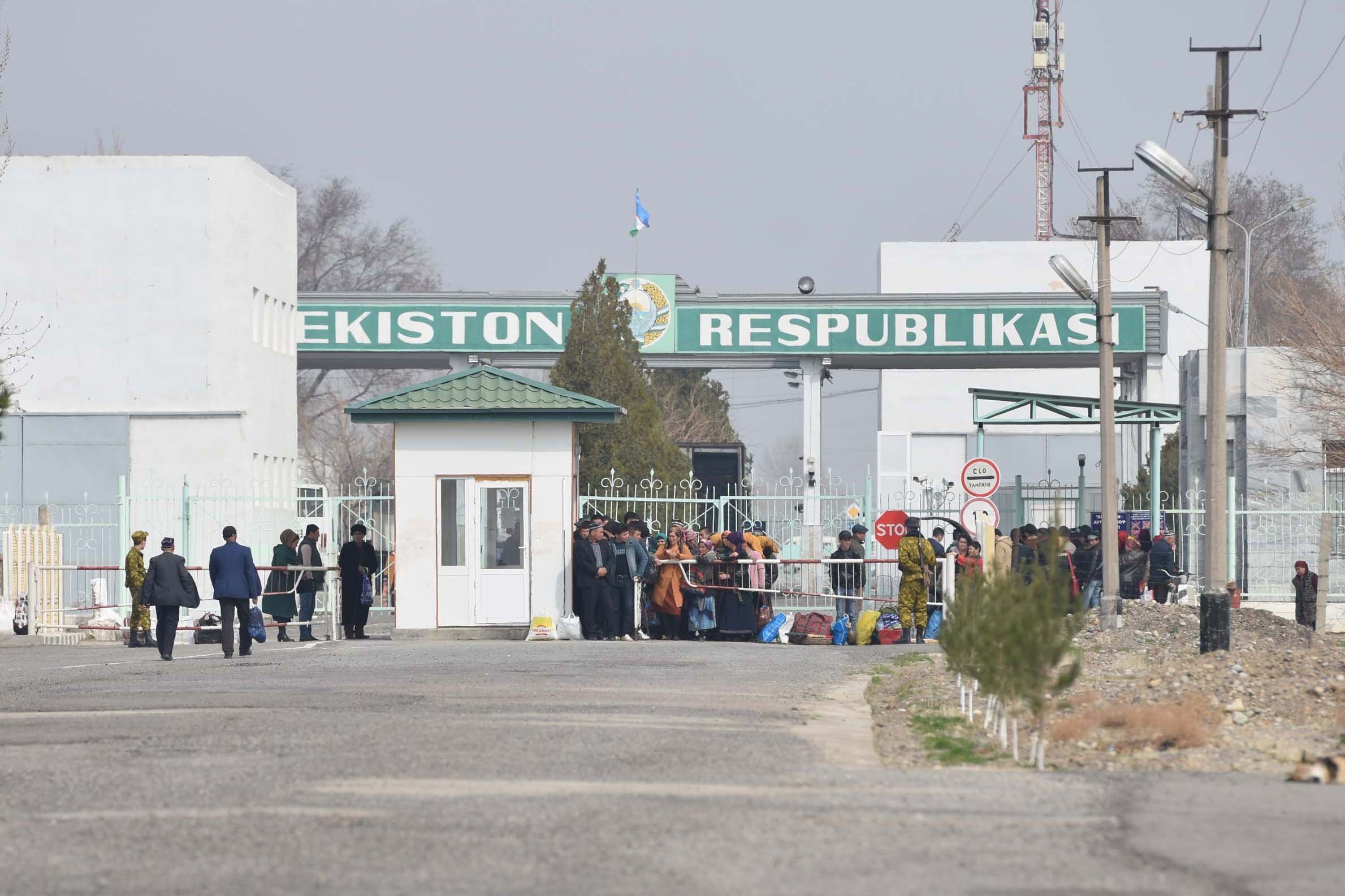
On average, more than 10,000 people are reportedly crossing the Tajik-Uzbek border per day.  The largest flow is reportedly proceeding via the border crossing points (BCPs) Tursunzoda-Sariosiyo and Panjakent-Samarqand. After signing of government-to-government agreement between Tajikistan and Uzbekistan on visa-free travel that was singed in Dushanbe on March 9, people living in border areas of […]

On average, more than 10,000 people are reportedly crossing the Tajik-Uzbek border per day.  The largest flow is reportedly proceeding via the border crossing points (BCPs) Tursunzoda-Sariosiyo and Panjakent-Samarqand.

After signing of government-to-government agreement between Tajikistan and Uzbekistan on visa-free travel that was singed in Dushanbe on March 9, people living in border areas of Tajikistan and Uzbekistan began putting their mind to what line of trade they could get into.  Vendors from border areas of both countries have crossed over to Tajikistan and Uzbekistan and returned with goods to sell.

According to the press center of the Main Border Guard Directorate at the State Committee for National Security (SCNS) of Tajikistan, on average 2,000 people are currently proceedings via the Panjakent-Samarqand BCP per day.

“The flows proceedings via other BPCs along the Tajik-Uzbek border are on average between 400 and 1,000 people,” the source said.

On average, more than 10,000 people are crossing the Tajik-Uzbek border per day and this flow is increasing, the source added. 

Recall, Tajikistan’s lower house (Majlisi Namoayndagon) of parliament on March 19 ratified a government-to-government agreement between Tajikistan and Uzbekistan on visa-free travel that was singed in Dushanbe on March 9.

The agreement enables nationals of Tajikistan and Uzbekistan to visit each others’ countries for up to 30 days without obtaining a visa.      

Thousands of people flocked to most of the 16 border crossing points between the two countries shortly after the announcement of a deal introducing 30-day, visa-free travel.

Tashkent introduced visas for Tajik citizens intending to visit Uzbekistan on May 16, 2000 in 2000, creating major complications for ethnic Tajiks living on the Uzbek side and ethnic Uzbeks on the Tajik side, many of whom have relatives or other connections in the other country.      

Join us on social media!

Article translations:

Related Article

Оби зулол
Tenisi
Оби зулол

Most Read

Коммерсбонк Точикистон

Recent Articles

RZD announces the restoration of passenger services between Moscow and Dushanbe

Direct rail services between the capitals of Russia and Tajikistan were suspended in March 2020 due to the COVID-19 pandemic.

#AP30/Stories. “Selam! Heller nichek?” How Tatars live today in Sughd province

On the 30th anniversary of "Asia-Plus," we continue to publish reports that remain relevant even after years. This story was told in 2021, and since then, little has changed in the life of the Tatar community in Tajikistan.

15,000 cameras, drones, and robots: how technology monitors pilgrims in Mecca and Medina

During Hajj 2026, Mecca and Medina were under unprecedented digital control.

Another child in Dushanbe removed from family and sent to boarding school

The Ministry of Internal Affairs reports that the parents did not pay adequate attention to the child.

Emomali Rahmon instructs to address issues in seed production following criticism of the industry

Issues have been noted with certification, seed quality, and the material and technical base of the industry.

Water, climate, and a $130 billion deficit: seven key outcomes of the Water Conference in Dushanbe

At the forum, countries and international organizations discussed new mechanisms for cooperation, investments, and technologies that are essential for addressing the global water crisis.

Eskhata Bank introduces a new generation children’s wallet

"Eshkata Bank" has created a full-fledged digital platform that helps children aged 7 to 16 learn how to manage money.