The somoni continues depreciating against the dollar

The value of the Tajik national currency, the somoni (TJS), has continued to depreciate against the U.S. dollar, registering an average official buying rate (the buying rate is the rate at which money dealers will buy foreign currency) of the dollar against the somoni 1:8.8847 on April 25, up from 1:8.280 on April 9. Over […]

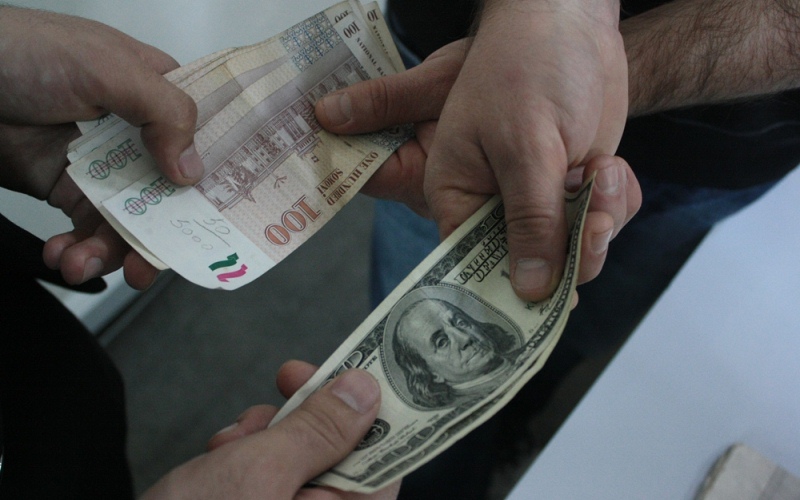
The value of the Tajik national currency, the somoni (TJS), has continued to depreciate against the U.S. dollar, registering an average official buying rate (the buying rate is the rate at which money dealers will buy foreign currency) of the dollar against the somoni 1:8.8847 on April 25, up from 1:8.280 on April 9.

Over the report period, the somoni has lost nearly 1.0 percent of its value against the U.S. dollar (at the National Bank rate).

While major commercial banks reportedly had no dollars to speak of, some smaller lenders had small amounts to go around.  They offer not more than 200.00 U.S. dollars per person.   

Recall, the National Bank of Tajikistan in December 2015 ordered the closure of all unauthorized currency exchange points in the country.  After that, only banks were able to perform foreign exchange operations. Anybody found violating this new arrangement could face jail terms of up to nine years.

Also, banks are forbidden by law from selling somoni at more than 1.5 percent the rate established by the National Bank.

Tajik central bank has ordered commercial banks to organize sale of the dollar owing to their own reserves and the currency purchased from the population.

Meanwhile, banks attribute the current dollar shortage to the fact that they now receive dollar remittances far less frequently than before.

“We give only those dollars that we receive from customers,” a source in one of banking centers told Asia-Plus in an interview.

Some experts attribute the current dollar shortage in Tajikistan to the recent sharp devaluation of the Russian ruble against the dollar.

Tajik labor migrants working in the Russian Federation now mainly send Russian rubles to their families in Tajikistan. 

Thus, the percentage in the currency structure of the last year’s remittance flows from Russian to Tajikistan was: Russian ruble – 83 percent; U.S. dollar – 16 percent; and euro – 0.1 percent.   

Join us on social media!

Article translations:

Related Article

Оби зулол
Оби зулол
Tenisi

Most Read

Коммерсбонк Точикистон

Recent Articles

RZD announces the restoration of passenger services between Moscow and Dushanbe

Direct rail services between the capitals of Russia and Tajikistan were suspended in March 2020 due to the COVID-19 pandemic.

#AP30/Stories. “Selam! Heller nichek?” How Tatars live today in Sughd province

On the 30th anniversary of "Asia-Plus," we continue to publish reports that remain relevant even after years. This story was told in 2021, and since then, little has changed in the life of the Tatar community in Tajikistan.

15,000 cameras, drones, and robots: how technology monitors pilgrims in Mecca and Medina

During Hajj 2026, Mecca and Medina were under unprecedented digital control.

Another child in Dushanbe removed from family and sent to boarding school

The Ministry of Internal Affairs reports that the parents did not pay adequate attention to the child.

Emomali Rahmon instructs to address issues in seed production following criticism of the industry

Issues have been noted with certification, seed quality, and the material and technical base of the industry.

Water, climate, and a $130 billion deficit: seven key outcomes of the Water Conference in Dushanbe

At the forum, countries and international organizations discussed new mechanisms for cooperation, investments, and technologies that are essential for addressing the global water crisis.

Eskhata Bank introduces a new generation children’s wallet

"Eshkata Bank" has created a full-fledged digital platform that helps children aged 7 to 16 learn how to manage money.