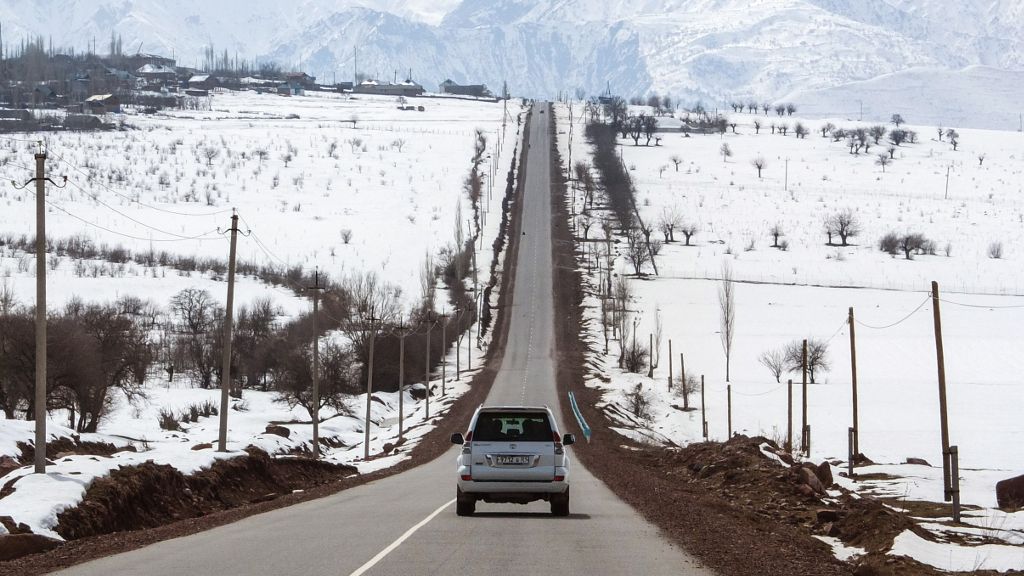
The Asian Development Bank (ADB)’s Board of Directors on May 28 approved a $90 million grant as additional financing for the rehabilitation of a 40-kilometer (km) section of the Dushanbe and Bokhtar (former Qurghon Teppa) road to improve connectivity between two major cities and economic hubs in Tajikistan and enhance the safety of the country’s highway network.
The grant, sourced from ADB’s Asian Development Fund, is under the Central Asia Regional Economic Cooperation (CAREC) Corridors 2, 5, and 6 (Dushanbe-Bokhtar) Road Project approved in October 2016, says press release issued by the ADB Tajikistan Resident Mission (TJRM).
“Road transport is central to Tajikistan’s economy and development, supporting investment, job creation, and poverty reduction in the country,” said Kamel Bouhmad, Transport Specialist at ADB’s Central and West Asia Department. “The additional financing will not only develop Tajikistan’s economic corridors through transport development, but also strengthen the government’s capacity to maintain these assets.”
The Dushanbe-Bokhtar road, which carries about 10,000 vehicles per day, is a strategic north-south link and one of the most heavily traveled roads in Tajikistan, as well as the confluence of CAREC corridors 2, 5, and 6.
The improvement of the 40-km road section from Chashmasoron to Bokhtar includes road expansion from two to four lanes, construction of new pavements and structures, and provision of well-designed facilities to address existing road safety deficiencies.
The additional financing will also support the Ministry of Transport’s program to improve the road safety situation of the national highway network, which may include existing tunnels, intersections, black spots, and failed lengths of pavement.
ADB is celebrating 20 years of development partnership with Tajikistan in 2018. To date, ADB has approved around $1.6 billion in concessional loans, grants, and technical assistance to the country. ADB and Tajikistan’s development partnership, which began in 1998, has restored and built the country’s new transport and energy infrastructure, supported social development, expanded agricultural production, and improved regional cooperation and trade.