Dortmund conference has shown that IRPT does not pose threat to Tajikistan anymore, says Tajik think tank deputy head

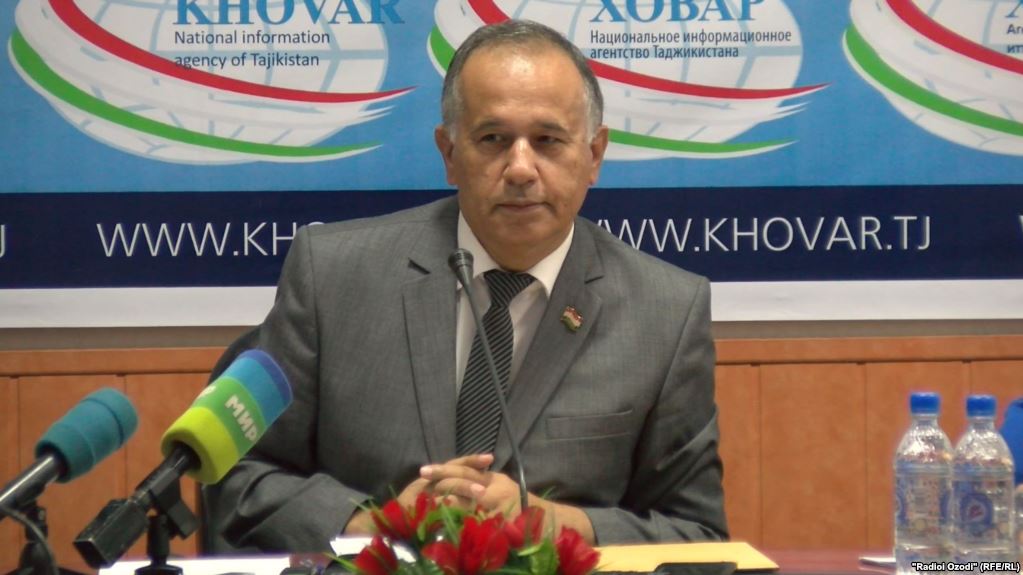
“The Dortmund conference has shown that there has been a breakup between the Islamic Renascence Party (IRPT) and other opposition organizations,” Khudoberdi Kholiqnazar, Director of the Center for Strategic Studies under the President of Tajikistan, told reporters in Dushanbe on July 30. According to him, all secular opposition organizations have stopped communicating with the IRPT.  […]

“The Dortmund conference has shown that there has been a breakup between the Islamic Renascence Party (IRPT) and other opposition organizations,” Khudoberdi Kholiqnazar, Director of the Center for Strategic Studies under the President of Tajikistan, told reporters in Dushanbe on July 30.

According to him, all secular opposition organizations have stopped communicating with the IRPT.  “This split is to Tajikistan’s good, of course,” Khudoberdi noted.

The deputy head of the Center for Strategic Studies, Saifullo Safarov, for his part, noted that the Dortmund conference had demonstrated “weakening of IRPT’s positions in the international arena.”

“These pickets and meetings organized by the IRPT cannot pose threat to Tajikistan any more.  Lasting peace and stability have been established in Tajikistan and the IRPT and other external forces cannot influence the minds and hearts of Tajikistan’s population anymore,” Safarov said.  

He further added that the Dortmund conference had been supposed to bring together more than 300 supporters of Tajik opposition, “but only 60 persons participated in that conference.”  

According to him, persons like “Hafiz Boboyorov and Dodojon Atovulloyev, who have secular views, will not cooperate with Kabiri.” 

Recall, a number of opposition activists, including IRPT leader Muhiddin Kabiri and representatives of Group 24, participated in a conference that took place in Dortmund, Germany on July 9, 2017, marking the twentieth anniversary of the signing of the Peace Accords that formally ended Tajikistan’s 1992-1997 civil war.

On July 10, 2017, Saifullo Safarov condemned the opposition activists who attended the Dortmund conference.  He stated that their attempts to unite into a coordinated opposition movement posed a “serious threat” to Tajikistan’s national security.

The IRPT was designated a “terrorist organization” by the Supreme Court of Tajikistan in 2015 and dozens of IRPT officials and members have been imprisoned since 2015. 

Before the 2015 ban, the IRPT had been the only legal Islamic party in any of the five former Soviet republics of Central Asia.

Join us on social media!

Article translations:

Related Article

Tenisi
Оби зулол
Оби зулол

Most Read

Коммерсбонк Точикистон

Recent Articles

RZD announces the restoration of passenger services between Moscow and Dushanbe

Direct rail services between the capitals of Russia and Tajikistan were suspended in March 2020 due to the COVID-19 pandemic.

#AP30/Stories. “Selam! Heller nichek?” How Tatars live today in Sughd province

On the 30th anniversary of "Asia-Plus," we continue to publish reports that remain relevant even after years. This story was told in 2021, and since then, little has changed in the life of the Tatar community in Tajikistan.

15,000 cameras, drones, and robots: how technology monitors pilgrims in Mecca and Medina

During Hajj 2026, Mecca and Medina were under unprecedented digital control.

Another child in Dushanbe removed from family and sent to boarding school

The Ministry of Internal Affairs reports that the parents did not pay adequate attention to the child.

Emomali Rahmon instructs to address issues in seed production following criticism of the industry

Issues have been noted with certification, seed quality, and the material and technical base of the industry.

Water, climate, and a $130 billion deficit: seven key outcomes of the Water Conference in Dushanbe

At the forum, countries and international organizations discussed new mechanisms for cooperation, investments, and technologies that are essential for addressing the global water crisis.

Eskhata Bank introduces a new generation children’s wallet

"Eshkata Bank" has created a full-fledged digital platform that helps children aged 7 to 16 learn how to manage money.