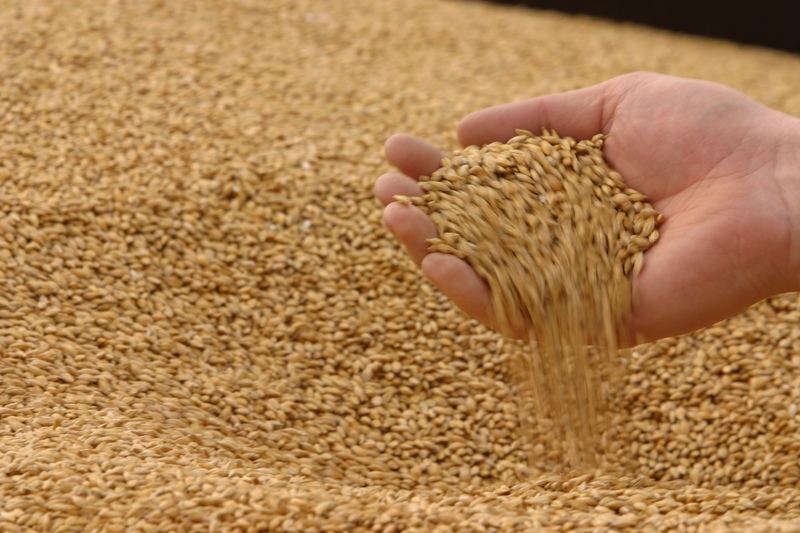
Tajikistan can be left without Kazakhstan’s wheat as the Kazakh authorities consider the possibility of abandoning grain exports and making shift to milling the whole wheat produced in Kazakhstan into flour in the country itself.
“The country is capable of increasing wheat flour production four times, that is to mill the whole wheat produced in Kazakhstan into flour in the country itself and not to export it as raw materials,” the head of the Association of Millers and Bakers of Karaganda Oblast, Dos-Mukasan Taukebayev, was quoted as saying by Forbes.kz.
Taukebayev further added that 70 percent of wheat flour produced in Kazakhstan is now exported to Afghanistan and a large amount of Kazakh wheat flour is also exported to Uzbekistan, Tajikistan and Kyrgyzstan.
According to him, Kazakhstan’s flour mills are capable to process more than 20 million tons of wheat into flour. In 2017, Kazakhstan reportedly produced 21.7 million tons of wheat.
Meanwhile, the Ministry of Industry and New Technologies (MoINT) noted in early August this year that Tajikistan is now capable of providing domestic market with own wheat flour/
Over the first six months of this year, 95.8 percent of Tajikistan's domestic demand for flour has reportedly been met through domestic production.
In January-June this year, Tajikistan has reportedly imported some 512,000 tons of wheat.
Kazakhstan provides the bulk of Tajikistan’s wheat imports. According to data from the Antimonopoly Agency under the Government of Tajikistan, Tajikistan has imported more than 500,000 tons of wheat from Kazakhstan over the report period at the rate of 169 U.S. dollars per ton.
Compared to the same period last year, wheat imports in January-June this year have increased by 15 percent or 65,000 tons.
According to the data from the Customs Service under the Government of Tajikistan, flour imports over the same six-month period have decreased by 36 percent or 10,000 tons. Tajikistan has reportedly imported some 17,000 tons of wheat flour over the first six months of this year.
Tajikistan has reportedly produced 382,000 tons of wheat flour over the report period, which is 31,900 tons more than in January-June last year.
70 companies are now engaged in delivering wheat to Tajikistan; the largest of them are Rohi Somon LTD, Davlat 2012 LTD and Somon 2017 LTD.
Meanwhile, the number of companies engaged in delivering wheat flour to country has reportedly decreased from 30 in 2017 to 24.
Last month, an average price for a 50-kilogram sack of domestic grade 1 wheat flour was 148 somoni, which is 5.2 percent fewer than in the same peiro last year. An average price for a 50-kilogram sack of Kazakh grade 1 wheat flour in September was 155 somoni.
Tajikistan annual requirements in wheat flour are 800,000 tons.