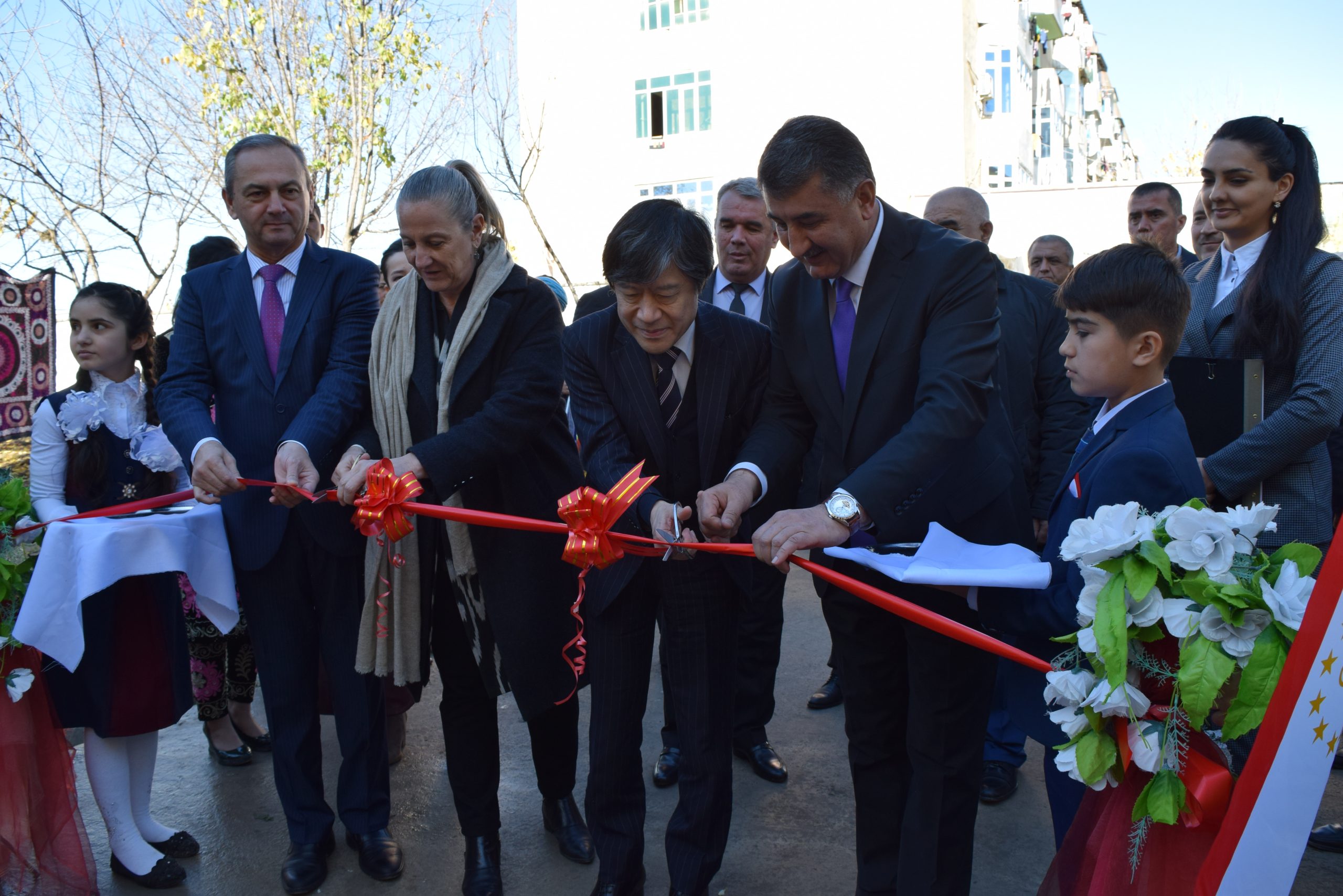
On November 29, Mr. Hajime Kitaoka, Ambassador Extraordinary and Plenipotentiary of Japan to Tajikistan, attended a handover ceremony to commemorate the successful completion of the project, Rehabilitation of the Branch of the Dushanbe Prosthetic Limbs Manufacturing and Physiotherapy Center in Kulob.
According to Japan’s Embassy in Dushanbe, the project was realized under the framework of Japan’s “Grant Assistance for Grassroots Human Security Projects (GGP)”. The Government of Japan provided the total grant amount of 81,752 U.S. dollars to the branch of Prosthetic Limbs Manufacturing and Physiotherapy Center in Kulob to increase the capacity of the center and improve the quality of the rehabilitation services for people with disabilities in Khatlon province.
Prior to the project implementation, the people with disabilities in Khatlon region reportedly had to spend more money and time in order to visit Prosthetic Limbs Manufacturing and Physiotherapy Center located in Dushanbe to get treatment and fix the prosthetic limbs. Now, the building of the branch of Prosthetic Limbs Manufacturing and Physiotherapy Center in Kulob is entirely renovated and benefits all the people with disabilities in Khatlon province who can make use of the Center’s services such as physiotherapy, manufacturing and repairing of prosthetic limbs.
During the ceremony, Ambassador Kitaoka stated that Japan’s GGP projects have been able to make a true difference by providing development assistance in the improvement of different spheres, including infrastructure, education, agriculture, health and social sectors. He also added that the projects also play a vital role in strengthening bilateral partnership between Tajikistan and Japan.
Along with the staff of the Prosthetic Limbs Manufacturing and Physiotherapy Center of Kulob and representatives of local government of Kulob, the handover ceremony was also attended by Mr. Amonullo Qudratullo, Mayor of Kulob, Mr. Shodikhon Jamshed, Deputy Minister of Health and Social Protection of Tajikistan, Ms. Claudia Azzolini, Head of ICRC Mission in Tajikistan, Mr. Qudratullo Qurbonov, Head of the Health and Social Protection Department, Mr. Sherkhon Karimov, Head of the State Enterprise Orthopedic Plant (SEOP) in Dushanbe, and Mr. Bakhtiyor Rustamov, Head of the Branch of Prosthetic Limbs Manufacturing and Physiotherapy Center in Kulob. The attendees in turn extended their words of gratitude to the Government and people of Japan for their support.
“Grant Assistance for Grassroots Human Security Project” (GGP) is a scheme within Japan’s Official Development Assistance. GGP in particular implements grassroots-level projects in various sectors throughout the Republic of Tajikistan. Recipients of GGP grants include local governments, educational and medical institutions, and NGOs. As of today, GGP has supported 389 projects in Tajikistan, for which US$ $31.5 million has been allocated since 1996.