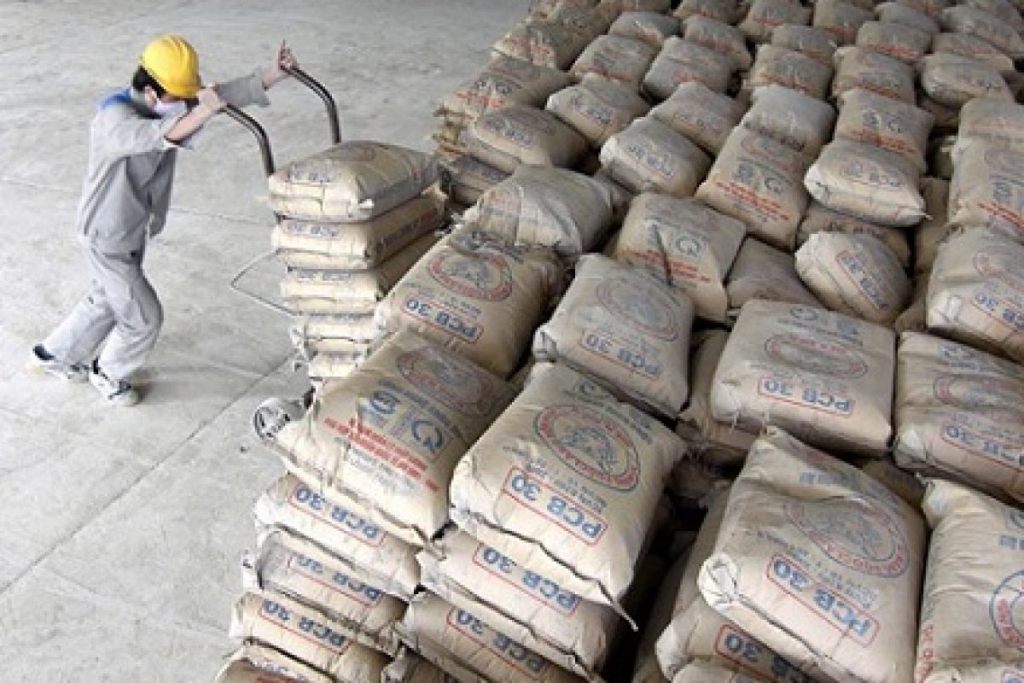
Over the first eleven months of this year, Tajikistan has exported 1.3 million tons of cement to neighboring countries, which is 40 percent of the overall volume of cement produced in the country over the report period, according to the Ministry of Industry and New Technologies (MoINT).
An official source at a MoINT says Tajikistan over the report period has exported 738,000 tons of cement to Uzbekistan, 481,000 tons to Afghanistan and 85,000 tons to Kyrgyzstan.
Tajik-Chinese joint ventures Chzhungtsai Mohir Cement, Huaxin Gayur Cement and Huaxin Gayur Sughd Cement reportedly accounted for 35.7%, 33% and 27.2% of Tajikistan’s cement exports in the first eleven months of this year, respectively.
In 2016, Tajikistan exported only little more than 282,000 tons of cement.
Tajikistan began exporting cement to neighboring countries in 2015 and it exported only some 500 tons of cement in that year.
In January-November this year, Tajikistan has reportedly produced 3.5 million tons of cement. In 2017, Tajikistan produced 3.1 million tons of cement.
Tajik-Chinese joint ventures Chzhungtsai Mohir Cement, Huaxin Gayur Cement, and Huaxin Gayur Sughd Cement accounted for 30.5%, 28.6% and 25.8% of the local production in the first eleven months of this year.
Dushanbe-based cement plant (Tojik Cement) accounted for only 6.4 percent of the local production over the same eleven-month period.
Tajikistan now has 13 cement plants with a total production capacity of 4.7Mt/yr.
Tajikistan has increased production of cement significantly in recent years due to launching new Tajik-Chinese joint ventures. Over the last eight years, production of cement has increased in Tajikistan nearly ten times.
Meanwhile, such achievements of Tajikistan’s industry evoke concern of ecologists, who consider that excessive increase in cement production may cause irreparable harm to the country’s environment.
According to them, more polluting plants in China are forced to shut down or pay the costs of environmental damage in the wake of new laws and a crackdown on pollution. Cement is one of the world’s most polluting industries, and therefore, Chinese producers have moved excess capacity offshore. The Chinese cement plants mainly use coal for their fuel. The companies reportedly claim that their plants are using advanced environmental and energy saving technology, without specifying exact standards.