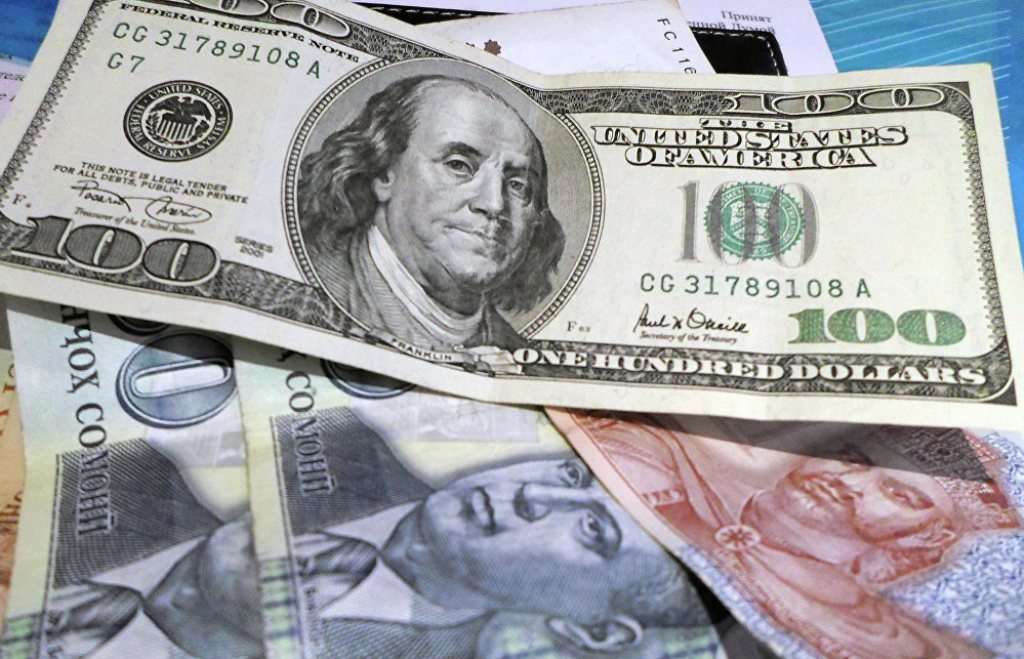
The Tajik national currency, the somoni (TJS), lost 6.9 percent of its value against the dollar (USD) in a year to December 31, 2018.
An official USD/TJS exchange rate set by the National Bank of Tajikistan (NBT) increased from 1:8.8190 on January 1, 2018 to 1:9.4296 on December 31, 2018.
The NBT analysts have attributed the fall in the exchange rate of TJS against USD to negative balance of the country's foreign trade turnover (more than 1 billion USD), expansion of production and commercial activities, increase in currency expenditures on construction of strategic facilities as well as impact of seasonal factors.
The Tajik authorities forecast that in 2019 the Tajik national currency will lose not more than 3.0 percent of its value against the dollar. And the USD/TJS exchange rate will be 1:9.7 by the end of the next year.
The Euro/TJS exchange rate this year has risen 2.1 percent, from 1:10.5766 on January 1, 2018 to 1:10.8007 on December 31, 2018.
Meanwhile, the exchange rate of the Russian ruble (RR) against the Tajik national currency has dropped 11 percent this year, from 1:0.1524 on January 1, 2018 to 1:0.1356 on December 31, 2018.
It is to be noted, that Tajik labor migrants working in Russian Federation now send mostly Russian rubles to banks in Tajikistan.
According to data from Russia’s central bank, 1.938 billion U.S. dollars have been sent through money transfer system to Tajikistan from Russia over the first nine months of this year, which was 3.4 percent or 63 million U.S. dollars more than in the same period last year (in January-September last year, 1.875 billion U.S. dollars were sent to Tajikistan from Russia through money transfer system).
Physical entities have reportedly remitted US$487 million from Russia to banks in the first quarter, 672 million U.S. dollars in the second quarter and 779 million U.S. dollars in the third quarter.
Tajik central bank says the percentage in the currency structure of the report period’s remittance flows from Russian to Tajikistan was: Russian ruble – some 90 percent; U.S. dollar – more than 9 percent; and euro – 0.1 percent.