Record amount of gold produced by Tajikistan last year

Tajikistan produced a record amount of gold in 2018 – more than 6.4 tons. According to the Ministry of Industry and New Technologies (MoINT), Tajikistan last year produced gold 16.9 percent more than in 2017.  The ministry refrains from disclosing the actual amount of gold produced in the country last year. Meanwhile, the Minister of […]

Tajikistan produced a record amount of gold in 2018 – more than 6.4 tons.

According to the Ministry of Industry and New Technologies (MoINT), Tajikistan last year produced gold 16.9 percent more than in 2017.  The ministry refrains from disclosing the actual amount of gold produced in the country last year.

Meanwhile, the Minister of Industry and New Technologies, Shavkat Bobozoda, told reporters in Dushanbe on February 13 last year that Tajikistan produced 5,500 kilograms in 2017, which was 11.2 percent more than in 2016.  Bobozoda noted that it is planned to increase gold production in 2018 by 20 percent compared to 2017.  

“Over the last four years, an average annual gold production growth rate has amounted to more than 20 percent,” Bobozoda added. 

Proceeding from the fact that Tajikistan produced 5.5 tons of gold in 2017, one can calculate that more than 6.4 tons of gold were produced in the country last year.  

An official source at a MoINT notes that Tajikistan has created favorable conditions for investment in the country’s gold production sector.

Recall, Tajikistan produced 5,000 kilograms of gold in 2016.  In 2015, Tajikistan produced about 4,200 kilograms of gold, which was nearly 32 percent more than in 2014.  In 2014, Tajikistan produced about 3,200 kilograms of gold.

Tajikistan has 137 deposits with estimated reserves of industrial gold and 127 deposits of non-industrial gold.  Tajikistan plans to increase annual production of gold to 17 tons beginning on 2022.

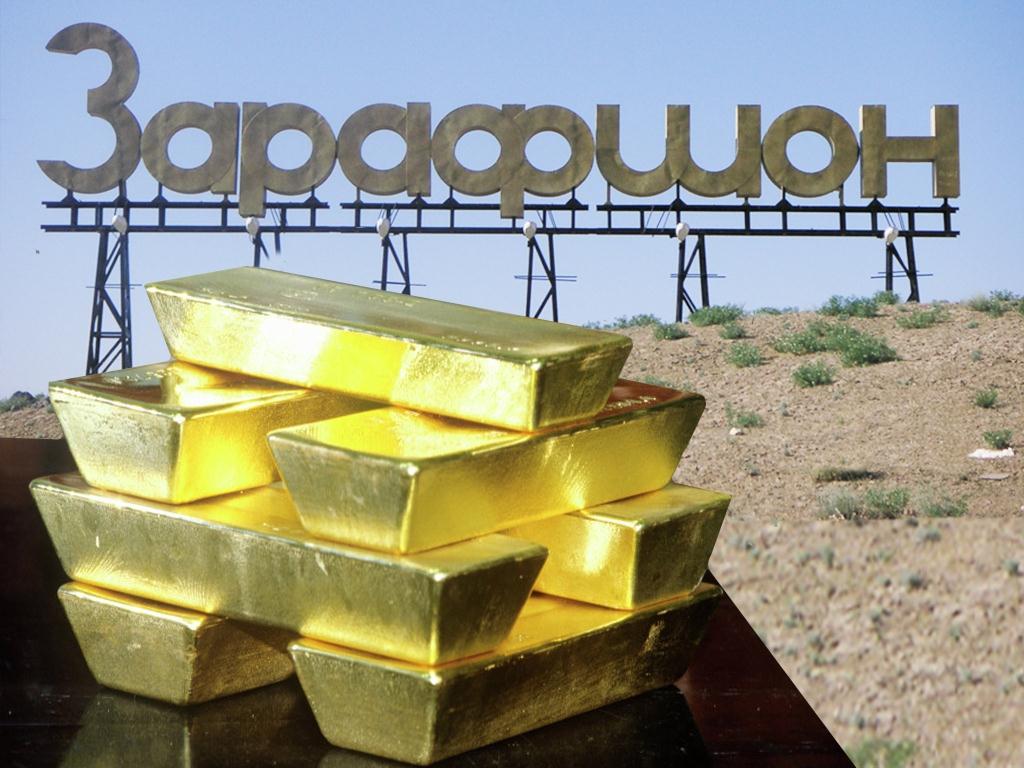
Four large gold mining companies now operate in Tajikistan: Tilloi Tojik; Tajik-Chinese JV Zarafshon; Tajik-Canadian JV Aprelevka; and China Nonferrous Gold Limited, which is the first foreign company to obtain 100% ownership of a mining and exploration project in Tajikistan.  Besides, enterprises such as Odina, Nazira, Ganj, Barakat and Istiqlol are engaged in gold production in the country.

Most of gold comes from the Jilau deposit operated by Tajik-Chinese joint venture, Zarafshon, which reportedly accounts for more than 70 percent of the total amount of gold produced in Tajikistan.       

Join us on social media!

Article translations:

Related Article

Оби зулол
Tenisi
Оби зулол

Most Read

Коммерсбонк Точикистон

Recent Articles

RZD announces the restoration of passenger services between Moscow and Dushanbe

Direct rail services between the capitals of Russia and Tajikistan were suspended in March 2020 due to the COVID-19 pandemic.

#AP30/Stories. “Selam! Heller nichek?” How Tatars live today in Sughd province

On the 30th anniversary of "Asia-Plus," we continue to publish reports that remain relevant even after years. This story was told in 2021, and since then, little has changed in the life of the Tatar community in Tajikistan.

15,000 cameras, drones, and robots: how technology monitors pilgrims in Mecca and Medina

During Hajj 2026, Mecca and Medina were under unprecedented digital control.

Another child in Dushanbe removed from family and sent to boarding school

The Ministry of Internal Affairs reports that the parents did not pay adequate attention to the child.

Emomali Rahmon instructs to address issues in seed production following criticism of the industry

Issues have been noted with certification, seed quality, and the material and technical base of the industry.

Water, climate, and a $130 billion deficit: seven key outcomes of the Water Conference in Dushanbe

At the forum, countries and international organizations discussed new mechanisms for cooperation, investments, and technologies that are essential for addressing the global water crisis.

Eskhata Bank introduces a new generation children’s wallet

"Eshkata Bank" has created a full-fledged digital platform that helps children aged 7 to 16 learn how to manage money.