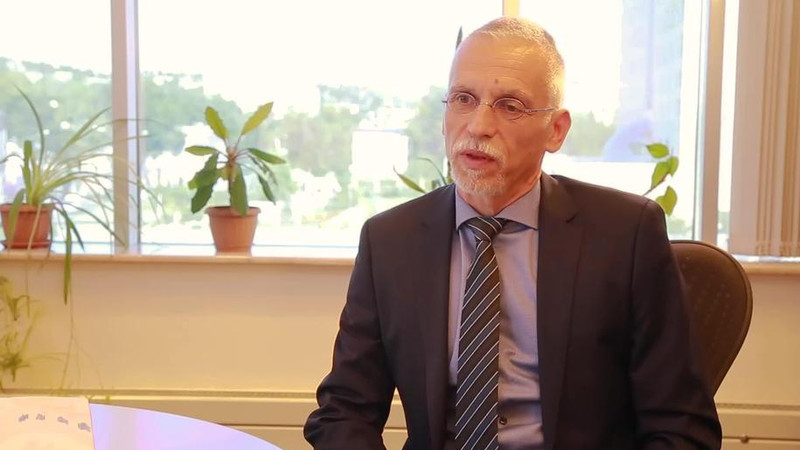
The Credit Registry was officially launched at the Ministry of Justice on February 1. Congratulating Tajikistan on this event, Mr. Jan-Peter Olters, World Bank Country Manager for Tajikistan, in particular said that with the implementation of reforms to permit for a modern secured transaction system, comprised in a set of nine laws, Tajikistan is leading efforts among countries in the former Soviet Union to incorporate a functional approach to secured transactions.
By applying operational rather than legal principles, banks will be helped in enforcing collaterals and firms benefit from being able to broaden the types of moveable assets that they can pledge, Mr. Olters noted.
In essentially every dynamic, innovative economy, small and medium-sized enterprises, and especially start-ups, tend to finance their investments through bank credits. Rejected credit applications, or prohibitively high interest rates, constrain a firm’s—and, ultimately, a country’s—growth opportunities,” the World Bank official said.
According to him, principally two factors lead to such a situation, viz., (i) a narrow deposit base, partly the result of a narrow private sector unable and/or insufficiently confident to develop its potential; and (ii) a high risk premium placed on any loan by commercial banks. The latter factor has, in principal, to root causes: First, banks find it very difficult to enforce credit contracts in instances of default, unable to sell collaterals within a reasonable time span. Second, companies are constrained in their ability to provide collaterals, principally tied to the ownership of land and real estate. Especially new—and these are often the most innovate—firms often cannot fall back on immovable property as guarantee for a loan application.
As such, this reform reportedly represents a critical building block in efforts to facilitate borrowing opportunities for SMEs, to reduce the implicit risk premium that banks have to place on credits, and to initiate a virtuous cycle of lower risks, increased access to credits, increased investments, an accelerated rate of innovation, higher profits (net of taxes), and increased deposit base, lower interest rates, increased supply of credits to the economy.
Mr. Olers noted that Tajikistan has taken an important step towards providing banks and firms with an environment that encourages investment, innovation, and employment generation, while providing additional incentives and encouragement to similarly successful reforms in other areas currently holding back the private sector’s ability to be successful both in domestic markets and the newly accessible, very large and underserviced market in the direct neighborhood.
Since 2012, the World Bank has worked closely with Tajikistan, under the umbrella of the Private Sector Competitiveness Project, to support Tajikistan in financing a modern, online, notification based collateral registry—in itself the tool to operationalize the legal reforms that are the subject of today’s event. In support, the IFC’s technical assistance project, the Azerbaijan Central Asia Financial Infrastructure Project, with generous support from the Government of Switzerland, critical to the ability of reaching this milestone, has supported the necessary legal reforms.