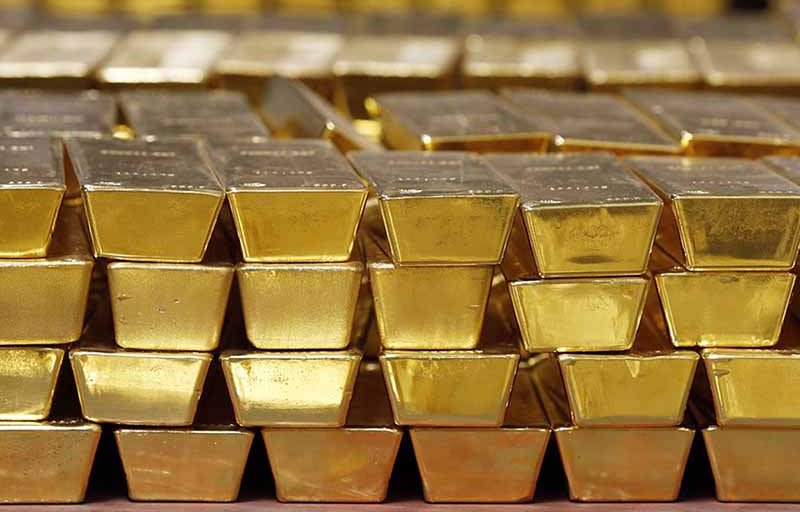
Tajikistan’s gold-an-currency reserves currently cover 4.9 months of imports, the head of the National Bank (NBT) of Tajikistan, Jamshed Nourmahmadzoda told reporters in Dushanbe yesterday.
He refrained from disclosing the volume of the country’s gold-and-currency reserves. He just said that they had increased 2.4 times over the past four years.
Last year, an average monthly volume of Tajikistan’s imports amounted to 262 million U.S. dollars.
Meanwhile, the Forecast of Tajikistan’s Monetary Policy for 2019 and Medium-Term Period, in particular, says the country’s gold-and-currency fell nearly 5 percent in a year to September 30, 2018.
The decrease in Tajikistan’s gold-and-currency reserves attributes to the fall in the international gold prices.
The Forecast notes that the country’s international reserves decreased from 5.5 months of import cover on September 30, 2017 to 4.7 months of import cover on September 30, 2018.
Recall, a report by the World Bank, Tajikistan: Heightened Vulnerabilities, Despite Sustained Growth, notes that international reserves held by the National Bank of Tajikistan rose sharply in the first nine months of 2017 to 5.6 months of import cover, but this was largely the result of one-off effects and not indicative of a sustained improvement in economic fundamentals. The surge in reserves came primarily at the cost of debt accumulation, reflecting a US$500 million Eurobond issuance in September.
According to the report, the reserves were also supplemented by the acquisition of monetary gold through domestic currency issuances and foreign exchange purchases facilitated by administrative measures. In the medium-term, reserve levels are reportedly expected to gradually moderate as imports recover and construction of the Roghun hydroelectric power plant (HPP) accelerates.
Import cover is an important indicator of the stability of a currency. It measures the number of months of imports that can be covered with foreign exchange reserves available with the central bank of the country.