FAO and the European Union support the Ministry of Agriculture in launching an institutional reform as part of the Government’s program.
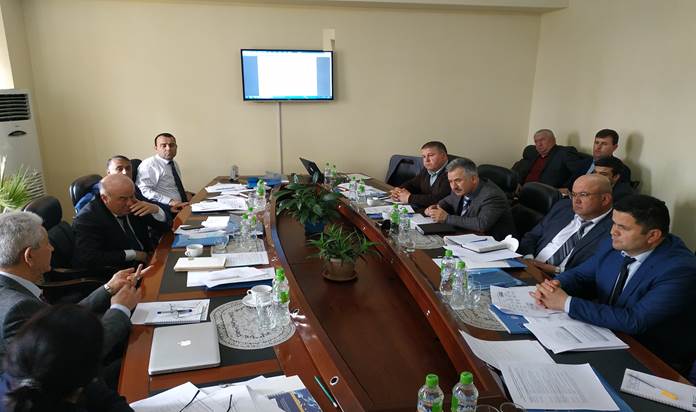
Last week, the Ministry of Agriculture’s Technical Working Group, devoted to optimizing and strengthening the effectiveness of the agrarian sector management, held a meeting.
During the two-day workshop, the Ministry of Agriculture, with technical support of FAO and the European Union, reviewed leading approaches in the sector administration and the possibility of introducing public-private partnerships modalities, according to FAO Country Office in Tajikistan.
Participating experts reportedly discussed the possibility of replicating other countries’ experience in this area in Tajikistan.
The agricultural reform, launched by the Government of Tajikistan in 2012, is aimed at ensuring the prerequisites for enhancing the profitability of agricultural production, increasing investments in the sector and, as a result, the improving food security in the country.
“FAO supports the Government in the preparation for the reform’s core institutions, and ultimately strengthen the agricultural sector’s administration, enable quality professional services, and encourage private sector investments,” said Oleg Guchgeldiyev, FAO Representative in Tajikistan.
“The proposed institutional reform that was developed during the workshop, reflects national policies, strategies and agriculture reform priorities as in the Agriculture Reform Program 2012-2020,” said Kuvat Bapaev, FAO senior technical adviser. “It should also contribute to the provision of technical assistance in boosting operations of the Agrarian Reform Secretariat, and launching improved coordination mechanisms among key players in the agriculture sector.”
Activities related to the institutional reform are part of the project, Strengthening Institutions and Capacity of the Ministry of Agriculture and State Veterinary Inspection Service for Policy Formulation, which is funded by the European Union. The main objective of the project is to assist the government in institutional reforms of the agricultural sector, including food safety and security.