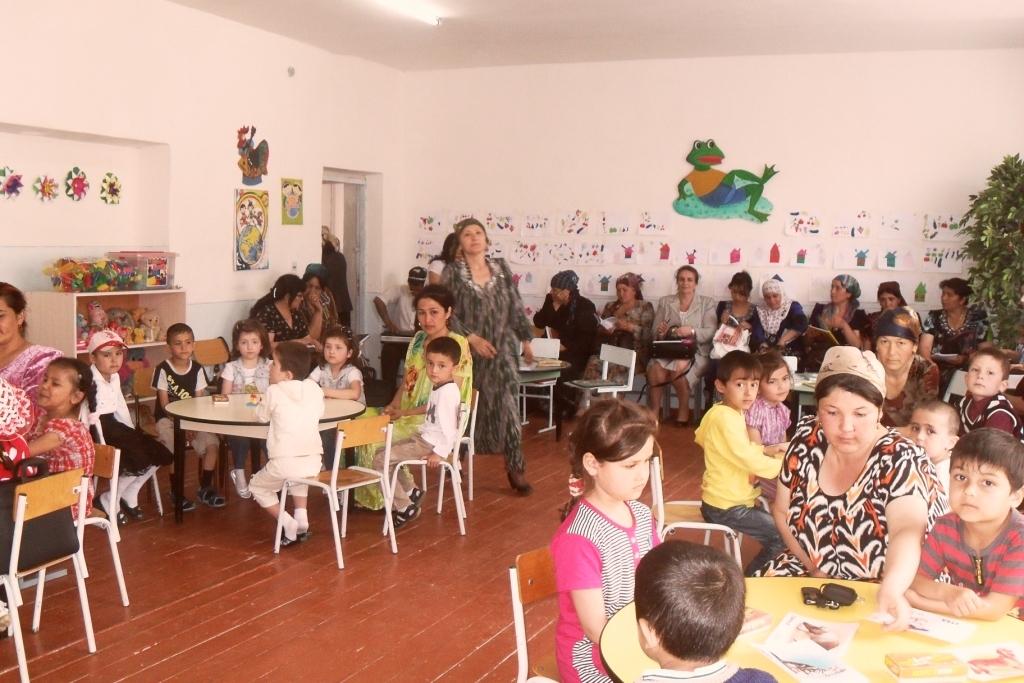
Investing in early childhood development is critical to boosting Tajikistan’s human capital and future labor force productivity, said experts at an international workshop in Dushanbe on March 14.
With the youngest and fastest growing population in Central Asia, it is important for Tajikistan to ensure that all children are well-nourished and intellectually stimulated, both at home and at school, so they can become productive adults in an increasingly competitive and integrated global economy.
A coordinated national approach for early childhood development (ECD) programs in Tajikistan was the focus of discussions at a March 14 workshop, organized by the Government of Tajikistan and the World Bank, in collaboration with development partners, the UN, civil society representatives and international experts.
“We are encouraged by Tajikistan’s efforts to take a holistic approach to ECD development, aimed at benefitting today’s children and tomorrow’s work force,” said Jan-Peter Olters, World Bank Country Manager for Tajikistan, “Improving school readiness, educational outcomes, and physical and mental health will lead to more productive and healthy adolescents and adults.”
Research shows that investments in the early years of children’s lives are among the most cost-effective ways a country can cultivate a productive workforce. Early childhood development—the physical, cognitive, linguistic, and socio-emotional development of a child from conception up to primary school—is the most crucial period for brain development, laying the foundation for health, cognitive capacity, and productivity in later life. Indeed, each additional dollar invested in dedicated programs for early childhood development will yield a return of between $6 and $17.
Effective interventions to support early childhood development include pre-natal care for pregnant women, adequate nutrition and growth monitoring, vaccinations, accessible early learning opportunities (including preschool education), clean water and good sanitation, and parental stimulation. As these interventions cross a range of sectors, a coordinated national approach is crucial to success. In 2014, 68 countries around the world had national multi-sectoral programs on early childhood development.
Tajikistan made progress in reducing poverty between 2000 and 2017: poverty rates dropped from 80% to below 30% of the population. However, the World Bank finds that resources currently dedicated to early childhood development in Tajikistan are not yet sufficient. For instance, 17% of children under five years of age are stunted, and only one in 10 children aged three to six years benefits from early learning programs.
The World Bank’s Human Capital Index has shown that a child born today in Tajikistan is expected to be 53% as productive as he or she could be growing up with complete education and full health.
The World Bank is currently finalizing diagnostic reports on early childhood development in Tajikistan. The findings, along with feedback from today’s workshop, will be used to develop a $40 million project to support national efforts to strengthen early childhood development in the country.
The World Bank’s active portfolio in Tajikistan includes 16 projects, with net commitments of $625 million. The World Bank remains committed to supporting Tajikistan as it strives to improve the lives of its people and meet the aspirations of its young and growing population.