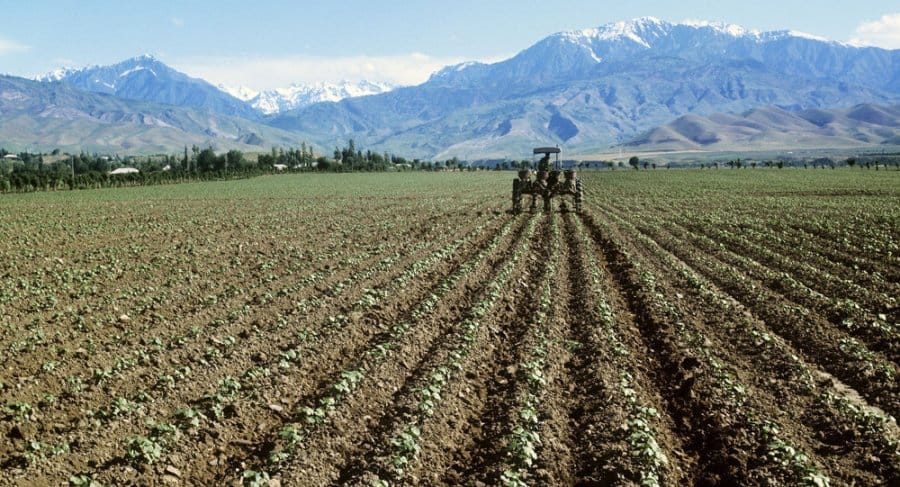
Tajikistan is an agrarian country and agricultural finance has a good potential to develop here, Farrukh Karimboyev, Agri-finance Expert at IFC Tajikistan told Asia-Plus in an interview.
According to him, small farming units could be profitable and of interest to banks and microfinance organizations for providing loans to them.
“Agricultural lending is a promising direction and it could be profitable both to creditors and farmers. However, there are obstacles both on the part of creditors and farmers,” Karimboyev noted
While considering farming units’ applications for loans, financial institutions usually analyze historical data that is a good practice.
“However, there ought to pay more attention to analysis of monetary flows and future profitability of a farm in order to determine its potential to serve debt (requested loan). Financial institutions should develop strategy, products and tools of analysis taking into consideration specifics of the agrarian sector and provide loans by tranches wit flexible schedule of repayment of loan,” the expert said.
Karimboyev noted that one of key factors of success in getting a loan is a business plan or strategy of development for the coming years offered by a farmer.
Meanwhile, according to data from the National Bank of Tajikistan (NBT), micro loans for financing agrarian sector last year accounted for nearly 25 percent of the whole Tajikistan’s loan portfolio.
Agricultural finance is a sectorial concept that comprises financial services for agricultural production, processing, and marketing. It includes short, medium, and long-term loans, leasing, savings, payment services, and crop and livestock insurance.
Financial institutions (FIs) must look at agricultural finance holistically; as the full range of activities involved in getting a product or service through different phases of production and delivery to the final consumer. This can help FIs keep a market-oriented view to target productive investments in areas that need them most. Further, approaching agricultural finance from a value chain perspective allows FIs to provide a wider range of products to a wider range of actors beyond farmers and producers who may be more geographically dispersed and harder to reach.