Cross-border trade promotes sustainability of small and medium-sized enterprises

Zaydulo Junaydov, Tajik expert on issues of border and economic cooperation and trade, notes that supporting development of business in border areas and development of cross-border trade is one of priority tasks of the Project for Livelihood Improvement in Tajik-Afghan Cross-Border Areas (LITACA II). The project is being implemented by the Ministry of Economic Development […]

Zaydulo Junaydov, Tajik expert on issues of border and economic cooperation and trade, notes that supporting development of business in border areas and development of cross-border trade is one of priority tasks of the Project for Livelihood Improvement in Tajik-Afghan Cross-Border Areas (LITACA II).

The project is being implemented by the Ministry of Economic Development and Trade of Tajikistan and the Ministry of Rural Rehabilitation and Development of Afghanistan jointly with UNDP.  

The project objective is in improving livelihoods and resilience of communities in the bordering areas and improving population’s access to cross-border trade, dialogue and partnership, including involvement of vulnerable groups of the population and women.  

Economic relation between Tajikistan and Afghanistan have been implemented in the framework of a trade agreement that was ratified on September 13, 2004.    

Besides, a number of significant projects has been planned: a trilateral agreement between Tajikistan, Afghanistan and Pakistan on trade and transit; implementation of CASA 1000 Project; construction of railway connecting Tajikistan, Afghanistan and Turkmenistan; and establishment of new border crossing points (BCPs);   

The two-way trade between Tajikistan and Afghanistan last year valued at 72.2 million U.S. dollars.  This consisted of Tajikistan’s exports to Afghanistan estimated at 71.1 million U.S. dollars and Tajikistan’s imports from Afghanistan worth 1.1 million U.S. dollars.         

Tajikistan mainly exports cement, vegetable oil, electricity and iron and steel wares.  Imports from Afghanistan include fruits and vegetables, home appliances and soft drinks.  

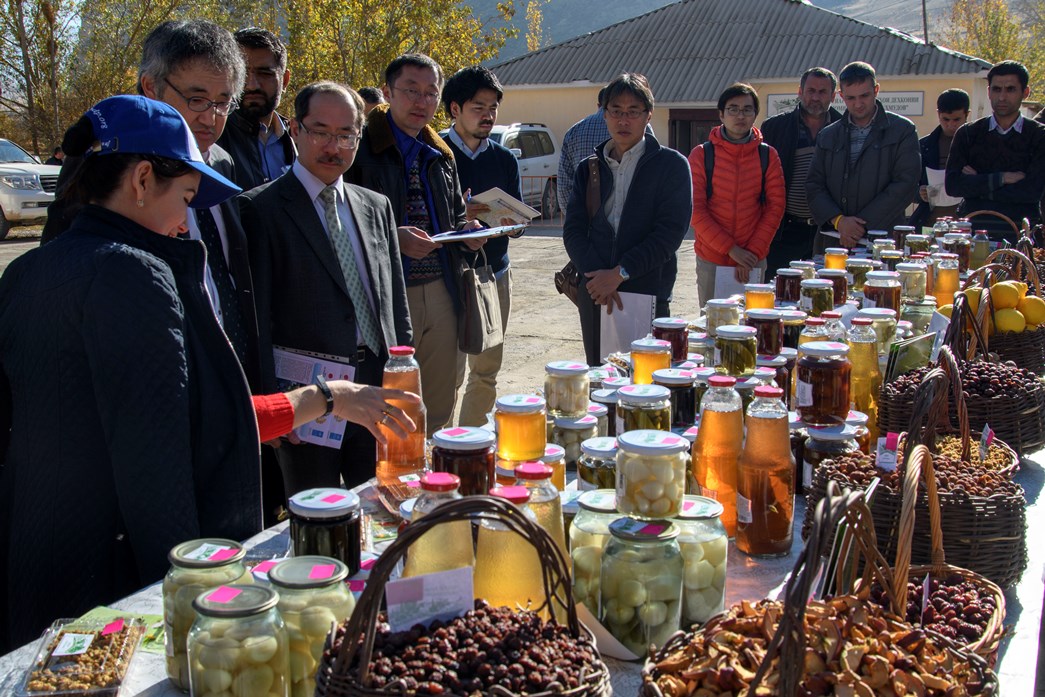
In October 2018, an exhibition of goods of Tajik and Afghan entrepreneurs took place in Bokhtar, the capital of the Tajik southern Khatlon province.  28 entrepreneurs from Khatlon and 17 entrepreneurs from Afghan Badakhshan, Takhar, Kunduz and Balkh provinces participated in the exhibition.  On the sidelines of the exhibition, Tajik and Afghan entrepreneurs signed 45 agreements worth 975,000 U.S. dollars.  Implementation of these agreements is planned to be completed before October 2020. 

Join us on social media!

Article translations:

Related Article

Оби зулол
Оби зулол
Tenisi

Most Read

Коммерсбонк Точикистон

Recent Articles

RZD announces the restoration of passenger services between Moscow and Dushanbe

Direct rail services between the capitals of Russia and Tajikistan were suspended in March 2020 due to the COVID-19 pandemic.

#AP30/Stories. “Selam! Heller nichek?” How Tatars live today in Sughd province

On the 30th anniversary of "Asia-Plus," we continue to publish reports that remain relevant even after years. This story was told in 2021, and since then, little has changed in the life of the Tatar community in Tajikistan.

15,000 cameras, drones, and robots: how technology monitors pilgrims in Mecca and Medina

During Hajj 2026, Mecca and Medina were under unprecedented digital control.

Another child in Dushanbe removed from family and sent to boarding school

The Ministry of Internal Affairs reports that the parents did not pay adequate attention to the child.

Emomali Rahmon instructs to address issues in seed production following criticism of the industry

Issues have been noted with certification, seed quality, and the material and technical base of the industry.

Water, climate, and a $130 billion deficit: seven key outcomes of the Water Conference in Dushanbe

At the forum, countries and international organizations discussed new mechanisms for cooperation, investments, and technologies that are essential for addressing the global water crisis.

Eskhata Bank introduces a new generation children’s wallet

"Eshkata Bank" has created a full-fledged digital platform that helps children aged 7 to 16 learn how to manage money.