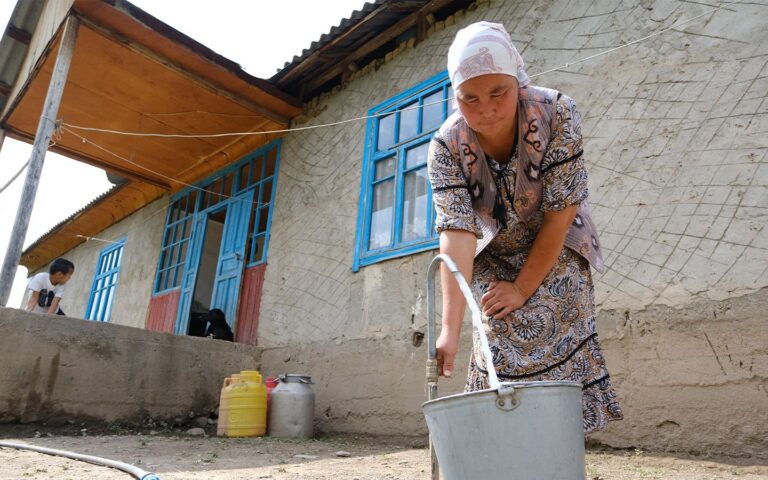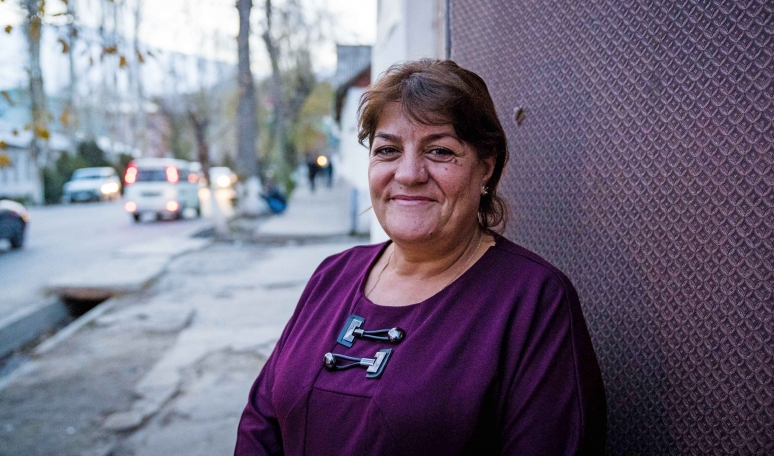
Once a simple housewife in a small village, Rukhshod is now director of a national micro-lending organization (MLO) in Tajikistan, with five branches across three regions, according to an article posted on the Aga Khan Development Network (AKDN)’s website.
Rukshod’s journey into this position reportedly began when she became the manager of the women’s committee of a small village organization. Her natural ability to engage community members to ensure all voices were heard gained her early respect and recognition amongst her peers. In 2007, when several village organizations in her area merged into a federation, Rukhshod was selected to lead it, and thrived doing so. Four years later, in 2011, Rukhshod was appointed director of the regional MLO ‘’Rushdi Pomir”. Thanks to Economic and Social Connections: A Multi-Input Area Development Financing Facility for Tajikistan (ESCoMIAD), a joint project of the Aga Khan Foundation (AKF) and the U.S. Agency for International Development (USAID), Rukhshod received trainings in business planning, financial statement analysis and cash management that enabled her to excel in this role. Her background in economics also paved the way for quick absorption of the material.
Over the last few years, ESCoMIAD has reportedly made significant strides in developing the capacity of staff like Rukhshod, while also strengthening MLOs to create an environment that makes financial services accessible to low-income, rural households.
In recent years, funds from village organizations began to implement local development initiatives. In 2004, a new law in Tajikistan required that all informal lending be formalized to improve accountability, thereby establishing the micro-lending organization, or MLO, in the country. Further regulations since then have increased the threshold base of capital required, as well as security and recordkeeping measures.
To ensure access to quality financial services in rural and remote areas, in 2016 AKF supported the merging of five MLOs in three regions of Tajikistan where it operates, forming one national MLO “Rushdi Kuhiston”. The MLOs grew out of governance structures of the village organizations, and eventually became their own entities owned by the community as shareholders. Trainings, improved financial systems and new loan products tailored to local needs have ensured the consolidated MLO adapts to a changing regulatory environment and economic circumstances.
In 2016, the MLO Rushdi Kuhiston’s headquarters was established in Khorog, where Rukhshod is now based as the national director. Since then, US$ 1.5 million in loans has been distributed, supporting household consumption and small business investments. Most noteworthy, the organization is financially sustainable and returning dividends to the communities’ shareholders. New innovations have also been introduced: all branches are now operating with a secure, real-time connection to an integrated banking software, allowing offices as far as remote border areas near Afghanistan to record updates on new loans and repayments.
Like other MLOs supported by ESCoMIAD, MLO Rushdi Kuhiston takes a community-based approach to financial access. It is, in essence, a financial institution with a local face.
Filling a gap in financial services, the MLOs, combined with the support of the village organizations, enhance the resilience of communities in the region.
By supporting local economies and local people, ESCoMIAD is expanding access to social and financial opportunities. Greater access to finance, especially, will make a sustainable difference in the lives of people in Tajikistan, helping them meet their own needs and develop their communities.