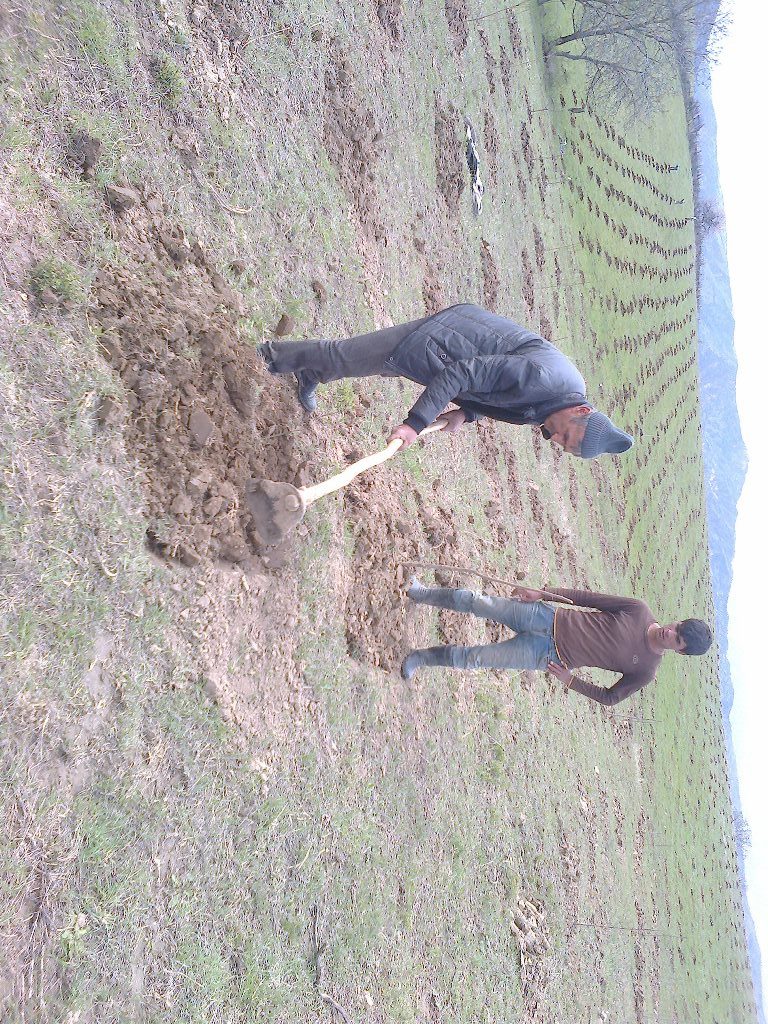
Adaptation to Climate Change through Sustainable Forest Management Project has concluded in Tajikistan.
The implementation of the project has ended with handover of heavy machinery – excavators and bulldozers – to the state-run forest management agencies in the Khovaling and Farkhor districts of the Khatlon province and the Vanj district of the Gorno Badakhshan Autonomous Region (GBAO)/
The project has been implemented in the country by the Forestry Agency under the Government of Tajikistan and the German Development Bank (KfW)’s Office in Tajikistan since 2014.
The funds for implementation of this project have been provided by the German Government through the Energy and Climate Fund (EKF).
Tajikistan is among the Asian countries most severely affected by climate change. This is evident from the growing incidence of natural disasters, such as landslides, floods and drought, and a general decline in the availability and quality of water. Following the collapse of the Soviet Union, large areas were deforested to meet the need for fuelwood. This now makes the country more vulnerable to climate change and exacerbates its negative impacts.
Forests play a key role in the lives of Tajikistan’s rural population. Firewood, fodder, medicinal plants, fruit and nuts can be sold locally at a profit and represent an important source of income. Forests also perform an essential function in regulating the water balance and providing protection against natural disasters. Rehabilitating and protecting forests is therefore of vital importance in the process of adapting to climate change.
The main objective of the project is in protecting and rehabilitating forests and ensuring that they are used sustainably.
The project has built on successful experiences with collaborative forest management in several regions of Tajikistan. The focus was on supporting the forest agency, forest enterprises and their staff. Vocational training measures for foresters were developed and carried out. The project has worked with forest enterprises and authorities on analyzing their operating processes with a view to increasing their efficiency, self-reliance and transparency. Moreover, the project has supported the development and introduction of a monitoring system that enables local forest enterprises to plan and monitor their activities more effectively (including joint forest management — JFM). JFM has been successfully introduced and adapted to the needs of six communities with different forest types.