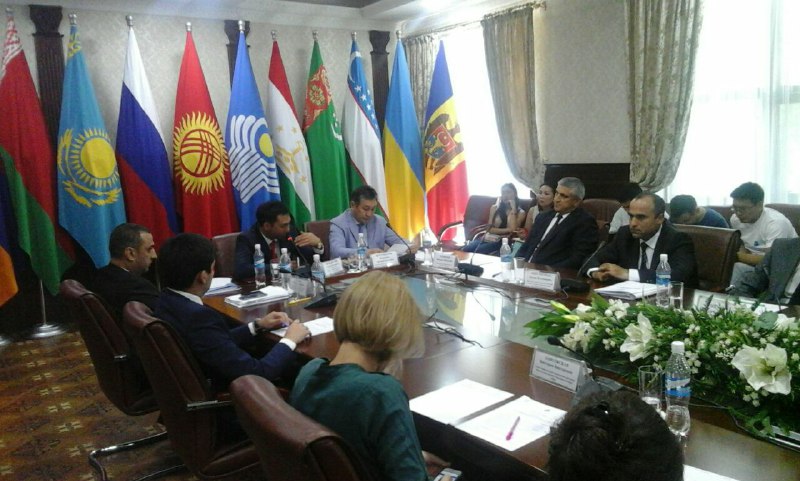
The issue of establishing the CIS annual tourism fair is being discussed at a two-day session of the CIS Council for Tourism that kicked off in the Uzbek city of Samarqand today.
According to the CIS Executive Committee, the session participants are discussing the process of implementation of the Plan of Actions on the implementation of the Tourism Cooperation Expansion Strategy designed for the period until 2020 and the draft Strategy for Expansion of Tourism Cooperation designed for 2021-2030.
They will also discuss an initiative to create a so-called “silk visa” for entry to Kazakhstan, Kyrgyzstan, Tajikistan, Turkmenistan and Uzbekistan.
Besides, the session participants will discuss Uzbekistan’s proposal to establish the CIS annual tourism fair and experience of Belarus in providing tourism opportunities and promoting tourism products ahead of large international sports events (the 2nd European Games Minsk 2019).
Established in 1994, the CIS Council on Tourism now comprises representatives of Azerbaijan, Armenia, Belarus, Kazakhstan, Kyrgyzstan, Moldova, Russia, Tajikistan, Ukraine and Uzbekistan.
The Council is engaged in formulating a common strategy for tourism development in the CIS countries and coordinating implementation of the tourism policy.
Established on December 8, 1991 after the dissolution of the Soviet Union, the Commonwealth of Independent States (CIS) is a regional organization. Its member nations now include Azerbaijan, Armenia, Belarus, Kazakhstan, Kyrgyzstan, Moldova, Russia, Tajikistan, Turkmenistan, Ukraine and Uzbekistan. Turkmenistan became an associate member of the CIS in August 2005. Georgia pulled out of the organization in 2009.
Although Ukraine was one of the founding countries and ratified the Creation Agreement in December 1991, it practically stopped participating in 2018. It now takes part in CIS “on selective basis.” On May 19, 2018, President Petro Poroshenko signed a decree formally ending Ukraine's participation in CIS statutory bodies. Since September last year, Ukraine has had no representatives in the CIS Executive Committee building. Ukraine has stated that intends to review its participation in all CIS agreements, and only continue in those that are in its interests.