Tajikistan has the lowest suicide rate in Central Asia but it appears to be trending upwards

A 30-year literature review on suicide in Central Asia was presented at a Public Lecture organized by the University of Central Asia’s Cultural Heritage and Humanities Unit (CHHU) in Dushanbe on July 3, according to press release issued by the University of Central Asia (UCA). The lecture on Suicide in Central Asia: A Systematic Study […]

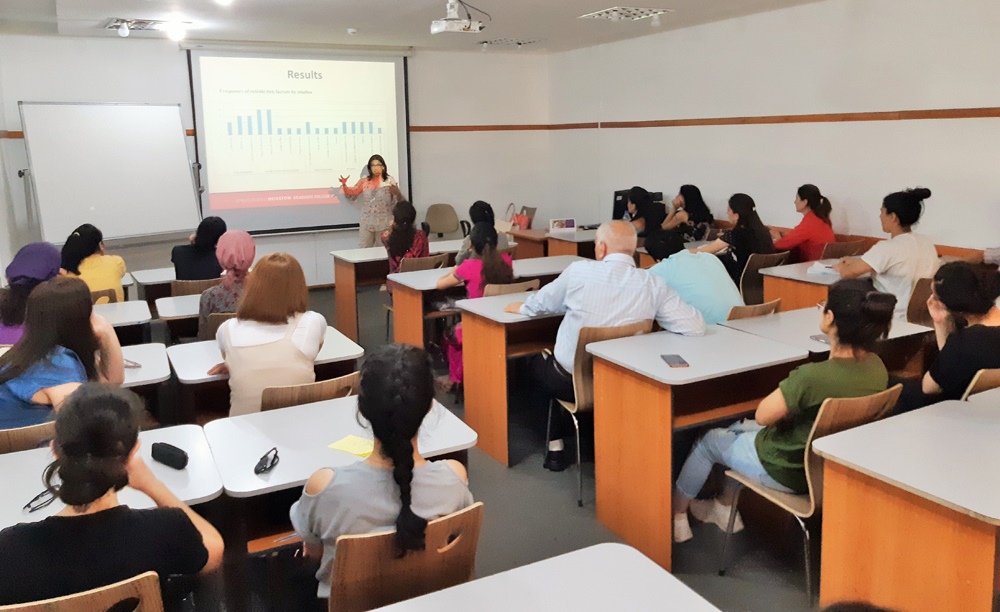
A 30-year literature review on suicide in Central Asia was presented at a Public Lecture organized by the University of Central Asia’s Cultural Heritage and Humanities Unit (CHHU) in Dushanbe on July 3, according to press release issued by the University of Central Asia (UCA).

The lecture on Suicide in Central Asia: A Systematic Study of Risk and Protective Factors was delivered by Shahnaz Savani, Lecturer of Social Work at the University of Houston-Downtown (USA).

Suicide is important for research as it contributes to premature mortality, accounting for nearly 1.5 million people worldwide every year (or 22.5 million Years of Life Lost), with 76% in low- and middle-income countries, approximately 60% of which occurs in Asia alone.

Although most suicides occur in Asia, they are predominately studied in the West.  In Central Asia, suicide is relatively understudied, despite being at high alarming level.

The study reportedly revealed that compared to the global suicide rate of 11.4 per 100,000 individuals, in Central Asia (Kazakhstan, Kyrgyzstan, Tajikistan, Turkmenistan, and Uzbekistan), rates of suicide mostly exceed it, with the highest in Kazakhstan – 48.1.  In Turkmenistan, it reaches 15.8, in Uzbekistan 13.6, in Kyrgyzstan 13.4 and the lowest rate is in Tajikistan at 7.2, although it appears to be trending upwards.

“Islam is the predominant religion of the population of Central Asia and suicide is viewed negatively, creating issues of stigma, under reporting and secrecy around those who need help”, said Shahnaz Savani.

The lecture mainly focused on suicide deaths rather than thoughts or attempts and highlighted the lack of nuanced attention to suicides within at-risk population sub-groups.  Among the main risk factors, revealed by the study, 11 specific risk factors centered on marital and family violence.

The study aims to respond to the need for a systematic review of literature in Central Asia to examine risk and protective factors to inform the future development of culturally appropriate and effective treatments.

Join us on social media!

Article translations:

Related Article

Оби зулол
Tenisi
Оби зулол

Most Read

Коммерсбонк Точикистон

Recent Articles

RZD announces the restoration of passenger services between Moscow and Dushanbe

Direct rail services between the capitals of Russia and Tajikistan were suspended in March 2020 due to the COVID-19 pandemic.

#AP30/Stories. “Selam! Heller nichek?” How Tatars live today in Sughd province

On the 30th anniversary of "Asia-Plus," we continue to publish reports that remain relevant even after years. This story was told in 2021, and since then, little has changed in the life of the Tatar community in Tajikistan.

15,000 cameras, drones, and robots: how technology monitors pilgrims in Mecca and Medina

During Hajj 2026, Mecca and Medina were under unprecedented digital control.

Another child in Dushanbe removed from family and sent to boarding school

The Ministry of Internal Affairs reports that the parents did not pay adequate attention to the child.

Emomali Rahmon instructs to address issues in seed production following criticism of the industry

Issues have been noted with certification, seed quality, and the material and technical base of the industry.

Water, climate, and a $130 billion deficit: seven key outcomes of the Water Conference in Dushanbe

At the forum, countries and international organizations discussed new mechanisms for cooperation, investments, and technologies that are essential for addressing the global water crisis.

Eskhata Bank introduces a new generation children’s wallet

"Eshkata Bank" has created a full-fledged digital platform that helps children aged 7 to 16 learn how to manage money.