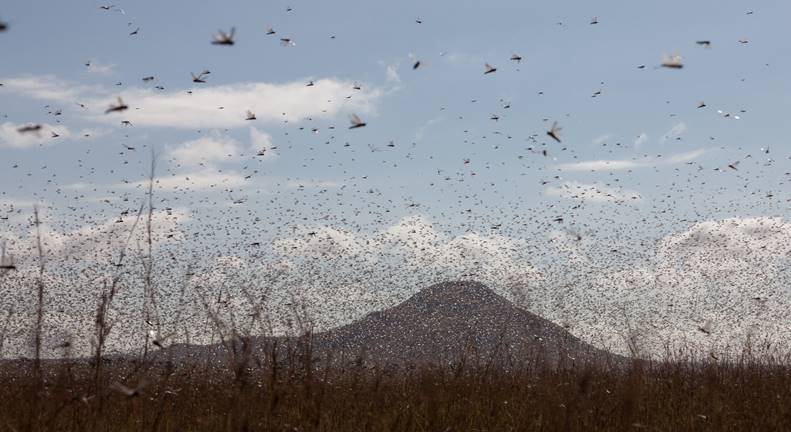
According to FAO Country Office in Tajikistan, locust populations began to increase in Tajikistan In the 1990s, in a country fresh off the collapse of the Soviet Union and the Tajikistan civil war. The increasing populations of locusts began devastating crop fields and affecting the livelihoods and food security of Tajik farmers. Year after year, farmers kept losing their harvests to locusts. Due to limited resources, the national locust management system was not able to provide effective control; it lacked trained and experienced staff and didn’t have modern monitoring, communication, positioning and control equipment. Plus, there were inadequate resources for conducting timely and efficient survey and control operations.
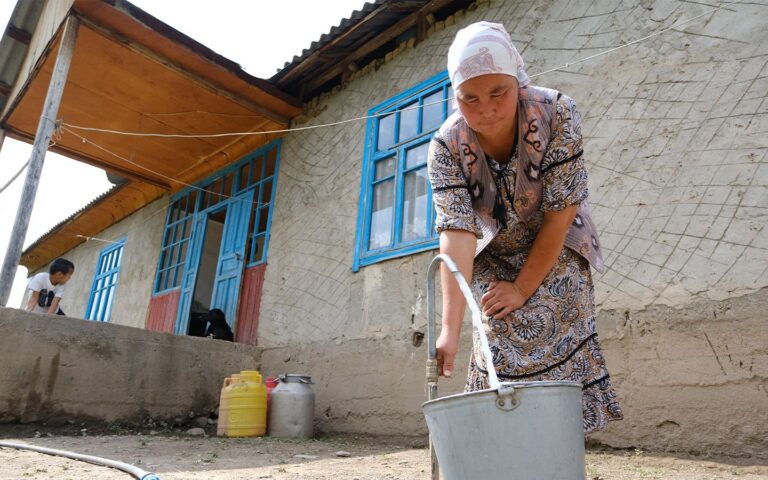
The agriculture sector is a major employer in the country. In the past, farmers have had limited capacity to face seasonal and unpredicted events, and they have been particularly vulnerable to attacks from locusts or other pests.
Historically, locust infestations have reportedly been a widespread phenomenon, particularly from April to August. Locusts can fly up to 100 kilometers per day and settle in new areas. Because of the locust attacks, the level of food insecurity increased, and farmers were losing their yields.
FAO, with funding from Japan, has been working since 2015 to improve the situation in Tajikistan and in neighboring Afghanistan and Kyrgyzstan. The project has been framed by an FAO program to improve national and regional locust management in the Caucasus and Central Asia, launched in 2011 in ten countries.
Through the project, Tajikistan has received equipment for conducting locust survey and control operations – including communication equipment, vehicles, sprayers, motorbikes, pesticides and more – in addition to extensive staff training on a wide range of locust-related topics.
Now the state entity “Locust Control Expedition” is equipped with new modern technologies to cope with locust infestations.
Workers in the field are able to transmit data they’ve collected on the locust situation directly to the central offices. Data analyses, including forecasts and recommendations, are sent to the highest authorities for timely decisions on control operations. The added efficiencies mean that workers are able to treat between 200 ha and 400 ha of land every day – a huge jump from the 30 ha to 40 ha that could be treated daily in the years before the project.
Traditional locust habitats and breeding areas often span national borders, meaning that locusts frequently cross countries' political boundaries. The main objective of the program is in developing and strengthening regional cooperation among countries in the area.
The results of the project so far have reportedly been tangible. The project has contributed significantly to reducing the duration, severity and frequency of locust outbreaks in Tajikistan.
The ongoing aim of this preventive locust control strategy is to contribute to reducing the annual number of infested and treated hectares, to help preserve the food security and livelihoods of highly vulnerable rural communities, and to reduce the negative impacts of control operations on human health and the environment.