FAO shared experiences in implementing agrometeorology pilot programs during a study tour in Italy, for a delegation from Tajikistan from July 1-5.
According to FAO Country Office in Tajikistan, Abulqosim Muminov, Head of Agrometeorology Department of Agency of Hydrometeorology (Hydromet), as well as a national expert from the Ministry of Agriculture, head of State Agency on Plant Protection and Chemicalization and a specialist from the Agriculture and Environment Department of President’s Executive Office took part in the tour.
Mr. Muminov noted that the study tour was very fruitful for them. “The topics addressed are necessary for our country and implementation with FAO support facilitates the improvement of crop status forecasting and integrated plant protection,” he said.
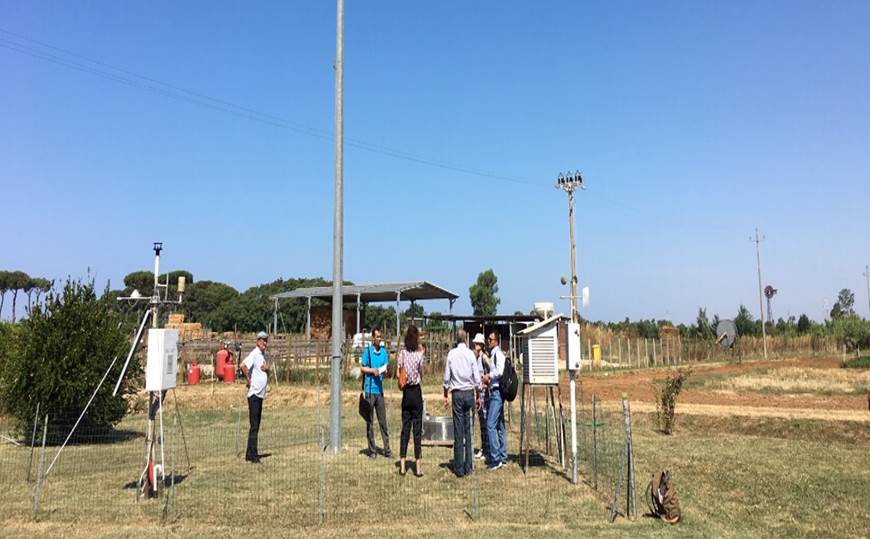
The delegates reportedly visited Italian institutions in charge of agrometeorological data collection and research. The Regional Agency for the Development and Innovation of Agriculture of Lazio (ARSIAL) hosted the delegation at their headquarters based in Rome, as well as at the Tarquinia Demonstration and Experimental Farm.
Through peer-to-peer exchange, the delegates were able to learn first-hand about network maintenance, and the collection, processing and dissemination of agrometeorological information in Italy’s Lazio region. This included information on new initiatives for information dissemination to farmers, including through SMS and mobile applications.
FAO presented several models and tools relevant for meteorological and climate services including ASIS, AquaCrop, MOSAICC, Google Earth Engine and Collect Earth, and shared information about Integrated Pest Management and Farmer Field Schools.
FAO is currently working with national institutions in Tajikistan to develop stronger agrometeorological information and early-warning systems for use in the agriculture sector. The aim is to strengthen the capacity of these systems to support farmers, advise adaptation planning and prioritize future climate investments in agriculture.
In Central Asia, climate change is projected to bring increased temperatures, extreme weather events, and glacial melt, as well as the continued expansion of deserts and arid areas. Already suffering from low agricultural productivity, water stress, and high losses from disasters, Tajikistan is considered one of the most vulnerable countries to climate change in the region. Advisories, alerts and robust early-warning systems are essential for farmers and rural dwellers to prepare for and adapt to changes in the climate.
The study tour was carried out in cooperation with the project, Strengthening Institutions and Capacity of the Ministry of Agriculture and State Veterinary Inspection Service for Policy Formulation.