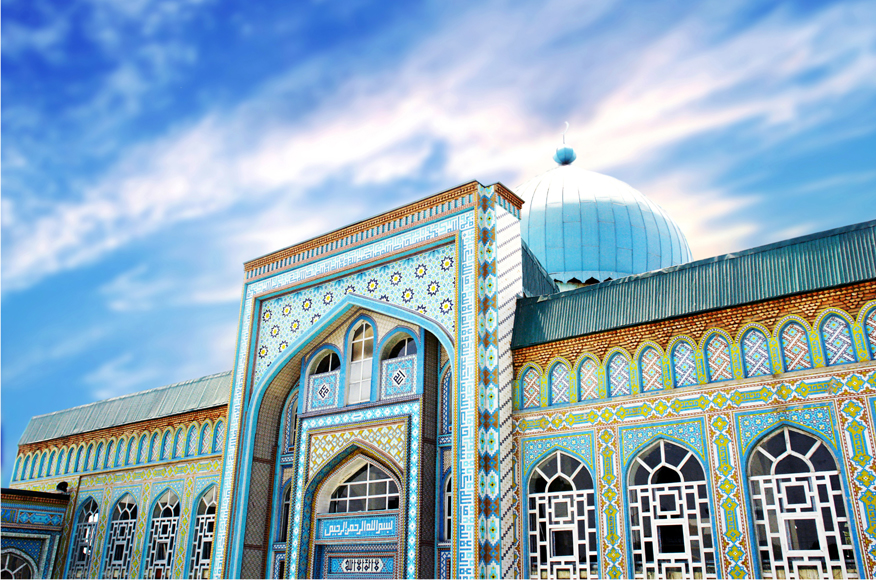
The Shuroi Ulamo (Council of Ulema — an Islamic council that issues fatwas (religious rulings) and religious guidance to Islamic religious organizations) on August 3 announced the date of celebration of Idi Qurbon, or Eid al-Adha in Arabic. This year, the date of celebration of Eid al-Adha this year falls on Sunday, August 11.
Last year, Tajikistan celebrates Eid al-Adha on August 21.
Eid al-Adha, “Festival of Sacrifice” or “Greater Eid,” is an important religious holiday celebrated by Muslims worldwide to commemorate the willingness of Ibrahim to sacrifice his son Ismail as an act of obedience to God, but instead was able to sacrifice a ram (by God's command).
Eid al-Adha is also about spending time with family and friends, sacrifice, and thanksgiving for being able to afford food and housing. In traditional or agrarian settings, each family would sacrifice a domestic animal, such as a sheep, goat, cow, or camel, by slaughter (though some contemporary Muslims do not sacrifice an animal as part of their observance, it is still a very popular tradition, even in Muslim communities in Europe). The meat would then be divided into three equal parts to be distributed to others. The family eats one third, another third is given to other relatives, friends or neighbors, and the other third is given to the poor as a gift.
Eid al-Adha is the latter of two Eid festivals celebrated by Muslims. Like Eid ul-Fitr, Eid al-Adha begins with a short prayer followed by a sermon (khutbah).
While Eid al-Adha is always on the same day of the Islamic calendar, the date on the Gregorian calendar varies from year to year since the Islamic calendar is a lunar calendar and the Gregorian calendar is a solar calendar. The lunar calendar is approximately eleven days shorter than the solar calendar. Each year, Eid al-Adha (like other Islamic holidays) falls on one of about 2–4 different Gregorian dates in different parts of the world, because the boundary of crescent visibility is different from the International Date Line.