An exhibition of works by Japanese manga artist Kaoru Mori will kick off at the Gallery of Modern Art (Dushanbe Mall) on September 12.
Organized by Japan’s Embassy in Dushanbe in cooperation with Ministry of Foreign Affairs, the Ministry of Culture and the Gallery of Modern Art of Tajikistan, the event is devoted to the Seventh Foreign Ministers' Meeting of the “Central Asia plus Japan” Dialogue that took place in Dushanbe on May 18 this year.
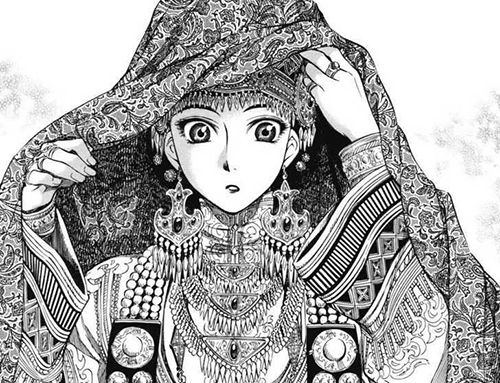
Kaoru Mori (born September 18, 1978) is a Japanese manga artist from Tokyo and is the creator of the manga series Emma, A Bride's Story and Shirley. Many of her works are centered on female characters in the 19th century, such as a maid in Victorian Britain and bride in Turkic Central Asia.
Mori's works are known for their high level of detail in terms of clothing design, historical nuances, and background work. Her books are often published outside Japan in larger, hardbound editions in order to compliment the heavy detail seen in every page.
Her first published work, Shirley, was revived in a two-installment continuation called Shirley Madison in Fellows! (now Harta), where her latest work A Bride's Story is serialized and continues to be updated sporadically.
Manga are comics or graphic novels created in Japan or by creators in the Japanese language, conforming to a style developed in Japan in the late 19th century. They have a long and complex pre-history in earlier Japanese art.
The term manga in Japan is a word used to refer to both comics and cartooning. “Manga” as a term used outside Japan refers to comics originally published in Japan.
In Japan, people of all ages read manga. The medium includes works in a broad range of genres: action, adventure, business and commerce, comedy, detective, drama, historical, horror, mystery, romance, science fiction and fantasy, erotica, sports and games, and suspense, among others. Many manga are translated into other languages. Since the 1950s, manga has steadily become a major part of the Japanese publishing industry.
Manga stories are typically printed in black-and-white, although some full-color manga exist (e.g., Colorful). In Japan, manga are usually serialized in large manga magazines, often containing many stories, each presented in a single episode to be continued in the next issue. Collected chapters are usually republished in tankōbon volumes, frequently but not exclusively, paperback books. A manga artist (mangaka in Japanese) typically works with a few assistants in a small studio and is associated with a creative editor from a commercial publishing company. If a manga series is popular enough, it may be animated after or during its run. Sometimes manga are drawn centering on previously existing live-action or animated films.
Manga-influenced comics, among original works, exist in other parts of the world, particularly in Algeria ("DZ-manga"), China, Hong Kong, Taiwan ("manhua"), and South Korea ("manhwa").