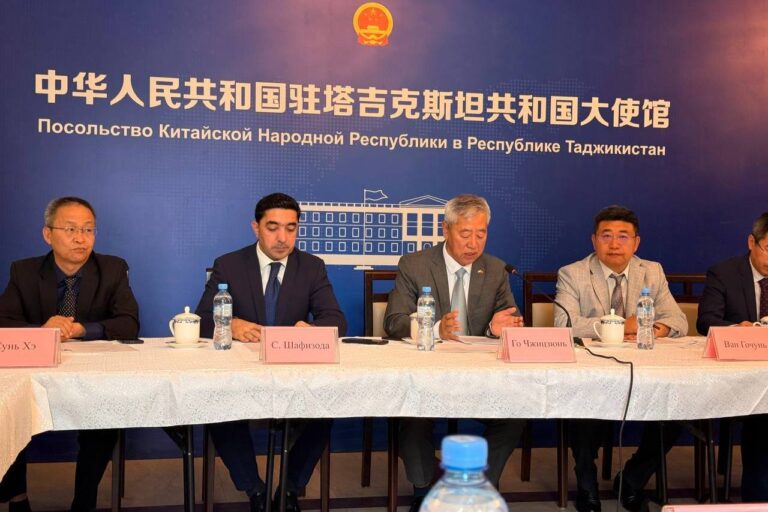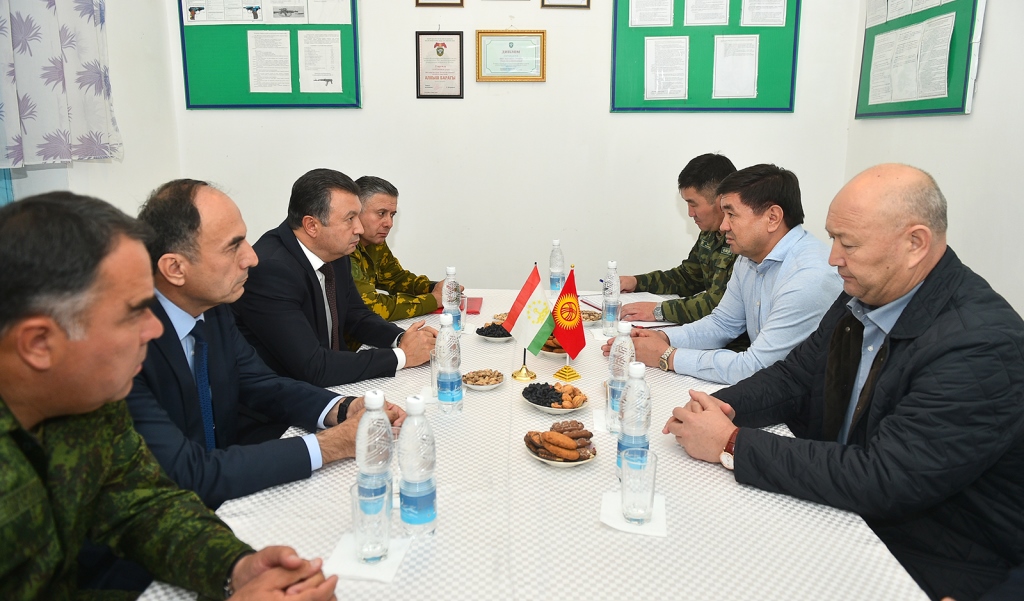
Tajik Prime Minister Qohir Rasoulzoda has met with his Kyrgyz counterpart Muhammedkaly Abdylgaziyev to discuss border issues.
Kyrgyzstan’s news agency AKIPress says the meeting took place yesterday at the border crossing point (BCP) Guliston-Qyzylbel.
The two sides reportedly discussed joint measures to deescalate the situation on the Tajik-Kyrgyz border in connection with deadly clash that broke out on the mutual border on September 16.
Rasoulzoda and Abdylgaziyev expressed regret that the armed incident had led to deaths and extended condolences to families and relatives of those who had been killed in the unrest, according to AKIPress.
Deputy premiers of the two countries co-chairing the joint borer commission and chiefs of border agencies of Tajikistan and Kyrgyzstan are reportedly continuing a joint work today to speed up the resolution of issues raised.
Meanwhile, Tajik Deputy Prime Minister, Azim Ibrohim, who is co-chairman of the Tajik-Kyrgyz joint border commission, told Radio Liberty’s Tajik Service, locally known as Radio Ozodi, yesterday that investigation into the September 16 unrest has been launched. The current situation on the Tajik-Kyrgyz border is relatively stable, Ibrohim noted.
“We are for peace and stability. Nobody wants people to die or get injured. We are making every effort take efforts to ensure that the situation normalizes and people return to their usual lives,” he said.
Many border areas in Central Asia have been disputed since the collapse of the Soviet Union in 1991. The situation is particularly complicated near the numerous exclaves in the Ferghana Valley, where the borders of Tajikistan, Uzbekistan, and Kyrgyzstan meet.
Tajikistan and Kyrgyzstan have been unable to agree on the location of the border they inherited when the Soviet Union collapsed in 1991. As the population in the dense Ferghana Valley grows, it has become increasingly difficult to demarcate the contested sections, where valuable agricultural land often lies.
The area at the focus of unrest among residents of border areas of the two countries lies on the jagged frontier where the east of Tajikistan’s Sughd province and Kyrgyzstan’s Batken region meet. Skirmishes have sparked between residents of Isfara (Tajikistan) and Batken (Kyrgyzstan) districts along the Kyrgyzstan-Tajikistan border. Trouble periodically sparks around Vorukh, an exclave surrounded by Kyrgyzstan that forms part of the Isfara district in the Su