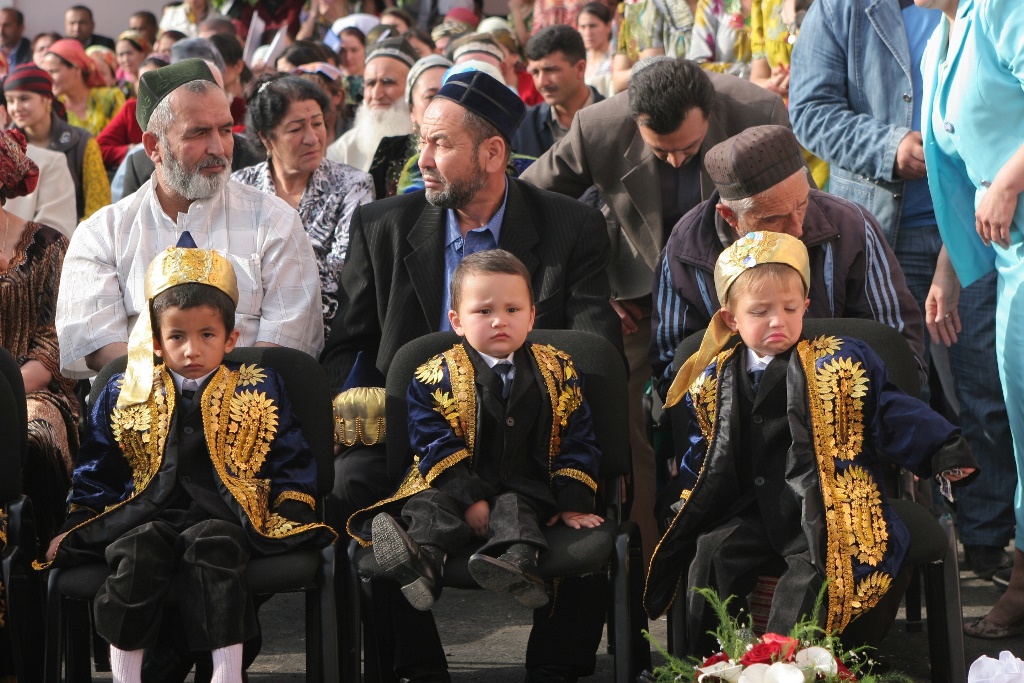
Tajikistan has the highest birth rate among Central Asia’s nations. Tajikistan’s population, currently 9 million, is expected to be 16 million in 2050.
Tajikistan’s government has recently endorsed the national reproductive health program designed for 2019-2022.
Faced with a population that continues to grow at rates that challenge the ability of the Tajik authorities to provide support for young people and jobs when they are older, the government has made driving down the birthrate the central plank of its new program for reproductive health for 2019-2022.
To achieve that goal and to improve the health of women, the Tajik government has directed its Ministry of Health and Social Protection to make contraceptives more readily available throughout the country to promote their use.
Developed by the Ministry of Health and Social Protection, the program is intended to prevent more than 450,000 pregnancies, at least some of them unwanted, over the next three years. This action has come in respond to a World Bank recommendation last year that Dushanbe take such action to reduce poverty, unemployment, and the high level of outmigration to other countries, particularly Russia.
Tajikistan’s population is currently growing at more than two percent a year, a figure that the country is finding it difficult to cope with.
Window on Eurasia notes that in fact, Tajikistan has reduced the fertility rate since the 1990s. Then, the average Tajik woman gave birth to six children per lifetime. Now, urban Tajiks give birth to no more than three, although rural ones still give birth to four, figures too high to stabilize the population anytime soon.
Even if the new program succeeds, the population will continue to grow for at least a generation because those already born are sufficiently numerous that even if each has fewer children, the total number of children will go up, something that complicates demographic management, according to Window on Eurasia.
The new program for reproductive health, in particular, provides for expanding access to extended range of contraceptive methods, especial for rural population and young people.
The program notes that maternal mortality and infant mortality have been decreasing in the country due to a complex approach; women have access to family regulation services that promoted prevention of unwanted pregnancies. Thus, maternal mortality has decreased in the country from 46.5 per 100 000 live in 2008 to 24 per 100,000 live in 2018, according to the program.
Meanwhile, there is reportedly enormous resistance to family planning and contraception among conservative Muslim groups for whom each child is viewed as a gift from Allah and ending a pregnancy is considered to be a major sin. Some experts say that given the continuing influence of these groups, the new Tajik program is unlikely to meet its target figures.