Khorog State University in January 2018 won a US$40 project, which has been implemented under support of the World Bank and the Ministry of Education and Science of Tajikistan.
The main objective of the project was in raising quality of education of female students at Khorog State University through improvement of psychological climate, living and educational preparation conditions.
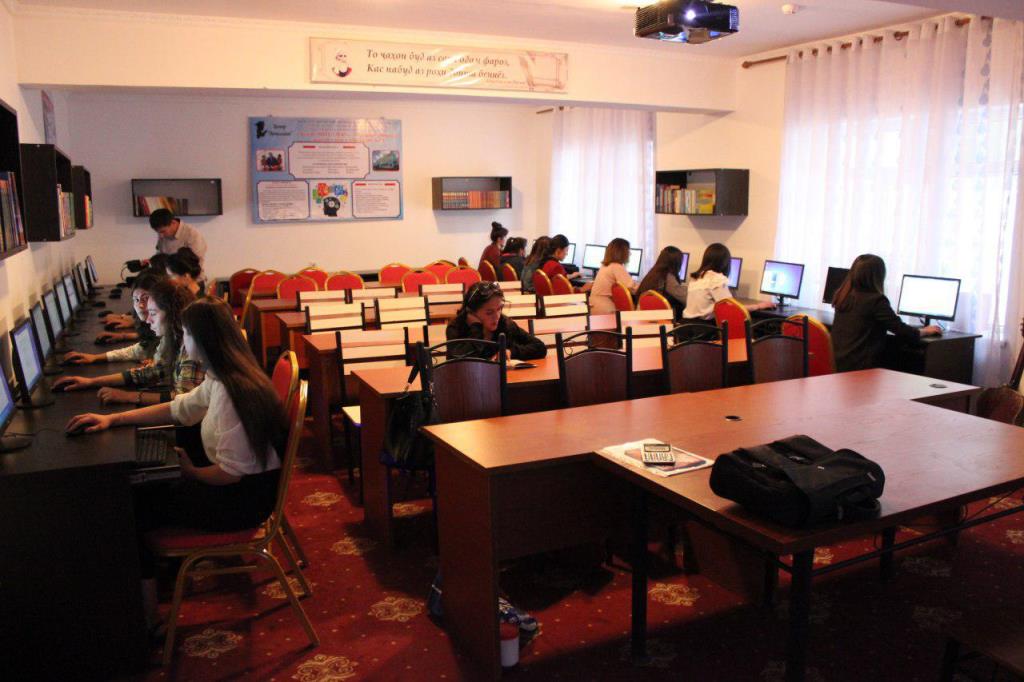
Ms. Olga Saifulloyeva, Vice-Rector of the University for International Cooperation, says the “Intellect” Center has been set up at University dormitory at which female students get access to educational materials and Internet resources.
“The reading room is equipped with the latest electronic technology, computers and educational resources and provided with high speed Internet,” Ms. Saifulloyeva said.
The Center reportedly organizes various events, seminars, language clubs, contests, conferences, debates and specialists working with the Center make available legal and psychological consultations.
Khorog State University is a public university located in Khorog, the capital of the Gorno Badakhshan Autonomous Region (GBAO). It is located in the center of Khorog, the only urban center in the region. The University has an enrollment of approximately 4,000 students, both full-time (daytime) and students studying by correspondence.
Khorog State University was founded on August 5, 1992 by the decision of the Cabinet of the Ministers of the Republic of Tajikistan, and the same year in September started its first academic year.
The University was named after Academician Moyonsho Nazarshoyev (1929–1994), who was a native of the region and whose contribution to the foundation of the University was extremely significant. Nazarshoyev was a Vice-Premier of Tajikistan before being assassinated on February 18, 1994 in Dushanbe.
For the first time, the population of GBAO had access and the opportunity to enter a higher education institution, without leaving their own region, especially in the early 1990s, when the university was just established.
The first Rector of the University was Academician Mamadsho Ilolov, serving from 1992 to 1995.
The university started with two Faculties: Humanities and Natural Sciences. After several years the Humanities Faculty divided into History-Philological Faculty and Economic Faculty, each consisting of several departments.