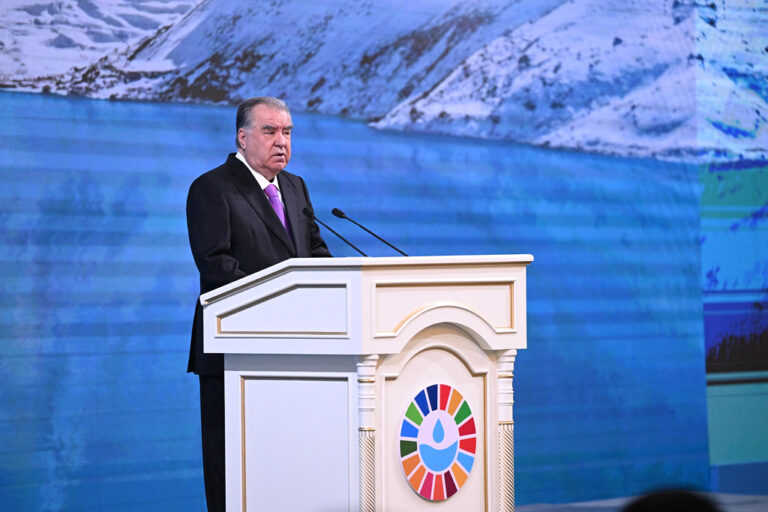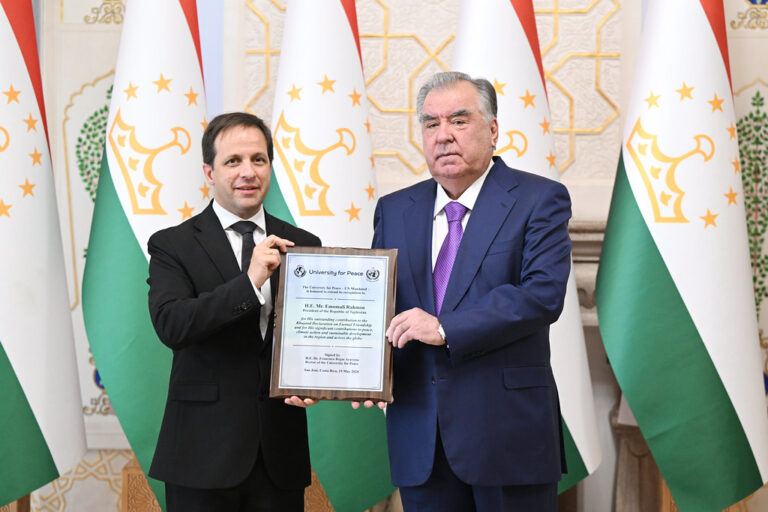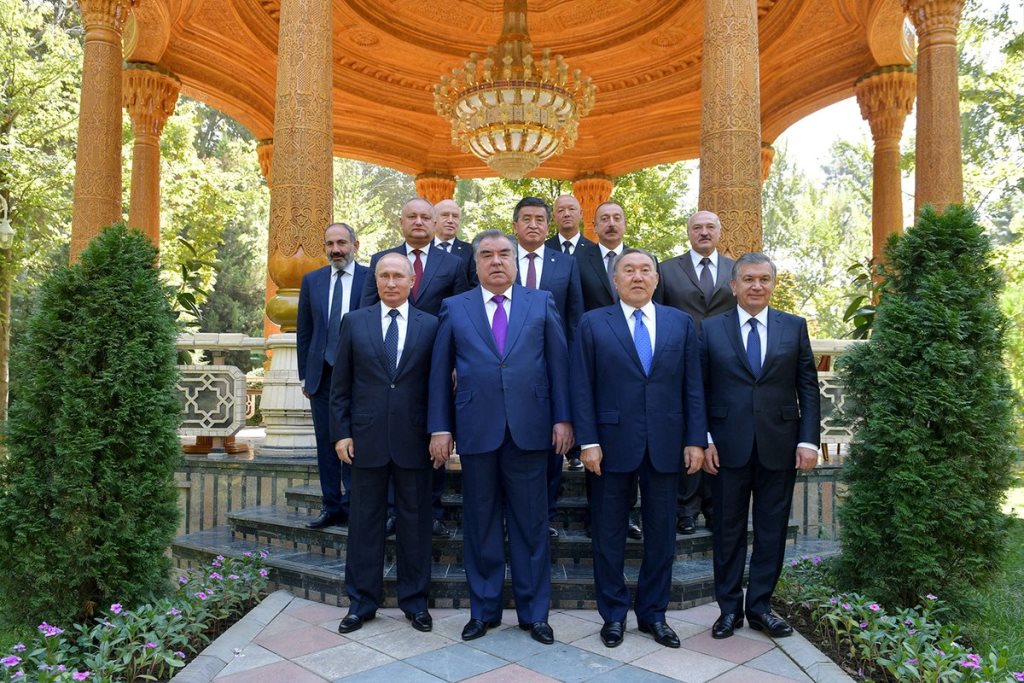
Tajik President Emomali Rahmon today morning departed for the Turkmen capital of Ashgabat for participation in a session of the CIS Council of Heads of State that is taking place there today.
Foreign minister, presidential advisor for foreign policy, minister of economic development and trade, prosecutor-general, and some other officials are accompanying Emomali Rahmon on his trip to Ashgabat, according to the Tajik president’s official website.
The CIS leaders are expected to review their countries’ trade, economic, social, foreign policy and security cooperation this year.
They will specifically focus on the upcoming joint celebrations of the 75th anniversary of Victory in the Great Patriotic War in 2020 and will adopt an address to the CIS nations and the international community.
The agenda includes the signing of multilateral documents, including the Declaration of Strategic Economic Cooperation of the CIS Member States and the coordination of personnel and organizational decisions.
The Council of Heads of State is a supreme body of the CIS, which discusses and solves any principle questions of the Commonwealth related to the common interests of the CIS member nations.
Established on December 8, 1991 after the dissolution of the Soviet Union, the Commonwealth of Independent States (CIS) is a regional organization. It now consists of Azerbaijan, Armenia, Belarus, Kazakhstan, Kyrgyzstan, Moldova, Russia, Tajikistan, Turkmenistan, Uzbekistan and Ukraine. Georgia pulled out of the organization in 2009.
Although Ukraine was one of the founding countries and ratified the Creation Agreement in December 1991, Ukraine chose not to ratify the CIS Charter as it disagrees with Russia being the only legal successor state to the Soviet Union. Thus it does not regard itself as a member of the CIS. In 1993, Ukraine became an "Associate Member" of CIS. On March 14, 2014, a bill was introduced to Ukraine's parliament to denounce their ratification of the 1991 Agreement Establishing the CIS, following the Russian military intervention in Ukraine and annexation of Crimea, but was never approved. Following the 2014 parliamentary election, a new bill to denounce the CIS agreement was introduced. In September 2015, the Ukrainian Ministry of Foreign Affairs confirmed Ukraine will continue taking part in CIS “on a selective basis.” Since that month, Ukraine has had no representatives in the CIS Executive Committee building. In April 2018, Ukrainian President Petro Poroshenko indicated that Ukraine would formally leave the CIS. On May 19, 2018, Poroshenko signed a decree formally ending Ukraine's participation in CIS statutory bodies. However, as of June 1, the CIS secretariat had not received formal notice from Ukraine of its withdrawal from the CIS, a process which will take 1 year following notice being given. Ukraine has stated that intends review its participation in all CIS agreements, and only continue in those that are in its interests.