Uzbekistan is currently exploring the option of joining the Eurasian Economic Union (EAEU) in the near future. What can this turn out for Tajikistan?
Tashkent and Moscow have set up a working group to study the possible conditions and risks of Uzbekistan’s joining the Eurasian Economic Union.
Valentina Matviyenko, chairwoman of the Federation Council (Russia’s upper house of parliament), remarked this last week after a meeting with Uzbek President Shavkat Mirziyoyev in Tashkent.
The creation of the working group was agreed upon by the presidents of the two countries, Russian parliament speaker noted.
Shea added that the findings of an analytical work carried out by a group of experts will be submitted for consideration before the end of this year.
Earlier this year Mirziyoyev spoke about considering the possible benefits and losses from EAEU membership. Mirziyoyev’s reform program is predicated on economic expansion and finding new markets for Uzbek goods; it comes against a backdrop of the EAEU increasingly restricting imports from non-member states.
Meanwhile, monitoring made by Uzbek media outlets shows that not all citizens of Uzbekistan are happy about Uzbekistan’s decision to join the Eurasian Economic Union.
Some of them advise the country’s authorities to speed up the process of joining the World Trade Organization (WTO), noting the EAEU is the too politicized organization.
Some experts consider that Uzbek membership in the EAEU will likely feed a split among the country’s politicians and elites. As in other countries, there are pro-EAEU and anti-EAEU camps; the latter likely frustrated with Mirziyoyev’s apparent entertaining of the option of membership. Because the EAEU is a weak organization in many respects, Uzbekistan’s membership would mostly benefit Russia insofar as the organization is a political vanity project more than a useful economic cooperative mechanism. In turn, the costs would accrue to Uzbekistan.
The markets Uzbekistan seeks to access are either heavily controlled by Russia or require Russian acquiescence to access. This puts Moscow in a position of power and if the past holds any precedent, Russia will play unfairly if it desires to. In addition, while cheaper Uzbek projects may do well in Russian markets, superior Russian products could dominate the Uzbek market just as easily.
One of high-ranking official in one of economic cluster ministers has told Asia-Plus on condition of anonymity that admission of Uzbekistan to the Eurasian Economic Union have both positive and negative points for Tajikistan. “But there will be more negative points,” he said.
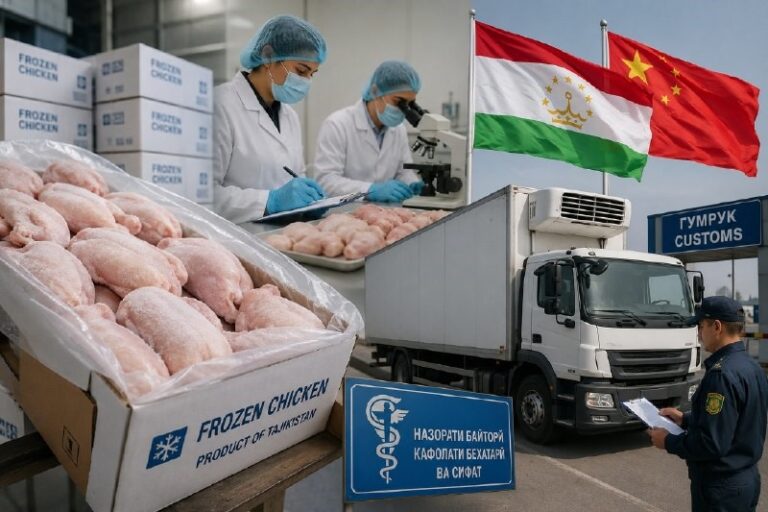
“After admission to the EAEU Uzbekistan will have more progressive legislation in customs, sanitary and phytosanitary spheres as well as on issues of technical regulation and Uzbekistan will become even more attractive country for investors,” the official said.
“We are already lagging behind our neighbors in this matter, and after their admission to the EAEU our chances to get foreign investments will decrease even more,” he noted.
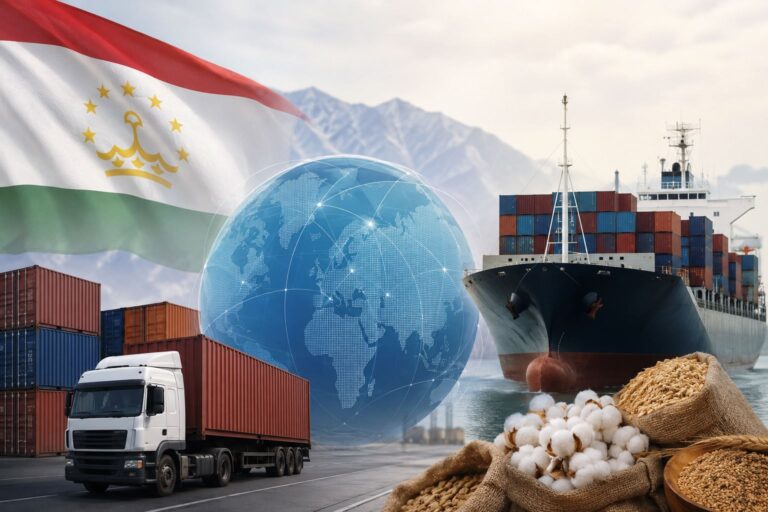
Besides, all transport corridors from Asia to Europe will go through Uzbek territory bypassing Tajikistan because it is cheaper and easier to transport goods through EAEU territory, the official added.
The Eurasian Economic Union (EAEU) is an economic union of states located primarily in northern Eurasia. A treaty aiming for the establishment of the EAEU was signed on May 29, 2014 by the leaders of Belarus, Kazakhstan and Russia, and came into force on January 1, 2015. Treaties aiming for Armenia's and Kyrgyzstan's accession to the Eurasian Economic Union were signed on October 9 and December 23, 2014, respectively. Armenia's accession treaty came into force on January 2, 2015. Kyrgyzstan's accession treaty came into effect on August 6, 2015.
The Eurasian Economic Union has an integrated single market of 183 million people and a gross domestic product of over 4 trillion U.S. dollars (PPP). The EEU introduces the free movement of goods, capital, services and people and provides for common transport, agriculture and energy policies, with provisions for a single currency and greater integration in the future. The union operates through supranational and intergovernmental institutions. The Supreme Eurasian Economic Council is the “Supreme Body” of the Union, consisting of the Heads of the Member States. The other supranational institutions are the Eurasian Commission (the executive body), the Eurasian Intergovernmental Council (consisting of the Prime Ministers of member states) and the Court of the EEU (the judicial body).