The decision taken by the Government of the Republic of Tajikistan to focus on addressing critical business climate constraints that had dissuaded enterprises from contributing more actively to the country’s ambitious development objectives have shown first results: the World Bank Group’s Doing Business 2020 report has recorded three related reforms in the past year, earning Tajikistan a spot among the world’s top ten most improved economies for ease of doing business.
In its wake, Tajikistan has taken a big step upwards to the 106th rank globally, with a score of 61.3 out of 100, according to the World Bank Office in Dushanbe.
“Against the backdrop of ambitious development objectives and emerging trade opportunities, Tajikistan has realized that an improved business climate for small and medium-size enterprises holds the key to investments, innovation, employment generation, and sustainable domestic resource mobilization,” said Jan-Peter Olters, World Bank Country Manager for Tajikistan. “By sustaining this reform momentum, Tajikistan will lay the foundation for increased private sector activities, export orientation, and dynamic rates of sustainable and inclusive growth.”
Highlights of Tajikistan’s reforms have been:
• the introduction of a social identification number in the company incorporation certificate at the time of registration;
• improved access to credit by launching a unified, modern and notice-based collateral registry, the establishment of a functional secured-transactions system, the broadening of the scope of assets that can be used as collateral, the allowance of the general description of debts and obligations, the granting of absolute priority to secured creditors, and the provision of a time limit and clear grounds for relief from automatic stays during reorganization procedures; and;
• the facilitation of the export of goods by prioritizing customs clearance of perishable products.
Tajikistan’s most significant improvements were in the area of getting credit. An expansion of secured transactions legislation made financing for entrepreneurs easier, less risky and less costly. Tajikistan now scores 11 out of 12 in the strength of legal rights index and ranks 11th globally on this indicator.
Importantly, Tajikistan improved the process of starting a new business. Entrepreneurs now receive a social identification number when registering the company with the Tax Authority. The time it takes to start a business in Tajikistan has been reduced to seven days and is shorter than the regional average.
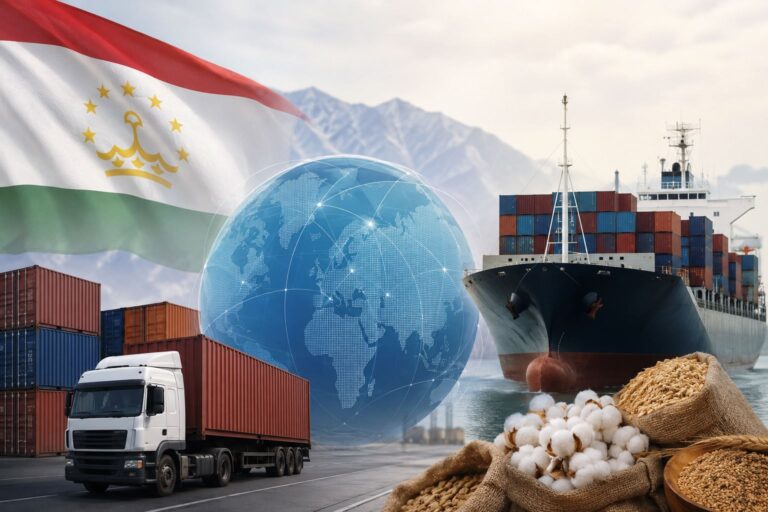
In response to the improvements in the access to neighboring markets, trading across borders has been simplified. When exporting perishable goods, such as edible fruit and nuts, local entrepreneurs now spend fewer hours complying with border requirements. These represent first steps of a broader reform agenda, requiring the economy—still not at the level of regional norms for cost—to improve its performance in this critical area.
Looking forward, Tajikistan’s reform priorities lie in the relatively underperforming areas of getting electricity (ranked 163), resolving insolvency (153), paying taxes (139), and dealing with construction permits (137). For example, local entrepreneurs need to undertake nine procedures to obtain electricity connection in Tajikistan, the most in the region. The country receives only four points out of eight on the reliability of supply and transparency of tariff index. In addition, at 29.6 cents on the dollar, the average recovery rate in Tajikistan remains lower than the 38.5 cents regional average.