Ministers from the 11 members of the Central Asia Regional Economic Cooperation (CAREC) Program have endorsed a new long-term strategy to improve energy security, increase investment, and improve the sustainability of energy systems in the region, setting it on a path toward achieving a secure energy future.
According to the Asian Development Bank (ADB) Tajikistan Resident Mission (TJRM), the CAREC Energy Strategy 2030 outlines a set of initiatives and policy recommendations to be implemented over the next decade based on regional cooperation, embracing energy market reforms, and deploying more green technology.
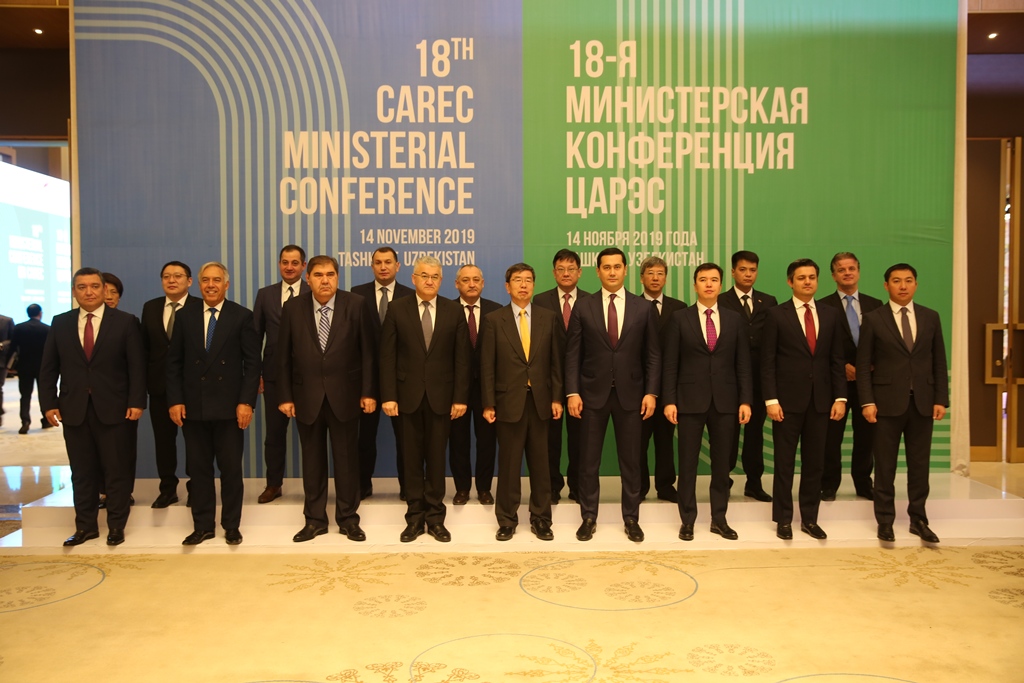
The Strategy was endorsed at the 18th CAREC Ministerial Conference that took place in the Uzbek capital of Tashkent on November 14.
The Tajikistan delegation was headed by Mr. Nematullo Hikmatullozoda, Minister of Economic Development and Trade/ CAREC National Focal Point for Tajikistan, and comprised senior officials from the Committee of Tourism Development, Ministry of Transport, and Ministry of Energy and Water Resources.
“The endorsement of the new energy strategy for CAREC members is a landmark moment,” said Asian Development Bank (ADB) Vice-President Mr. Shixin Chen, the co-chair at the CAREC Ministerial Conference. “Based on multilateral and bilateral cooperation, CAREC now has a roadmap toward a future in which electricity supply is reliable, affordable, cleaner, and more sustainable—conditions that are vital to ensuring continued economic development.”
The strategy responds to several challenges facing the region’s energy sector. CAREC countries are rich in natural resources, but uneven distribution of these resources—compounded by inadequate infrastructure and inefficient energy utilities—means some countries continue to face power shortages. The region is estimated to need around $400 billion in investments by 2030 in order to meet increasing demand for power.
The CAREC Program is a partnership of 11 countries—Afghanistan, Azerbaijan, the PRC, Georgia, Kazakhstan, the Kyrgyz Republic, Mongolia, Pakistan, Tajikistan, Turkmenistan, and Uzbekistan—to promote economic growth and development through regional cooperation, and supported by development partners. ADB hosts the CAREC Secretariat in its headquarters in Manila.
Since 2001, the CAREC Program has financed 200 regional projects worth $37.0 billion in the areas of transport, energy, and trade. Of this, $14.0 billion has been financed by ADB; $14.8 billion by other development partners such as the World Bank, the Islamic Development Bank, and the European Bank for Reconstruction and Development; and $8.2 billion from CAREC governments.