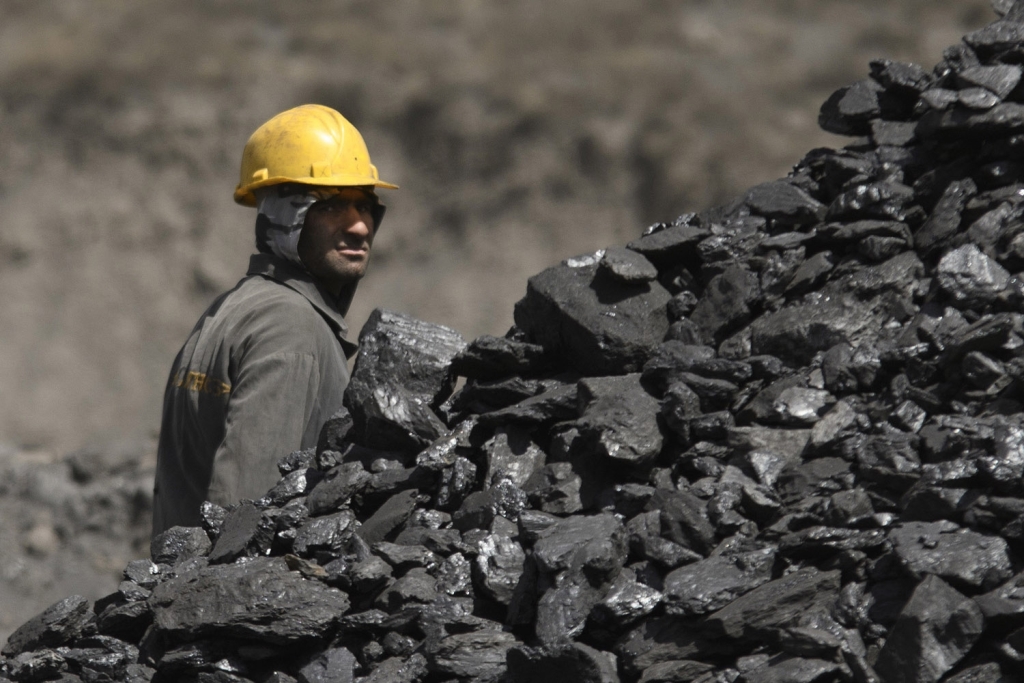
Coal prices have jumped nearly twice in Tajikistan and the Ministry of Industry and New Technologies (MoINT) blames speculators and second-hand dealers for this.
Bahriddin Abdurahimzoda, the head of MoINT Coal Industry Department, calls on local authorities to deal with unreasonable coal price hikes.
According to him, there no any objective causes for rise in coal prices in the country. “Coal producers have not raised wholesale prices, which today fluctuate from 250.00 to 300.00 somoni per ton, depending on the quality of coal,” Abdurahimzoda said.
Meanwhile, the current price for one ton of coal in Dushanbe is 700.00 somoni, the official added.
Today, eleven coal deposits are being developed in the country, and over the first eleven months of this year, Tajik coal-mining enterprises have produced 1.942 million tons of coal, which is 180,000 ton more than in the same period last year.
According to the MoINT, more than 420,000 tons of coal are currently stored in warehouses.
Radio Liberty’s Tajik Service, locally known as Radio Ozodi, says the price for one kilogram of coal rose from 0.50 somoni to 1.00 somoni in Dushanbe’s suburbs, with similar price rises in remote districts.
Prices for coal imported from Kyrgyzstan have also risen from 1.30 somoni to 2.00 somoni per kilogram.
Exploration and development of coal fields has been intensified in Tajikistan since 2012 when Uzbekistan stopped gas shipments to Tajikistan.
Coal deposits of Tajikistan are reportedly concentrated in two coal basins: Tajik (Hisor-Darvaz) and Fergana. The first of them covers the absolute majority of deposits and occurrences concentrated in central and southern Tajikistan. Deposits and occurrences of northern Tajikistan belong to the South Fergana coal basin.
The coal deposits of the Tajik coal basin in the vast majority of cases are exposed in the mountain ranges of the Tien Shan and Pamir-Alay, framing the Afghan-Tajik basin.
The industrial potential of the Tajik coal basin is significant. According to experts from the Eurasian Development Bank (EDB), Tajikistan’s possible coal reserves are estimated at least 4.3 billion tons.
In the territory of Tajikistan there are four regions of development of carbonaceous deposits, each one has a number of characteristic features according to geological zoning: 1) Zarafshon-Hisor; 2) South-Hisor; 3) the Pamir Darvaz; and 4) south-Fergana.
The biggest region, largest in acreage coal-bearing area that has the maximum number of coal veins, is Zarafshon-Hisor. The coal-bearing strata extends in almost uninterrupted strip from Panjakent to the river head of the Zarafshon River.