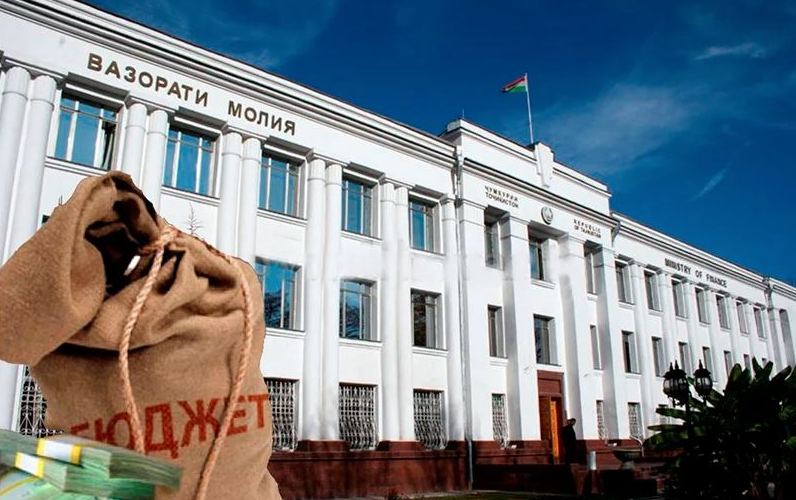
The national budget for 2020 earmarks more than 2.128 billon somoni (equivalent to nearly 220 million U.S. dollars) for repayment of its public debt, which is about 8 percent of the budget expenditures.
A total amount of the expenditure part of the national budget for 2020 is projected to stand at more than 26.2 billion somoni.
More than 1.281 billion somoni are projected to be spent for servicing the external debt and some 547 million somoni are expected to be spent for servicing the internal debt.
According to data from the Ministry of Finance, a total volume of Tajikistan’s public debt exceeded 3.6 billion U.S. dollars as of October 1 this year. The external debt amounts to 2.9 billion U.S. dollars and the country’s external debt-to-GDP ratio was 35.8 percent. The internal debt amounts to 715 million U.S. dollars.
China remains Tajikistan’s largest creditor. Tajikistan now reportedly owes more than 1.4 billion U.S. dollars to the Export-Import Bank of China (China Eximbank).
Tajikistan also has relatively lower debts owed to the World Bank, the Asian Development Bank, the Islamic Development Bank and some other international financial institutions.
Loans attracted for public investment projects, particularly from China, the issuance of a US$ 500 million Eurobond, and the depreciation of the somoni, increased the level of external debt from 33 percent of GDP in 2016 to 35.8 percent by October 1, 2019.
Internal debt or domestic debt is the part of the total government debt in a country that is owed to lenders within the country. Internal debt's complement is external debt. Commercial banks, other financial institutions etc. constitute the sources of funds for the internal debts
Internal public debt owed by a government (money a government borrows from its citizens) is part of the country's national debt. It is a form of fiat creation of money, in which the government obtains finance not by creating it de novo, but by borrowing it. The money created is in the form of treasury securities or securities borrowed from the central bank.
Public debt, also known as government debt, public interest, national debt and sovereign debt, contrasts to the annual government budget deficit, which is a flow variable that equals the difference between government receipts and spending in a single year. The debt is a stock variable, measured at a specific point in time, and it is the accumulation of all prior deficits.
Public debt can be categorized as internal debt (owed to lenders within the country) and external debt (owed to foreign lenders). Another common division of government debt is by duration until repayment is due.
Governments create debt by issuing government bonds and bills. Less creditworthy countries sometimes borrow directly from a supranational organization (e.g. the World Bank) or international financial institutions.