Tajikistan ratifies agreement on providing grant aid for rehabilitation of Qizilqala–Bokhtar section of Dushanbe-Bokhtar highway

Tajikistan’s lower house (Majlisi Namoyandagon) of parliament (Majlisi Oli) has ratified an agreement on providing a grant aid for the project aimed at rehabilitation the Qizilqala-Bokhtar section of the highway connecting Dushanbe and Bokhtar, the capital of Khatlon province. A regular sitting of the Majlisi Namoyandagon, presided over by its head, Shukurjon Zuhurov, took place […]

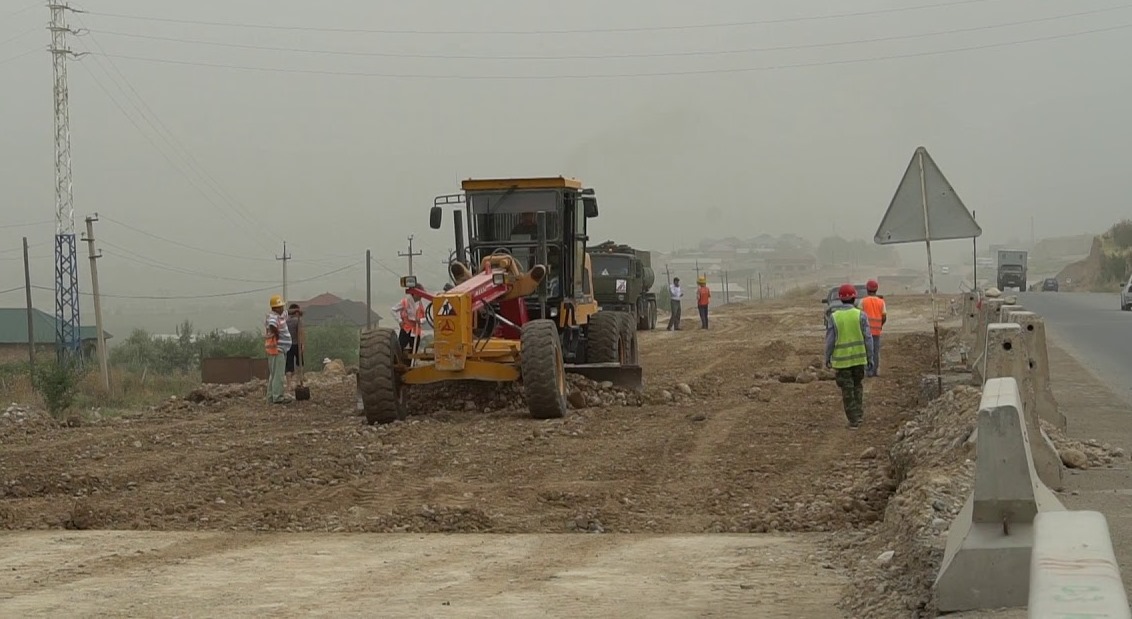
Tajikistan’s lower house (Majlisi Namoyandagon) of parliament (Majlisi Oli) has ratified an agreement on providing a grant aid for the project aimed at rehabilitation the Qizilqala-Bokhtar section of the highway connecting Dushanbe and Bokhtar, the capital of Khatlon province.

A regular sitting of the Majlisi Namoyandagon, presided over by its head, Shukurjon Zuhurov, took place on December 18.  

Presenting the agreement to lawmakers, the Deputy Minister of Transport, Rustam Valizoda, noted that Japan is providing a grant for implementation of that project.    

According to him a total length of this section of the Dushanbe-Bokhtar highway is about 9.2 kilometers and the project is designed for twenty-two months.    

Recall, a grant agreement for 3.409 billion yen (equivalent to about 31 million USD) was signed on September 3 in Dushanbe between the Government of Tajikistan, represented by Mr. Faiziddin Qahhorzoda, Minister of Finance, and the Government of Japan represented by Mr. Hideki Tanabe, the Chief Representative of the Japan International Cooperation Agency (JICA) in Tajikistan. 

The grant aid is provided for the Project for the Rehabilitation of the Qizilqala–Bokhtar Section of the Dushanbe-Bokhtar Highway.

The Government of Japan has reportedly allocated 3,232,000,000 Japanese Yen, in addition to 117, 000,000 Japanese Yen for detailed design, through JICA to support the implementation of the project

Under this project, the transportation and traffic safety in part of the Dushanbe-Bokhtar highway will be improved through the rehabilitation of the Qizilqala-Bokhtar section of the highway, thereby contributing to the economic development of Tajikistan.

One of the development priorities of Tajikistan is the improvement of road infrastructure that is crucial for the country to overcome communication deadlock and turn itself into a transit hub.  To support the efforts of the Government of Tajikistan, the Government of Japan has been funding several projects through JICA in the transport sector.  

Join us on social media!

Article translations:

Related Article

Tenisi
Оби зулол
Оби зулол

Most Read

Коммерсбонк Точикистон

Recent Articles

RZD announces the restoration of passenger services between Moscow and Dushanbe

Direct rail services between the capitals of Russia and Tajikistan were suspended in March 2020 due to the COVID-19 pandemic.

#AP30/Stories. “Selam! Heller nichek?” How Tatars live today in Sughd province

On the 30th anniversary of "Asia-Plus," we continue to publish reports that remain relevant even after years. This story was told in 2021, and since then, little has changed in the life of the Tatar community in Tajikistan.

15,000 cameras, drones, and robots: how technology monitors pilgrims in Mecca and Medina

During Hajj 2026, Mecca and Medina were under unprecedented digital control.

Another child in Dushanbe removed from family and sent to boarding school

The Ministry of Internal Affairs reports that the parents did not pay adequate attention to the child.

Emomali Rahmon instructs to address issues in seed production following criticism of the industry

Issues have been noted with certification, seed quality, and the material and technical base of the industry.

Water, climate, and a $130 billion deficit: seven key outcomes of the Water Conference in Dushanbe

At the forum, countries and international organizations discussed new mechanisms for cooperation, investments, and technologies that are essential for addressing the global water crisis.

Eskhata Bank introduces a new generation children’s wallet

"Eshkata Bank" has created a full-fledged digital platform that helps children aged 7 to 16 learn how to manage money.