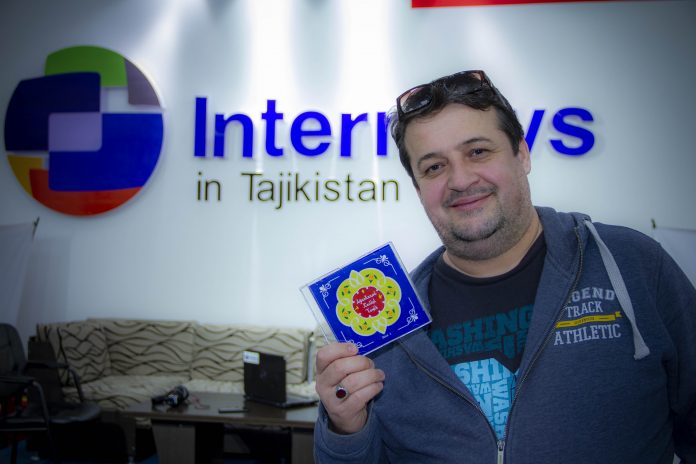
Audio fairy tales in Tajik and Pamiri languages have been issued in Dushanbe.
Tajik popular actors tell the fairy tales in Tajik and Pamiri languages nearly two and half hours. They, in particular, use local dialects of Tajik, if a character, for example, from the Khujand or Kulob fairy tales.
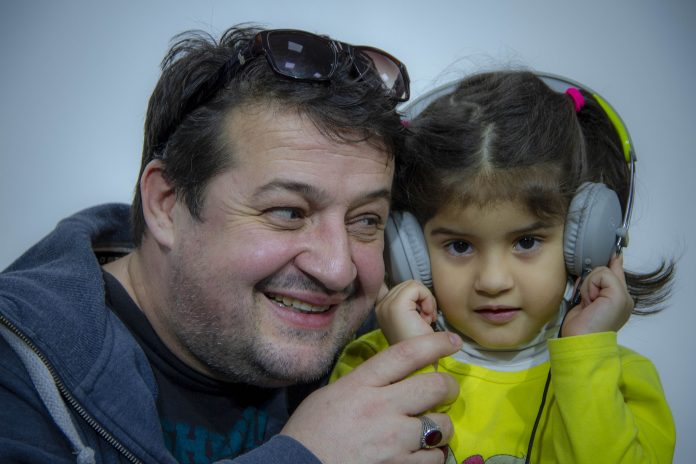
The author of this idea is a Tajik and Russian actor Firouz Sabzaliyev, according to Kazakhstan’s news agency Noviy Reportyor (New Reporter).
Firouz Sabzaliyev is very well known in Tajikistan. In 1991, he starred in Bakhtiyor Khudoinazarov’s “Bratan” (Brother).
In 2014, Firouz Sabzaliyev initiated dubbing an epic animation “Zolotaya Antilopa” (The Golden Antelope), which is the famous classic of the Soviet animation, into the Shughni language. This animation in the Shughni language is available on the popular video-sharing website YouTube.
Professional screen and theater actors from Dushanbe participated in dubbing the animation into the Shughni language.
Firouz Sabzaliyev and his team have also dubbed a famous film “Yunosti Pervoye Utro” (The First Morning of Youth) by known Tajik filmmaker Davlat Khudonazarov into the Shughni language. This film in Russia was shot in the Gorno Badakhshan Autonomous Region (GBAO) in 1979.
The Shughni language (including the dialects of Rushani, Oroshani, Bartangi, Oroshor, Khufi, and Shughni) along with Sarikoli, and Yazgulyam languages belongs to the Shughni-Sarikoli-Yazgulami sub-branch of the Pamir languages.
The Pamir languages are a subgroup of the Eastern Iranian languages, spoken by numerous people in the Pamir Mountains, primarily along the Panj River and its tributaries. This includes the Badakhshan Province of northeastern Afghanistan and the Gorno-Badakhshan Autonomous Region of Tajikistan. Smaller communities can be found in the adjacent areas of Pakistan where many have settled in recent decades.
The first published data concerning the Shughni language appeared in an article by R. Shaw "On the Shighni (Ghalchah) Dialect" (Journal of the Asiatic Society of Bengal, vol. 46, 1877).
A Shughni script was created in 1930/31 on the basis of the Latin alphabet. A number of textbooks and teaching devices were compiled for primary schools and some of them were even published. However, the Shughnis were only able to benefit from native language schooling for a few years.