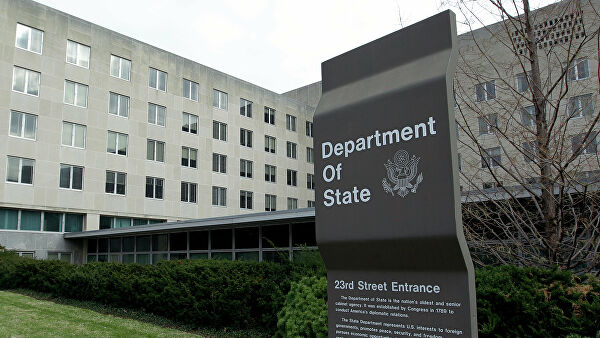
U.S. Department of State re-designates Tajikistan as CPC in terms of religious liberty violations

Press release issued by the United States Department of State says Tajikistan is still listed among Countries of Particular Concern (CPC) in terms of violation of religious freedom. The protection of religious freedom is a top of the U.S. Administration foreign policy priority and the United States continues to work diligently to promote religious freedom […]

Press release issued by the United States Department of State says Tajikistan is still listed among Countries of Particular Concern (CPC) in terms of violation of religious freedom.

The protection of religious freedom is a top of the U.S. Administration foreign policy priority and the United States continues to work diligently to promote religious freedom and combat abuses.  

On December 18, 2019, the U.S. Department of State re-designated Tajikistan alongside Burma, China, Eritrea, Iran, North Korea, Pakistan, Saudi Arabia, and Turkmenistan as Country of Particular Concern under the International Religious Freedom Act of 1998 for having engaged in or tolerated “systematic, ongoing, and egregious violations of religious freedom.”

The Department of State renewed the placement of Russia and Uzbekistan on a Special Watch List (SWL) for governments that have engaged in or tolerated “severe violations of religious freedom.”

Finally, the U.S. Department of State designated al-Nusra Front, al-Qaeda in the Arabian Peninsula, al-Qaeda, al-Shabab, Boko Haram, the Houthis, ISIS, ISIS-Khorasan, and the Taliban as Entities of Particular Concern.

These designations underscore the United States’ commitment to protect those who seek to exercise their freedom of religion or belief. 

Country of Particular Concern (CPC) is a designation by the United States Secretary of State (under authority delegated by the President) of a nation guilty of particularly severe violations of religious freedom under the International Religious Freedom Act (IRFA) of 1998 (H.R. 2431) and its amendment of 1999 (Public Law 106-55).  The term "particularly severe violations of religious freedom" means systematic, ongoing, egregious violations of religious freedom, including violations such as: a) torture or cruel, inhuman, or degrading treatment or punishment; b) prolonged detention without charges; c) causing the disappearance of persons by the abduction or clandestine detention of those persons; or d) other flagrant denials of the right to life, liberty, or the security of persons.

Join us on social media!

Article translations:

Related Article

Оби зулол
Tenisi
Оби зулол

Most Read

Коммерсбонк Точикистон

Recent Articles

RZD announces the restoration of passenger services between Moscow and Dushanbe

Direct rail services between the capitals of Russia and Tajikistan were suspended in March 2020 due to the COVID-19 pandemic.

#AP30/Stories. “Selam! Heller nichek?” How Tatars live today in Sughd province

On the 30th anniversary of "Asia-Plus," we continue to publish reports that remain relevant even after years. This story was told in 2021, and since then, little has changed in the life of the Tatar community in Tajikistan.

15,000 cameras, drones, and robots: how technology monitors pilgrims in Mecca and Medina

During Hajj 2026, Mecca and Medina were under unprecedented digital control.

Another child in Dushanbe removed from family and sent to boarding school

The Ministry of Internal Affairs reports that the parents did not pay adequate attention to the child.

Emomali Rahmon instructs to address issues in seed production following criticism of the industry

Issues have been noted with certification, seed quality, and the material and technical base of the industry.

Water, climate, and a $130 billion deficit: seven key outcomes of the Water Conference in Dushanbe

At the forum, countries and international organizations discussed new mechanisms for cooperation, investments, and technologies that are essential for addressing the global water crisis.

Eskhata Bank introduces a new generation children’s wallet

"Eshkata Bank" has created a full-fledged digital platform that helps children aged 7 to 16 learn how to manage money.