Three months ago, the Faroz company was one of the most successful business conglomerates in Tajikistan.
But at the height of that success, Faroz suddenly announced on September 17 that it will shut down due to tough market conditions and dwindling profits.
That announcement was followed by a statement that Faroz would sell its 108 businesses and properties across the country. Dozens of firms owned by the company removed Faroz signs and billboards from their headquarters.
But an investigation by Radio Liberty’s Tajik Service indicates that Faroz is still very much active in Tajikistan and that the only change it seems to have undergone is the removal of its signs.
A Faroz statement says the company informed the state Tax Committee on August 26 about its plan to shut down its operations. The committee confirmed that it received such notification.
But in contradiction of those alleged plans to close its businesses, RFE/RL obtained copies of two documents signed by President Emomali Rahmon that approve the allocation of large parcels of land for new, long-term business projects by Faroz.
Both of the documents were approved by the president after Faroz informed authorities about its dissolution.
The first document signed by Emomali Rahmon on August 31 reportedly approves the sale of nearly 14 hectares of land to Faroz in the Isfara, Mastchoh, and Panjakent districts. The document says Faroz will use the land for future projects, including the construction of international bus terminals near state borders.
The second document signed by President Rahmon on November 2 also allows Faroz to buy land in the Hisor, Tursunzoda, and Shahrinav districts for more bus terminals.
Faroz is officially registered in Tajikistan as a limited company. RFE/RL notes that until at least early December, the Tax Committee described Faroz as “operational” as opposed to being “closed” or “in the process of shutting down” — the three terms officially used to describe the status of a company.
Faroz reportedly says it was established in 2008 as a business entity for the sale and export of fuel.
By 2019, it had established a vast portfolio of lucrative businesses that included transport, construction, trade, banking, metallurgy, tourism and hospitality, health care, media, and education. RFE/RL says that in the past 11 years, Faroz has set up 58 separate businesses.
Following the termination announcement, dozens of its fuel stations and companies reportedly removed their Faroz signs. But they continue to operate as they did before, several employees told RFE/RL.
According to RFE/RL, it obtained documents showing that 46 companies belonging to Faroz continue to operate.
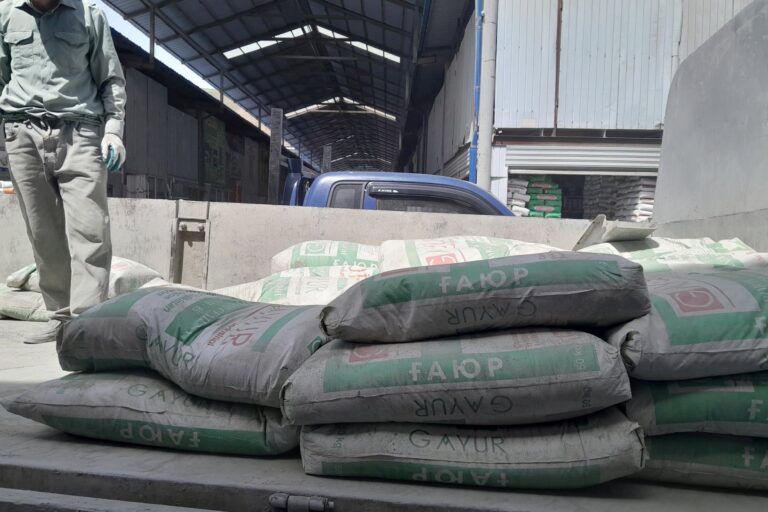
They include the Commerce Bank of Tajikistan, the Dushanbe Brickmaking Plant, the First National Insurance Group, Faroz Konch Cement, the Tajik Metallurgy Plant, and two major transport companies, Tajik Vneshtransport and Tajik Naqliyot.
Meanwhile, dozens of businesses that belonged to Faroz have ceased operations since September.
They include the Darian Bima insurance group, the British School of Tajikistan, the Avtosantal driving school, and several vehicle-inspection services.