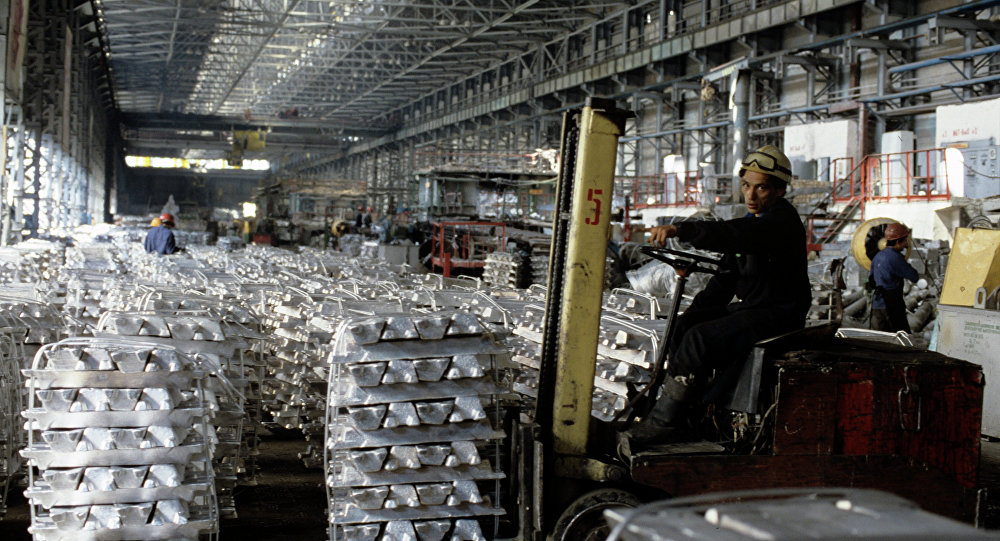
Last year, Tajikistan produced 100,800 tons of primary aluminum, which is 5,800 tons more compared to 2018, according to a statement released the Open Joint-Stock Company (OJSC) Tajik Aluminum Company (TALCO).
In 2019, the production process was reportedly slowed down due to delays in transit of freight by rail and trucks via Turkmenistan territory as well as damage caused by mudslide to the railway in Uzbekistan and a massive arms depot blast in Kazakhstan.
The mentioned factors made the Tajik aluminum smelter switch off 90 electrolyzers, though the enterprise has taken all necessary measures to restore production and connect new electrolyzers, TALCO said.
The Tajik Aluminum Company is fully state-controlled enterprise. Radio Liberty’s Tajik Service reported on December 4 that Tajikistan is on the cusp of selling a stake in TALCO to a Chinese company. RFE/RL cited China’s former ambassador to Tajikistan, Yue Bin, as saying that the acquisition would be executed in return for the Chinese company investing $545 million into the TALCO aluminum producer. Yue offered no details about the size of any stakes to be sold
Although TALCO has not commented publicly on the prospect of it being part-privatized, the conditions for sale have been created.
By government’s decree TALCO was converted from a state unitary enterprise into an open joint-stock company on November 1, 2019. All the shares belong to the government. Besides, TALCO’s affiliate Alyuminsokhtmon has also been converted into an open joint-stock company with all it shares belonging to TALCO
Although the shares of TALCO all now belong to the government, a portion may in time be traded to private investors.
The Tajik Aluminum Company (TALCO) is one of the ten largest aluminum smelters in the world. It consumes more than 30 percent of the country’s electrical power. TALCO is wholly owned by the Tajik government. Tajikistan does not mine alumina but imports the raw material through tolling arrangements.
Construction of the Tajik aluminum plant (TadAZ) began in 1972, and the first pouring of aluminum took place on March 31, 1975. THz Tajik aluminum smelter has a rated capacity of 517,000 tons of primary aluminum per year. On April 3, 2007, TadAZ was officially renamed to TALCO – Tajik Aluminum Company.