The Roghun hydroelectric power plant (HPP) accounted for more than 4.0 percent of a total volume of energy generated in Tajikistan last year, according to the Ministry of Energy and Water Resources (MoEWR).
An official source at a MoEWR says the Roghun HPP last year generated 840 million kWh of electricity.
In all, about 20.7 billion kWh of electric power was generated in Tajikistan last year, which was nearly 1 billion kWh more compared to 2018.
Of this amount, 2.3 billion kwh of electricity was generated by the Sangtu-1 HPP, 858 million kWh of electricity was generated by the Sangtuda-2 HPP, 192 million kwh of electricity was generated by Pamir Energy Company (a project company of the Aga Khan Fund for Economic Development) and 16.4 billion kWh of electricity was generated by power plants subordinate to Barqi Tojik (Tajikistan’s national integrated power company), the source added.
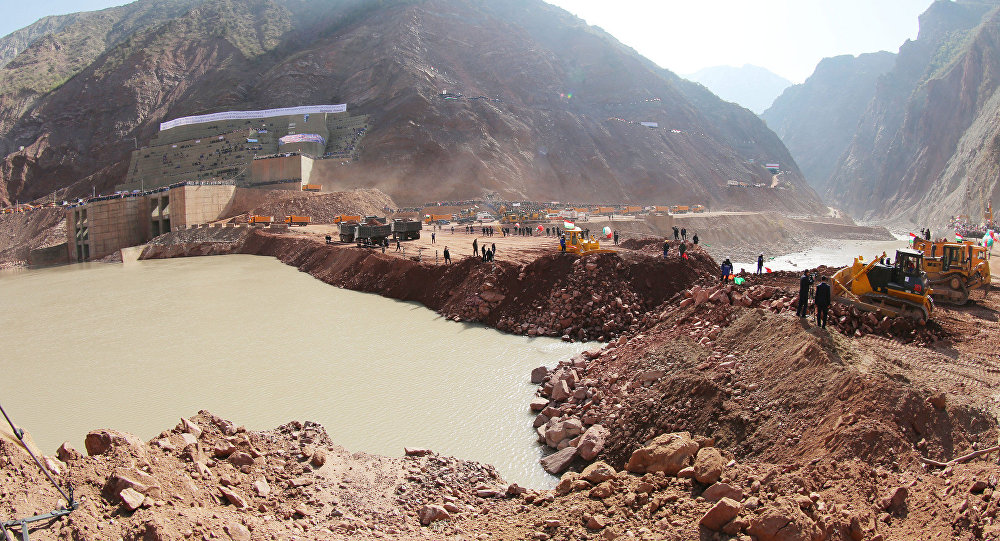
Tajikistan stemmed the flow of the Vakhsh River for construction of the Roghun hydroelectric power plant (HPP) mega-dam in late October 2018. Explosions were used on October 29 to block the main riverbed of the Vakhsh River, marking the first substantial step toward building the dam. The work on the Vakhsh River has not affected existing hydroelectric facilities downstream.
Roghun HPP is an embankment dam in the preliminary stages of construction on the Vakhsh River in southern Tajikistan. It is one of the planned hydroelectric power plants of Vakhsh Cascade.
In 2016, construction duties on Roghun were assigned to Italian company Salini Impregilo. It is estimated that the project will cost $3.9 billion to complete.
The project is broken down into four components, with the most expensive one involving the building of a 335-meter-high rockfill dam — the tallest in the world — which will entail costs of around $1.95 billion. Construction of the Roghun hydropower plant is expected to be completed in 2033.
Two of the six turbines have already started producing energy for sale to raise funding to complete it. The first turbine went into service in November 2018 year and the second one was introduced into operation in September last year.
If built as planned, the dam will be the tallest in the world at 335 meters and have a capacity of 3600 MW.