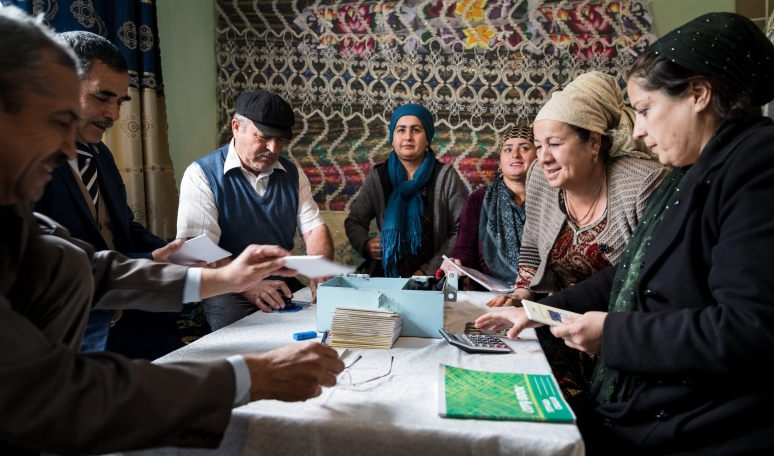
Established in 2015, the savings group in Ganj, a village in the Khatlon province of Tajikistan, boasts 40 members—35 of them female, according to press release issued by the Aga Khan Development Network (AKDN).
Today, they are reportedly in their fourth cycle of activity, having blossomed from a small group of only 17 members. The group has accumulated over $4,000 in savings, with the value of loans increasing significantly over the last year. The progress has given many members the confidence to explore small business ventures, speak up more in the home, and put trust in the savings group model. Most of all, members—the majority of them housewives—appreciate the supportive network that the group has created.
“Before, when we were not meeting as a group, we didn’t discuss our ideas,” one member says. “But now, we have a unique place where we can talk to each other about ideas, about starting our own businesses. Our heart is warm—knowing that we have support and savings here.”
Members describe the groups as a network of people who look out for one another, helping each other cover emergency costs and other pressing needs. For one member, that need was to provide for her son’s education: “I have a son who is studying at the university, and just to pay for his study, I needed a loan. I did not go to any of my relatives to ask for cash. I did not go to the bank… I just came here and addressed my problem with our group, and we solved it and I took a loan. And after 3 months, I paid it back.”
Savings groups build strong trust among the community. One member puts it simply: “We couldn’t do this without trust.” The ability of the groups to create this trusting atmosphere is in its accountability framework.
Accountability is built into the structure of how the group collects and stores funds. Shares and dues collected from all members—including a “social fund” that provides for emergencies—are kept in a lockbox. Three group officers (leader, treasurer, and secretary) are given keys to the lockbox. All three keys are needed to open it.
Together with discussions about local priorities, savings groups create a spirit of trust within the community and a platform for economic empowerment.
In 2014, the Aga Khan Foundation and the U.S. Agency for International Development (USAID) launched a Global Development Alliance entitled Economic and Social Connections: A Multi-Input Area Development Financing Facility for Tajikistan (ESCoMIAD). Since then, ESCoMIAD has improved lives for people living along the Tajik border with Afghanistan.