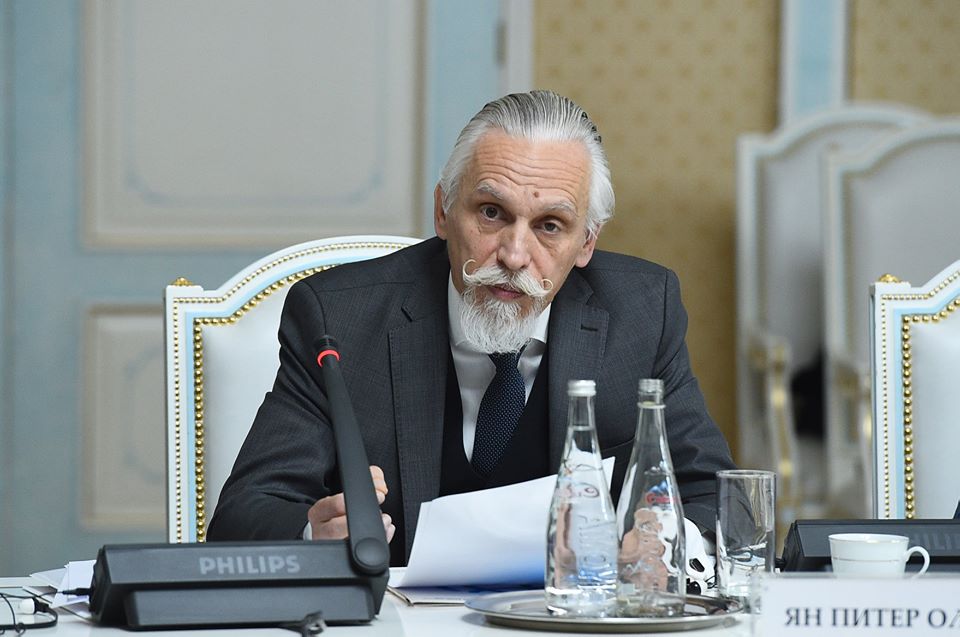
Mr. Jan-Peter Olters, World Bank Country Manager for Tajikistan, calls on Tajik authorities to take measures to resolve long-lingering obstacles to investment and private-sector development.
In a statement delivered at the 20th Session of the Consultative Council on the Improvement of the Investment Climate Under the President of Tajikistan, Mr. Olters, in particular, noted on February 12 that the year 2019 has the potential to be considered—by the time the National Development Strategy up to 2030 will be assessed in totality—as the “foundational year” for Tajikistan’s graduation from post-crisis response to socio-economic transformation.
According to him, this next development stage in Tajikistan’s economic history would see a successful, innovation-driven, export-oriented, employment-generating, and tax-paying private sector co-contribute to Tajikistan’s ambitious development objectives.
Specifically, potentially transformative decisions have been taken by the Government since the previous Consultative Council, for which support has been sought from development partners, World Bank country manager for Tajikistan noted.
“The ongoing work on the tax reform, with efforts to (i) replace the current tax audit practice with risk-based audits targeting high-risk taxpayers, thereby enshrining voluntary tax compliance as the principal objective of tax authorities’ conduct; and (ii) define a proper balance between fiscal costs of, and socio-economic benefits from, tax exemptions, holds the potential of redefining the, at times, apprehensive relationship between the State and private sector. Agreements reached on a medium-term restructuring agenda for the main power utility, with corresponding policy measures aimed at setting it on financially sound feet, will empower it to (i) provide for uninterrupted universal access to electricity at lowest-possible tariffs, without fiscal drains to the budget; and (ii) be a reliable commercial partner to suppliers,” Mr. Olters said
According to him, the year 2020 will be a critical year. It will be the year, in which it becomes evident whether the economy can walk through the doors that have opened during 2019—towards a more dynamic, private sector-driven, and increasingly export-oriented economy, Mr. Olters said, noting that President Emomali Rahmon, during last year’s Consultative Council, expressed commitment and provided the encouragement to resolve long-lingering obstacles to investment and private-sector development.
He further noted that the Development Coordination Council (DCC) members would do their utmost to provide the necessary support, united in the shared objective of seeing Tajikistan enter the virtuous cycle of the “innovate-industrial” development scenario described in the National Development Strategy up to 2030 and provide its citizens with substantially improved living conditions.