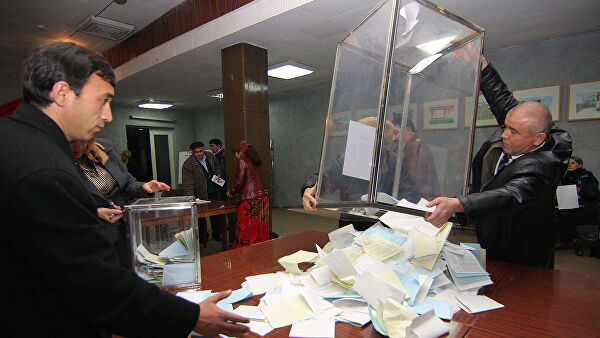
The Central Commission for Elections and Referenda (CCER) has begun delivering ballot papers to polling stations, where they will be secured by law enforcement officers.
In some regions voters will receive four ballot papers while in some other regions they will five ballot papers, an official source within the CCER told Asia-Plus in an interview.
The voters will receive the following ballot papers:
– the party list ballot paper with names of political parties participating in the upcoming parliamentary election;
– the ballot paper to cast a vote in a single-mandate constituency for election;
– and three ballot papers for election of a member of a local council of jamoat (rural municipality), district, city and province.
It is to be noted that voters from cities which do not have jamoats will receive four ballot papers.
Voters in Tajikistan will go to the polls on March 1 to cast ballots in parliamentary elections. Seven parties are registered to compete.
The only opposition party left in the race is the Social Democratic Party of Tajikistan (SDPT).
Recall, 240 candidates will compete for 63 seats in Tajikistan’s lower house (Majlisi Namoyandagon) of parliament (Majlisi Milli). Of them, 176 will run for parliament in 41 single-mandate constituencies and 65 others will compete for 22 seats in a single nationwide district.
48 of the officially registered candidates are women.
Members of the Majlisi Namoyandagon (Tajikistan’s lower chamber of parliament) are directly elected for a five-year term according to a mixed majoritarian-proportional system. Of the 63 MPs, 41 are elected from single-mandate districts, with the winning candidate requiring a majority of votes cast. If no candidate receives a majority, a second round is held within two weeks between the two leading candidates. More than 50 per cent of registered voters must participate for the election to be valid; otherwise, repeat elections must be held.
The other 22 MPs are elected from a single nationwide district under a proportional, closed-list system with a five percent threshold. All the seven officially registered political parties have nominated their candidates for parliamentary elections that will take place on March 1, 2020.