Tajik authorities deny rumors about reduction in food supplies as absolutely ‘baseless’

In a statement released on March 5, the Ministry of Economic Development and Trade of Tajikistan notes that rumors about reduction in procurement of food products, especially wheat flour, are absolutely unfounded. “The issue of providing consumer markets with basic food products and ensuring stability of prices is under constant control of the government, and […]

In a statement released on March 5, the Ministry of Economic Development and Trade of Tajikistan notes that rumors about reduction in procurement of food products, especially wheat flour, are absolutely unfounded.

“The issue of providing consumer markets with basic food products and ensuring stability of prices is under constant control of the government, and relevant ministries and agencies regularly take adequate measures in this direction,” reads the statement. 

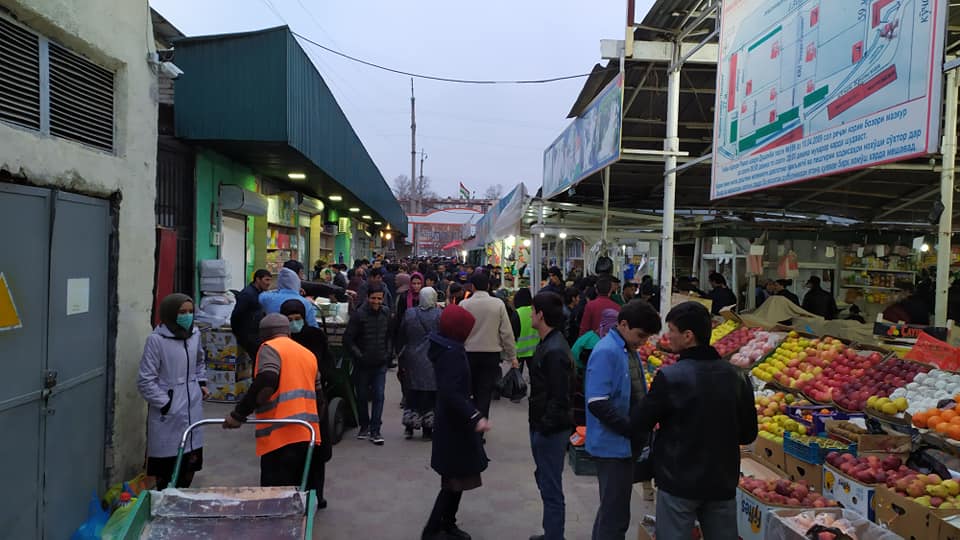
The ministry notes that all domestic markets are provided with basic food products such as wheat flour, vegetable oil, meat ad meat products, sugar, vegetables and others more than enough. 

According to the statement, Tajikistan last year produced 1.4 million tons of cereals, including 836,200 tons of wheat.  Besides, Tajikistan imported 1.1 million tons of wheat in 2019.

In 2019, Tajikistan reportedly produced approximately 1.5 million tons of wheat flour, which was 132,000 tons more than in 2018.  

Last year, Tajikistan produced 168,300 tons of meat and meat products, which was 11,000 tons more than in 2018, the statement says.  

The ministry, in particular, notes that the share of food products in China’s exports to Tajikistan last year amounted to only 0.3 percent. 

CIS member nationals provide the bulk of Tajikistan’s food imports, including wheat and wheat flour, according to the statement.  

The ministry says there are sufficient reserves and necessary production capacity to meet requirements of domestic consumer market.   

Recall, many staple items such as flour, oil and sugar are reportedly in short supply or totally sold-out at bazaars and stores in Dushanbe, as people stock up.  A 50-kilogram sack of flour used to cost around 220 somoni was selling in the Tajik capital this week for 380 somoni.

A resident of the southern city of Kulob told Eurasianet that riot police were on guard at the bazaar there and stopping shoppers from buying more than two sacks of flour at a time.

 

Join us on social media!

Article translations:

Related Article

Оби зулол
Tenisi
Оби зулол

Most Read

Коммерсбонк Точикистон

Recent Articles

RZD announces the restoration of passenger services between Moscow and Dushanbe

Direct rail services between the capitals of Russia and Tajikistan were suspended in March 2020 due to the COVID-19 pandemic.

#AP30/Stories. “Selam! Heller nichek?” How Tatars live today in Sughd province

On the 30th anniversary of "Asia-Plus," we continue to publish reports that remain relevant even after years. This story was told in 2021, and since then, little has changed in the life of the Tatar community in Tajikistan.

15,000 cameras, drones, and robots: how technology monitors pilgrims in Mecca and Medina

During Hajj 2026, Mecca and Medina were under unprecedented digital control.

Another child in Dushanbe removed from family and sent to boarding school

The Ministry of Internal Affairs reports that the parents did not pay adequate attention to the child.

Emomali Rahmon instructs to address issues in seed production following criticism of the industry

Issues have been noted with certification, seed quality, and the material and technical base of the industry.

Water, climate, and a $130 billion deficit: seven key outcomes of the Water Conference in Dushanbe

At the forum, countries and international organizations discussed new mechanisms for cooperation, investments, and technologies that are essential for addressing the global water crisis.

Eskhata Bank introduces a new generation children’s wallet

"Eshkata Bank" has created a full-fledged digital platform that helps children aged 7 to 16 learn how to manage money.