The government has ordered relevant bodies to take adequate measures to increase foreign direct investment in the country’s economy.
The Government of Tajikistan has ordered the State Committee on Investment and State-owned Property Management (GosKomInvest) to take effective measures to attract foreign direct investments in the country’s economy.
“[GosKomInvest] jointly with the Ministry of Finance, the Ministry of Industry and New Technologies, the National Bank of Tajikistan and local authorities should take effective measures to attract foreign direct investments in priority sectors of the economy,” reads a resolution adopted by the Government last month.
According to the official statistical data, investment in Tajikistan’s economy last year amounted to 607.1 million U.S. dollars, including 345.9 million U.S. dollars provided in foreign direct investments.
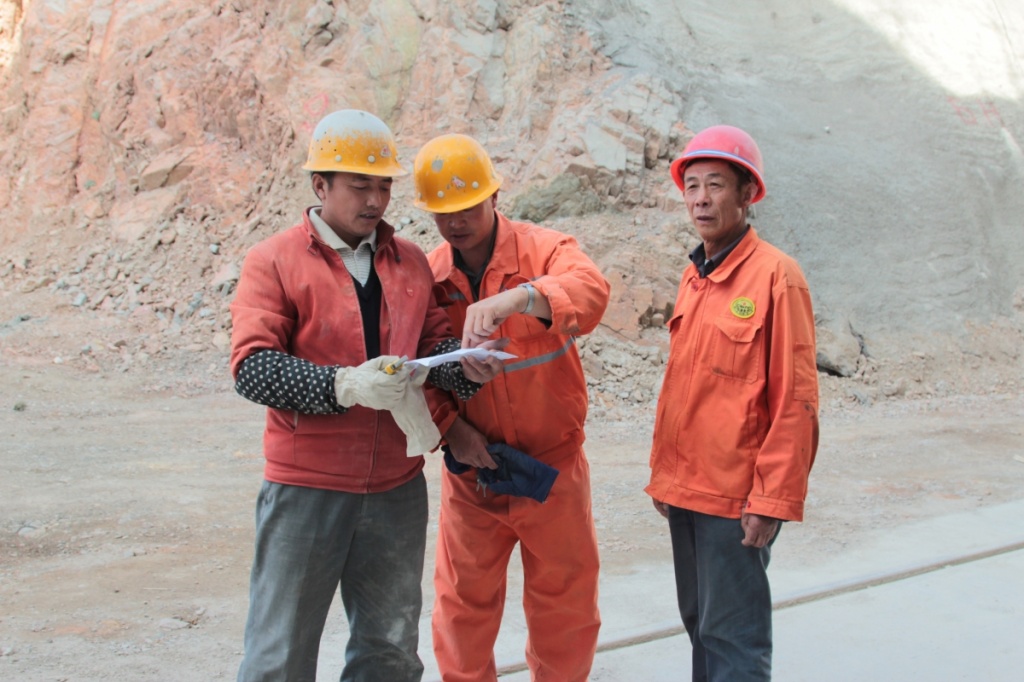
Direct investments have mainly gone to financing mining operations (67 percent of the overall volume of investments)
Besides, direct investments have gone to financing processing industry, transportation, communications, construction, tourism, communications and other commercial services.
China last year accounted for some 76 percent of foreign direct investment made in Tajikistan’s economy – 262.3 million U.S. dollars. These funds have mainly been invested in mining, construction, transportation and communications sectors.
Russia last year invested insignificant funds in Tajikistan’s economy, mainly in financial, construction and communications sectors.
In 2019, the United Kingdom, Turkey and some other countries also invested in relatively small volumes in Tajikistan’s economy.
The United Kingdom invested mainly in geological exploration, mining, and financial services, while Turkey invested in the processing industry as well as construction and financial sectors.
A foreign direct investment (FDI) is an investment in the form of a controlling ownership in a business in one country by an entity based in another country. It is thus distinguished from a foreign portfolio investment by a notion of direct control.
The investment may be made either “inorganically” by buying a company in the target country or “organically” by expanding the operations of an existing business in that country.