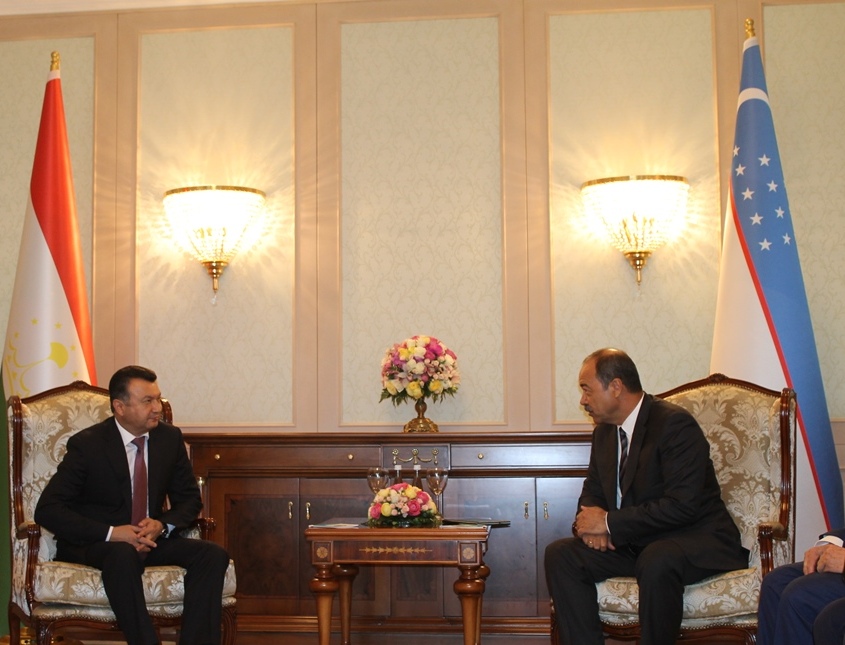
Co-chaired by Tajik Prime Minister Qohir Rasoulzoda and his Uzbek counterpart Abdulla Aripov, the next meeting of the Tajikistan-Uzbekistan intergovernmental commission for trade and economic cooperation will take place in the Tajik northern province of Sughd in the second half of April, an official source within the Tajik government told Asia-Plus in an interview.
According to him, the meeting that will be held in the city of Guliston (formerly Qairoqqum) will focus on issues related to further expansion of economic, cultural, humanitarian and scientific collaboration between the two countries.
“The sides are expected to negotiate prices for Uzbek natural gas being delivered to Tajikistan and Tajik electricity being supplied to Uzbekistan this year,” the source added.
Last year, Tajikistan reportedly supplied 1.425.1 billion kWh of electricity to Uzbekistan at the rate of 2.00 cents per kWh during the spring-summer period and 2.50 cents per kwh during the autumn-winter period.
In 2019, Tajikistan received 17.7 million USD worth of 140 million cubic meters of natural gas from Uzbekistan.
Recall, Uzbekistan resumed delivering natural gas to neighboring Tajikistan in April 2018, ending a six-year hiatus precipitated by diplomatic differences.
Under a deal reached same between the two nations’ presidents in March the same year, Uzbekistan has pledged to deliver 126 million cubic meters of gas for 15.1 million U.S. dollars in 2018. At $120 per 1,000 cubic meters, that translates into substantially favorable rates.
The gas that has been funneled through the Muzrabad-Dushanbe pipeline has been intended mostly to provide for the needs of the Tajik Aluminum Company (TALCO) aluminum smelter and its employees in the western Tajik town of Tursunzoda.
Tajikistan resumed electricity deliveries to Uzbekistan in early April 2018 after a nine-year break. Specifically, Tajikistan has begun supplying Uzbekistan with electricity via a power line running from the Regar substation, near the city of Tursunzoda west of Dushanbe, to the Gulcha substation across the border in Uzbekistan.
Tajikistan has sufficient summer-time (defined as May 1 to September 30) hydropower surpluses to export to the neighboring countries.