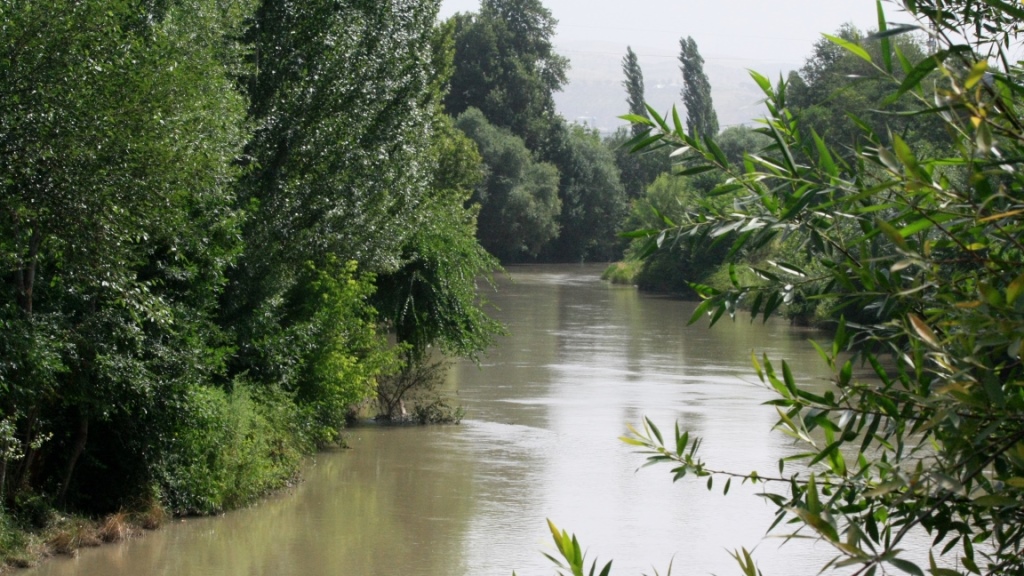
Tajik and Uzbek specialists are jointly clearing the Big Gissar Canal of slurry, according to the Emergencies Committee under the Government of Tajikistan.
The Big Gissar Canal irrigates about 30,000 hectares of farmlands in Tajikistan and more than 10,000 hectares of farmlands in Uzbekistan.
Under a government-to-government agreement between Tajikistan and Uzbekistan nine crawler excavators reportedly arrived in Hisor Township from Uzbekistan on March 5. Besides, Hisor local authorities have provided three crawler excavators.
The canal clearing works began on March 8 they have cleared 3.15 kilometers of the canal from slurry by March 12, an official source at the Emergencies Committee told Asia-Plus in an interview.
In all, they plan to clear 18 kilometers of the canal, the source added.
Irrigation in Tajikistan is important for the development of agriculture and the national economy. Large-scale irrigation development in southern Tajikistan started in 1931 with the construction of the Vakhsh main canal in the Vakhsh Valley.
During the Soviet era, significant irrigation development took place in the Kofarnihon River basin, in southern Tajikistan. Together with Uzbekistan, Tajikistan built the Big Gissar Canal, which carries water from the Kofarnihon River to the Surkhanddarya River basin in Uzbekistan. The work on construction of the canal began in 1940 and was completed in 1942.