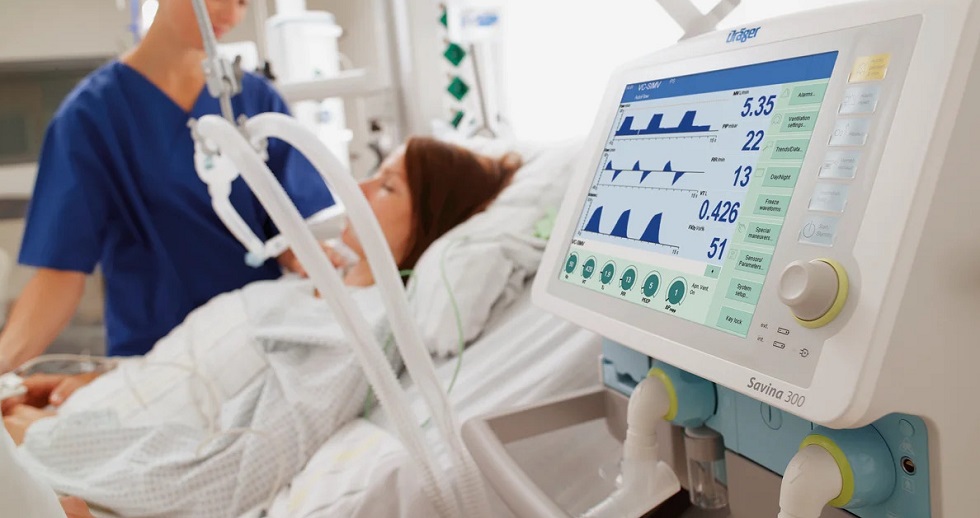
Representatives of the Ministry of Health and Social Protection of the Population have failed to tell us the exact number of ventilators (artificial lung ventilation machine) in the country. They, however, assure that Tajikistan has enough ventilators. Meanwhile, some sources say they are extremely few.
The press center of the Ministry of Health and Social Protection of the Population says they do not have information about the exact number ventilators in the country.
“But we know that resuscitation departments of all medical facilities are provided with ventilators,” a spokesperson for the Ministry of Health and Social Protection of the Population said.
The ministry has reportedly sent applications for ventilators to international organizations and partners.
The regional administration of the Gorno Badakhshan Autonomous Region (GBAO) says the local medical facilities have 26 ventilators.
According to them, the Aga Khan Health Services (AKHS) will provide some 80 other ventilators to local hospitals in the near future.
Meanwhile, an informed source has told Asia-Plus that there are very few ventilators in Tajikistan.
“As far as I know, hospitals in Dushanbe have more than 80 ventilators and hospitals in Khujand have some 50 ventilators. As far as other cities and districts are concerned, they have a maximum of 4-5 ventilators each,” the source said.
What is a ventilator and what does it do? Simply put, a ventilator takes over the body's breathing process when disease has caused the lungs to fail. This gives the patient time to fight off the infection and recover.
According to the World Health Organization (WHO), some 80% of people with Covid-19 – the disease caused by coronavirus – recover without needing hospital treatment.
But one person in six becomes seriously ill and can develop breathing difficulties.
In these severe cases, the virus causes damage to the lungs. The body's immune system detects this and expands blood vessels so more immune cells enter.
But this can cause fluid to enter the lungs, making it harder to breathe, and causing the body's oxygen levels to drop.
To alleviate this, a machine ventilator is used to push air, with increased levels of oxygen, into the lungs.
Patients are given medication to relax the respiratory muscles so their breathing can be fully regulated by the machine.