Tajikistan’s lower chamber (Majlisi Namoyandagon) of parliament (Majlisi Oli) today endorsed amendments proposed to the law on state registration of civil status act. The amendments, in particular, provides for officially banning the issuance of new identification documents and birth certificates for ethnic Tajiks containing Russified surnames.
Presenting the bill to lawmakers, the Minister of Justice, Muzaffar Ashouriyon, noted that the amendments did not apply to children who are not ethnic Tajiks.
“The amendments apply only to the children who will be born after adoption of the amendments,” the minister said.
The children will be given documents that use traditional Tajik suffixes – "i," "zod," "zoda," "iyon," "far," "pour" for children or “dukht” (for girls).
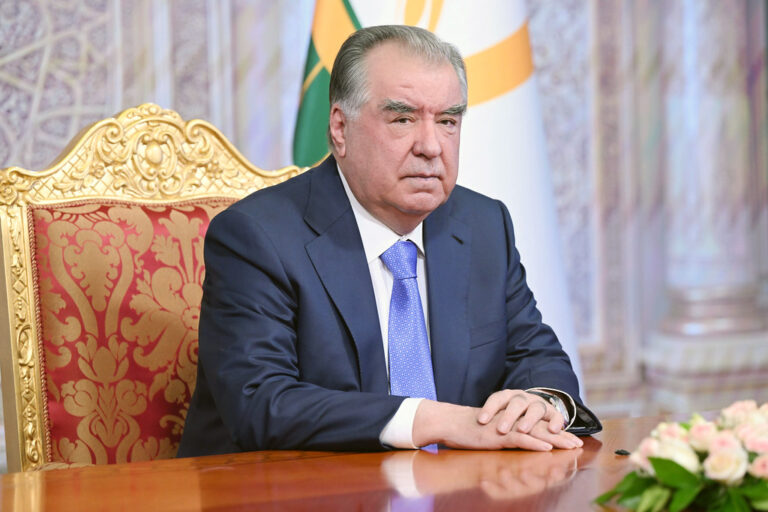
Recall, Tajik president Emomali Rahmonov announced in March 2007 that he opted to use the traditional version of his own name, with both local media and the official presidential website referring to the president as Emomalii Rahmon. On March 27, 2007, he issued orders to local authorities to stop imposing the Slavic suffixes "ov" and "ev" on the surnames of newborn babies,. In a statement released by the presidential press service, the head of state explained that people should revert to the traditional versions of their names as part of "a return to national roots."
In April 2016, Tajik authorities officially banned the issuance of new identification documents and birth certificates for ethnic Tajiks containing Russified surnames.
The then Deputy Chief of the Tajik Service for Registration of Citizens, Jaloliddin Rahimov, told Radio Liberty on April 29, 2016 that the new regulations were approved by President Emomali Rahmon in March.
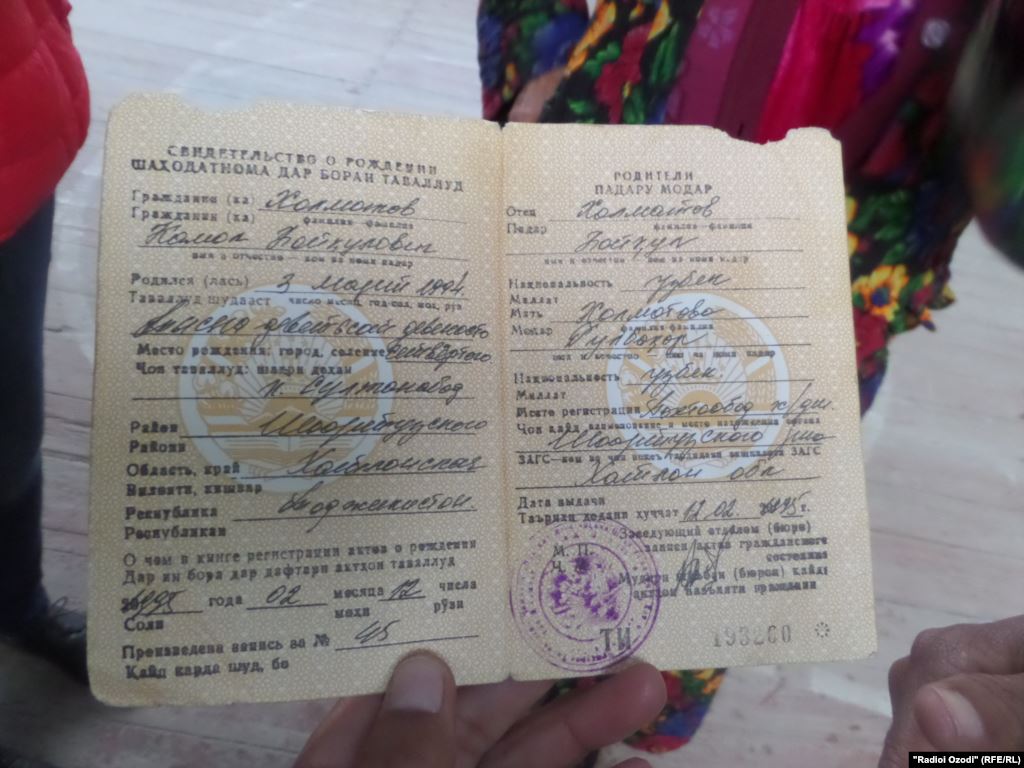
According to the new law, ethnic Tajik children whose parents have surnames from the Soviet era that end with the Russian "ov" for men and "ova" for women will instead be given documents that use traditional Tajik suffixes.
The regulation applies to the birth certificates of newborn ethnic Tajiks or ethnic Tajik children receiving identification documents for the first time.
Adults who previously obtained documents with a Russified surname and choose to continue using that surname were allowed to do so.
The law did not apply to children who are not ethnic Tajiks.