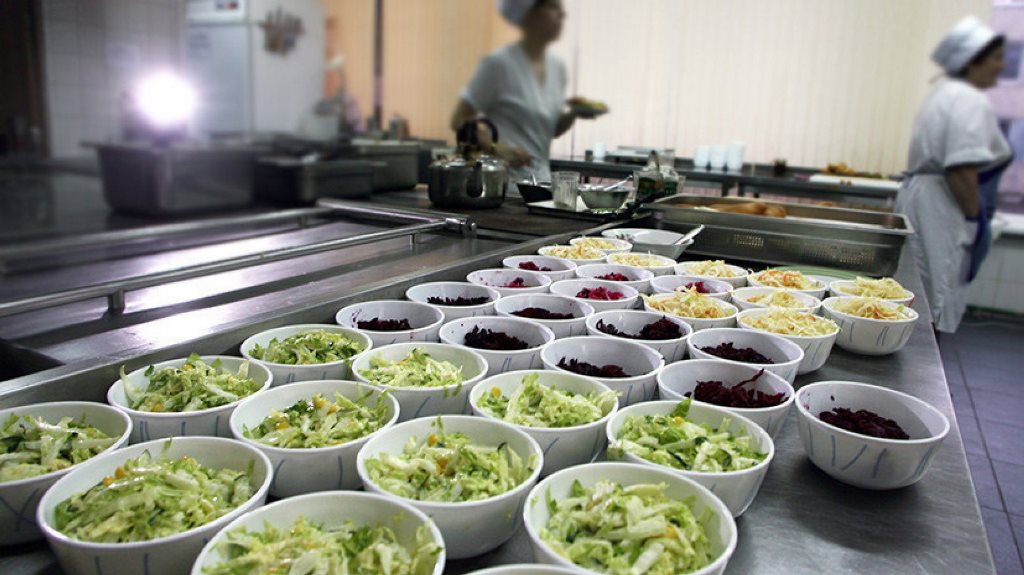
The Russian Federation allocates 11.2 million U.S. dollars (USD) to the United Nations World Food Programme (WFP) to develop a sustainable school feeding program in Tajikistan.
These funds will be used to implement the third and final phase of the same project that is being conducted by Russia and WFP from 2020 to 2023, particularly focusing on the renovation of school canteens, the further training of staff at Tajik schools and advocating healthy diets, according to WFP Country Office in Tajikistan.
Furthermore, the Russian Federation additionally provides 10 million USD to purchase Russian food commodities that will be used to meet the needs of schoolchildren in Tajikistan during the next two years (2020-2021).
“Over the past six years, the Russian Federation, jointly with WFP, has supported the efforts of the Government of the Republic of Tajikistan to create an effective and a self-sufficient national school feeding program”, emphasized Igor Lyakin-Frolov, Ambassador of the Russian Federation to Tajikistan. “This is one of our largest projects in the country – the total budget disbursed so far is close to USD 80 million. Promoting the harmonious and healthy development of the current Tajik schoolchildren is an important contribution of Russia to the future of entire Tajikistan.”
“Thanks to the close partnership with the Government of Tajikistan and the continued support from the Russian Federation, WFP helps the young generation of the country reach its full potential. Healthy diets for children mean not only better nutrition and health, but also increased access to education and improved educational outcomes,” stated Alberto Correia Mendes, WFP Representative and Country Director in Tajikistan.
The project on the sustainable development of the school feeding program in Tajikistan was launched in 2013 by WFP with the financial support of the Russian Federation. Due to the close collaboration with the Ministry of Health and Social Protection of the Population, the Ministry of Education and Science of Tajikistan, and experts from the Russian NGO “Social and Industrial Foodservice Institute” (SIFI), equipment at school canteens was renovated and trainings were carried out for staff from almost 60 schools during the first two project phases (2013-2015 and 2016-2019 with a total budget of 17.1 million USD). Furthermore, a total of seven bakeries, which provide 61 surrounding schools with bread were constructed or renovated, 10 greenhouses were built at schools and the second edition of the School Meals Recipe Book was published. In addition, Tajik authorities were provided with expert support during the development of the Concept on Improvement of the School Feeding in general educational institutions of Tajikistan and the National Strategy on Sustainable Development of School Feeding for the period of up to 2027.
Between 2013 and 2019, the Russian Federation additionally allocated 41 million USD to WFP to purchase food items from Russian producers for Tajik schoolchildren. Due to this support, in 2019, more than half a million Tajik schoolchildren from grades 1 to 4 in 2,000 schools across 52 rural districts of the country were regularly served nutritious soup or other local meals and a piece of traditional bread.
Starting from 2021, the implementation of the above-mentioned initiatives on supporting the national school feeding program will be gradually handed over to the responsible authorities in Tajikistan.
The project on the sustainable development of the school feeding program is WFP’s largest operation in Tajikistan and represents the organization’s strong commitment to changing lives and strengthening institutional capacities in Tajikistan.
WFP has been partnering with the Government of Tajikistan to implement the school feeding program since 1999.
The Russian Federation remains a key partner for Tajikistan and WFP in the sphere of strengthening food security in the country. The Russian support is not limited to the implementation of the above-mentioned project. Between 2005 and 2012, the Government of the Russian Federation allocated USD 36.5 million through WFP to purchase food to support vulnerable people in Tajikistan.